
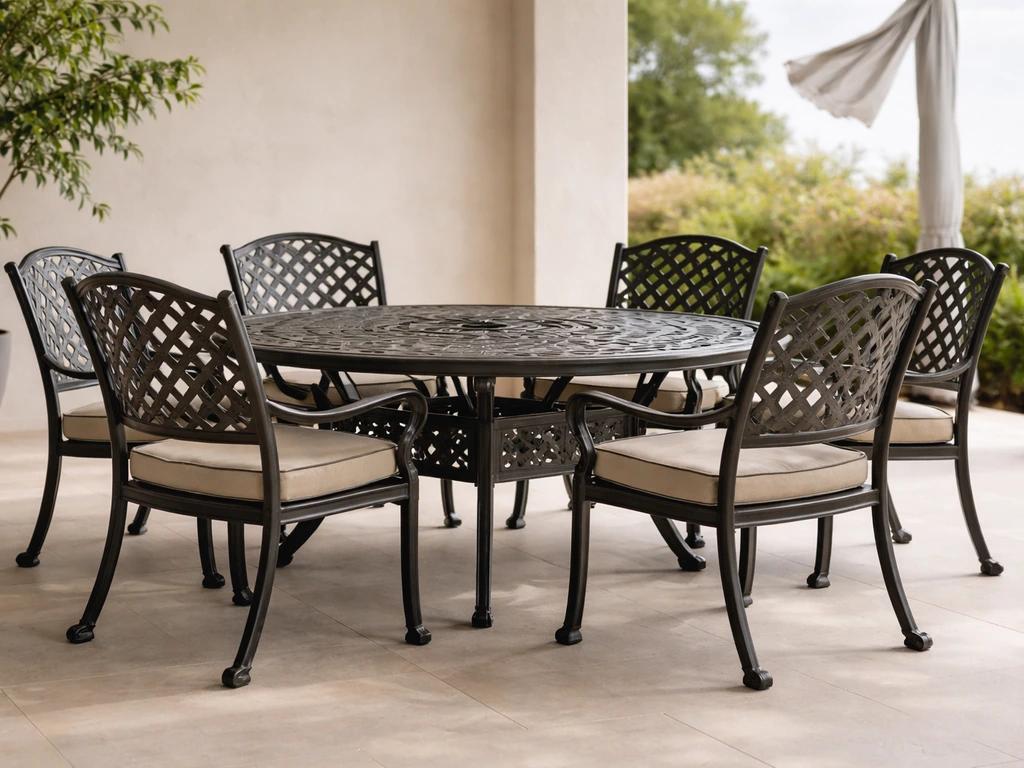
For windy areas, your best patio furniture is heavy cast aluminum or wrought iron with a wide, low stance, slatted or open designs that let air pass through rather than catch it, and cushions that tie directly to the frame. Those three factors, weight, aerodynamics, and secure attachments, do more to keep furniture grounded than any single material or brand claim. If you're on the coast, in a high-elevation yard, or anywhere gusts regularly hit 30+ mph, those aren't nice-to-haves. They're the baseline.
Best Patio Furniture for Windy Areas: What to Buy

Theo Tierney
18 May 2026
Why patio furniture fails in high winds
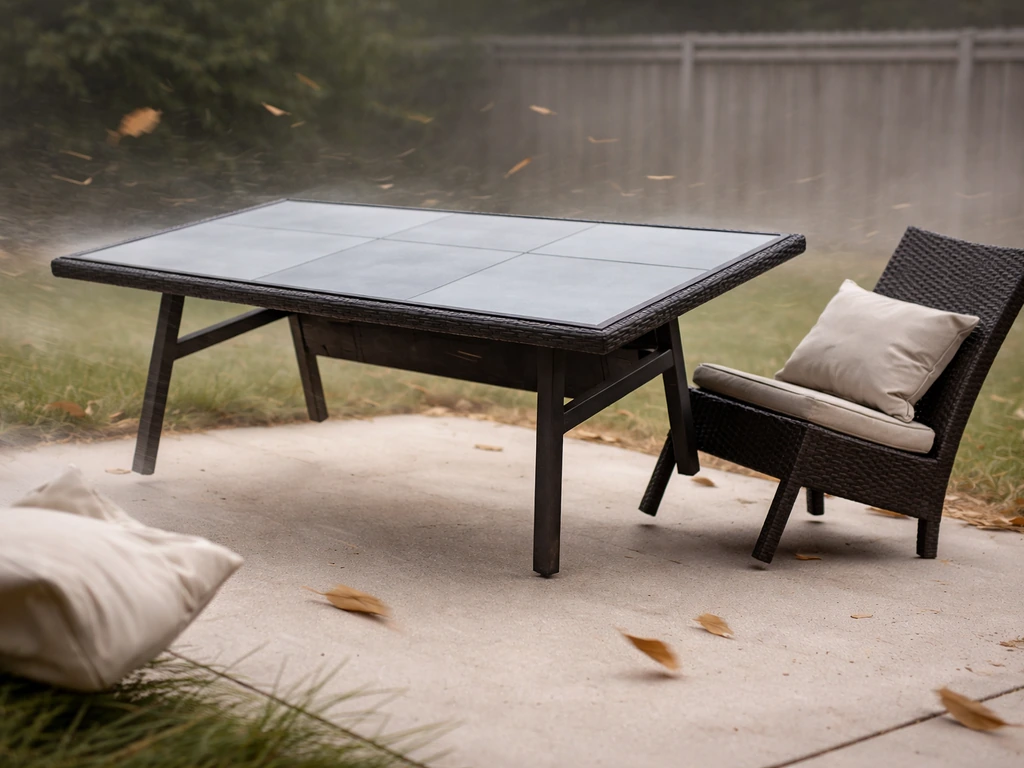
Most patio furniture isn't designed with wind as the primary threat. It's designed to look good in a showroom and hold up under normal use. Wind exposes every weak point: a narrow base tips easily, a solid panel back acts like a sail, cushions that aren't tied down become projectiles, and lightweight frames slide or tumble even when they're stacked or folded.
The 'sail effect' is the core problem. Furniture with enclosed backs, solid table surfaces, or large flat panels catches wind like a kite. Even a closed patio umbrella can catch enough air to go airborne. Researchers and safety engineers have documented this across the EN 581 outdoor furniture standard series, which includes explicit wind resistance testing to assess whether a piece can hold its position under sustained gusts without toppling. Most budget furniture never gets anywhere near that testing. Even heavy wrought iron and steel pieces can tip or slide in strong enough wind if the geometry is wrong or the base footprint is too small.
Lightweight chairs and side tables are the most predictable failures. They're the first things to move in a gust and the most likely to become windborne. Cushioned lounge chairs are also a real risk because the cushion adds both surface area and weight distribution problems. If you've had furniture flip before, the issue almost certainly came down to one of these: too light, too much surface area catching wind, or both.
Wind-stability checklist before you buy
Before committing to any piece, run through these four factors. They matter more than color, brand, or cushion thickness.
- Weight: Heavier is always more stable. Cast aluminum dining chairs should weigh at least 15–20 lbs each. Wrought iron pieces run heavier, which is a genuine advantage in windy spots. If a chair feels easy to lift with one hand, skip it.
- Base footprint: Wide, splayed legs or a broad base keeps the center of gravity low and makes tipping much harder. Look for chairs and tables where the legs splay outward rather than drop straight down. A narrow base is a wind vulnerability.
- Frame design: Solid welded frames beat bolted or collapsible frames in wind. Riveted or pinned joints can loosen over time and create wobble, which gets worse in gusty conditions. Tubular aluminum or solid cast aluminum frames with welded joints are the standard to look for.
- Surface design: Slatted tabletops, mesh seat backs, and open weave designs let air pass through instead of catching it. A solid teak table or a glass-topped table acts like a giant sail. If you want a solid surface, go with a perforated metal top or a slatted wood design that breaks up the wind load.
Best materials for windy areas
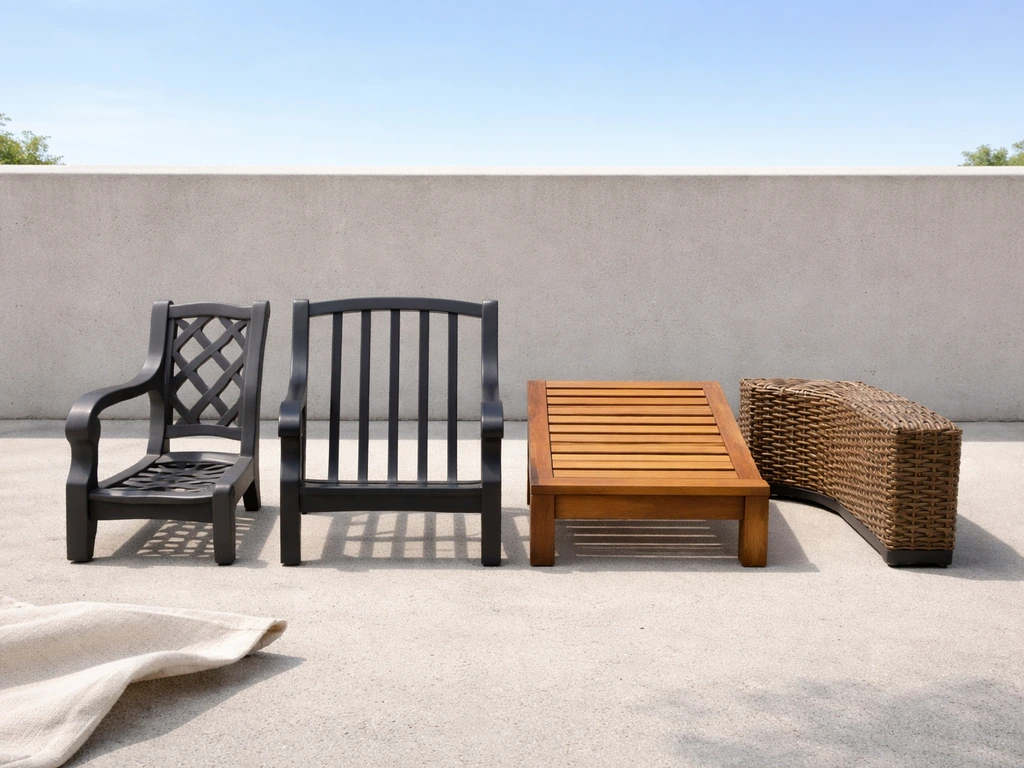
Not all outdoor furniture materials behave the same way in wind. Here's an honest comparison across the four main categories, including where each one wins and where it falls short in high-wind climates.
| Material | Wind Stability | Weight | Corrosion Resistance | Maintenance Level | Best For |
|---|---|---|---|---|---|
| Cast Aluminum | Excellent | Heavy enough, lighter than iron | Excellent (powder coated) | Low | Coastal and year-round windy areas |
| Wrought Iron | Excellent | Very heavy | Moderate (needs upkeep) | Moderate | Sheltered windy spaces, not salt air |
| Teak / Hardwood | Good | Heavy | Good (with oiling) | Moderate to high | Exposed areas where aesthetics matter |
| All-Weather Wicker (Resin) | Poor to Fair | Lightweight | Good | Low | Low-wind or sheltered patios only |
| Powder-Coated Steel | Good | Heavy | Fair (can rust if chipped) | Moderate | Budget-friendly wind-exposed areas |
| HDPE / Composite | Fair | Moderate | Excellent | Very low | Humid or salt-air climates |
Cast aluminum: the practical winner
Powder-coated cast aluminum is the most practical choice for most windy patios. It's heavy enough to resist moderate gusts without being impossible to move when you want to. The powder coat finish protects against corrosion, which matters if you're also dealing with salt air or coastal humidity. Welded cast aluminum frames don't have loose joints to rattle apart, and you can find chairs, dining sets, and deep-seating pieces in this material with slatted or mesh designs that reduce wind catch. This is the material I'd recommend first to most people.
Wrought iron: stable but demanding
Wrought iron is heavier than cast aluminum and genuinely hard to tip, but it rusts if you don't maintain it. Chip the finish and moisture gets in fast, especially in humid or coastal climates. If you live somewhere dry and windy (think high desert or elevated plains), wrought iron can work beautifully and last decades. If you're near the ocean, the rust risk makes it a poor trade-off compared to aluminum.
Teak and hardwood: heavy but watch the surface
Solid teak chairs and benches are heavy and naturally resistant to moisture, but the solid surfaces create more wind resistance than slatted designs. A thick teak bench is hard to tip. A teak dining table with a solid top is basically a sail. If you're going with wood in a windy area, choose slatted designs and make sure table frames are wide-based and heavy. Teak requires oiling once or twice a year to prevent drying and cracking, which is more upkeep than aluminum but still manageable.
Resin wicker: honest about its limits
All-weather resin wicker looks great and handles rain without rotting, but it's lightweight and the woven panels catch wind. A wicker sectional can shift, scatter, or tip in a strong gust. If your patio is fairly sheltered and you just get occasional gusty days, wicker can work, especially in heavier pieces like deep-seating sofas where the frame weight helps. But if you're in a consistently windy location, wicker is the wrong material. Save it for a protected porch or covered lanai.
HDPE composite: low maintenance, moderate stability
HDPE (high-density polyethylene) lumber, the material used in Adirondack chairs and some modern composite furniture, is genuinely maintenance-free and doesn't rust, rot, or fade badly. It's moderately heavy but not as heavy as iron or cast aluminum. In a very windy yard, a solid HDPE Adirondack chair can be a surprisingly stable choice because its low center of gravity and reclining angle work in its favor. It's not the most versatile option across furniture types, but for lounge-style seating it deserves serious consideration.
Furniture types that hold up best in wind
Material matters, but so does the category of furniture. Some styles are inherently more stable than others regardless of what they're made of.
Dining chairs and armchairs
Look for chairs with four wide-splayed legs, a low seat height, and an open or slatted back. High-backed chairs with solid back panels are far more likely to catch wind and tip than low-backed or slatted versions. Stackable aluminum dining chairs are a smart buy because you can stack and store them quickly when a storm rolls in, but for daily stability the wide base matters most.
Dining tables
A slatted or perforated metal top is the most wind-resistant tabletop option. Glass tops are the worst: they can catch wind, lift, and shatter. If you love a solid-look table, go with a slatted teak top or a perforated aluminum top rather than glass or solid composite panels. Pedestal-base tables are more tippy than four-legged tables with a wide stance, so avoid them in exposed areas.
Sofas and sectionals
Deep-seating sofas and sectionals have more mass than individual chairs, which helps, but the cushions become a problem in wind. Large cushions with no tie system will blow off instantly. Sectionals that connect to each other are better than loose pieces that can scatter independently. For the frame, cast aluminum or powder-coated steel with connected sectional clips is the most stable setup.
Lounge chairs and chaises
These are genuinely tricky in wind because they're lightweight by design and have a large surface area. Heavy cast aluminum chaises exist and are worth the investment if you use them daily. Otherwise, this is the furniture category most worth storing or tucking indoors when winds pick up.
Umbrellas
This needs to be said plainly: market umbrellas are wind hazards. Even a closed umbrella catches enough air to become dangerous in a real storm. If you want shade in a windy area, a cantilever umbrella with a heavy weighted base and a vented canopy is meaningfully safer than a standard center-pole umbrella. But the base design is everything. An under-weighted base will fail regardless of umbrella quality. When wind events are predicted, the only safe move is to close and store the umbrella. Wind damage is explicitly excluded from most umbrella warranties, and with good reason.
Cushions, covers, and accessories that survive gusts
Cushions are often the first casualty in a windy area. Loose cushions left on chairs will be across the yard (or the neighbor's yard) after any real gust. The fix is straightforward: buy furniture with built-in cushion tie systems, or buy aftermarket cushions that include tie straps.
Look specifically for cushions with fabric ties or hook-and-loop strap systems that attach to chair legs, armrests, or seat frames. Ties at the back and bottom of a cushion keep it from lifting off the back and sliding forward off the seat. For chaise lounges, wraparound straps that go under the frame are more secure than ties that just loop around a leg. If your current cushions don't have ties, you can add clip-on tie systems, but built-in ties sewn into the cushion itself are more reliable.
Furniture covers are a separate issue. A cover that fits loosely will catch wind like a parachute and can actually damage the furniture underneath by pulling and shifting on the frame. Even a well-fitted cover will shift in sustained wind unless it includes anti-wind strap or tie-down mechanisms. Look for covers with drawstring hems, elastic bottoms, or dedicated tie-down straps that anchor under the furniture legs. Covers without these systems are fine for light rain and sun but genuinely unreliable in wind.
A few other accessories worth flagging: furniture weights and sandbag anchors can be added to lightweight pieces to keep them in place without drilling into a deck. These work well for folding tables and side tables that you need to be moveable but want to secure on gusty days. Furniture glides and rubber feet help prevent sliding on hard surfaces like concrete or pavers, and they're cheap enough to add to anything.
Anchoring, placement, and windbreak strategies
Even the heaviest, most well-designed furniture benefits from smart placement. Where you put furniture on a windy patio matters almost as much as what you buy.
Placement fundamentals
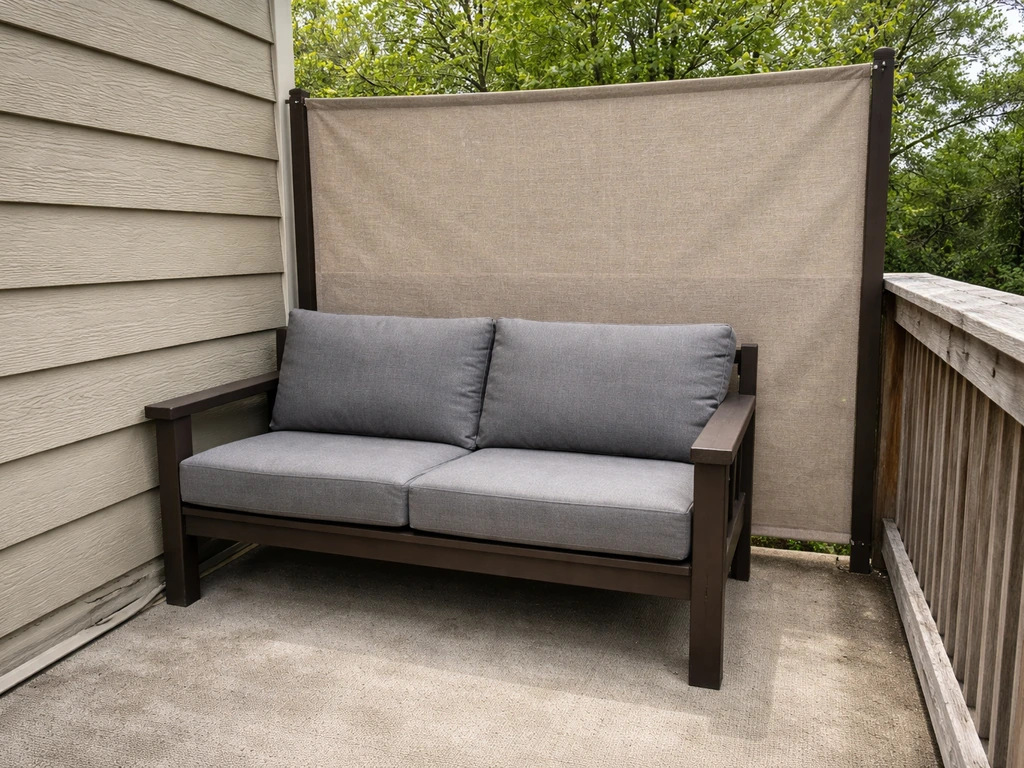
Push heavy furniture against walls, railings, or the house itself. Corner placement is most stable because it blocks wind from two directions. Avoid placing furniture in the middle of an open deck where it's exposed from every angle. Lower seating areas and ground-level patios are naturally more protected than elevated decks, which are essentially in the wind stream.
Physical anchoring options
- Deck anchor straps: Metal strap anchors that bolt into the deck surface and connect to furniture legs. Best for heavy pieces you don't move often.
- Sandbag weights: Reusable sandbags that clip or strap to chair and table legs. Good for lightweight pieces on concrete or pavers where you can't drill.
- Rubber non-slip feet: Adhesive or screw-on rubber feet that grip hard surfaces and reduce sliding by dramatically increasing friction. Cheap and effective for everyday gusts.
- Furniture anchor cables: Stainless steel cable systems that tie furniture to a fixed point like a post or railing. More heavy-duty and better for serious wind events.
Using windbreaks strategically
Windbreaks like lattice screens, planters, pergolas with shade sails, and privacy walls can meaningfully reduce wind speed at ground level on your patio. The key is to create a break without completely blocking airflow, which can actually create turbulence on the other side of a solid barrier. Slatted screens, open-weave privacy panels, or staggered tall planters are more effective at calming wind than a solid wall, which just redirects it. Evergreen hedges and dense shrubs work well as natural windbreaks and can reduce local wind speed by 30–50% within a distance of about five times the hedge height. That's a meaningful difference if you're positioning seating in that protected zone.
Large planters also pull double duty: they're heavy enough to anchor themselves and can be positioned to shield furniture from the prevailing wind direction. Fill them with heavy soil or add weight to the base if you need them to stay put. Just don't block emergency egress or sight lines in a way that creates a safety problem.
Maintenance and longevity in windy climates
Wind accelerates wear in a few specific ways: it carries abrasive particles that scratch finishes, it flexes joints and fasteners repeatedly, and it drives moisture into cracks and gaps faster than still-air exposure does. A good maintenance routine addresses all three.
Twice-yearly cleaning and inspection
Clean and wax powder-coated aluminum and steel frames twice a year, once before summer and once before winter. Use a mild soap and water for cleaning, then a paste wax or UV-protective spray to seal the finish. Inspect every weld, joint, and fastener at the same time. In windy areas, fasteners loosen faster than in sheltered spots, and a loose joint that gets ignored will become a structural failure. Tighten anything that moves. If you see bare metal showing through a powder coat chip, address it quickly with touch-up paint before corrosion starts. Rust-Oleum makes specialty outdoor furniture touch-up products that dry to touch in 2 to 4 hours, which is fast enough to do on a weekend morning.
Seasonal storage and winter prep
If you get freezing winters, drain any hollow aluminum or steel tubing before temperatures drop. Water trapped in hollow sections expands when it freezes and can crack or deform the frame from the inside. Tilt chairs and tables to drain them, or store them upside down. Store cushions indoors over winter, not in a deck box on the patio, where moisture and cold will degrade them faster. If you're leaving furniture outside year-round in cold climates, breathable furniture covers are better than non-breathable ones because they allow moisture to escape rather than trap it against the frame.
Wind event protocol
When serious wind is forecast, don't assume your furniture will be fine. Move lightweight pieces inside or into a garage. Stack and store chairs. Close and store umbrellas completely. Even heavy pieces can slide or tip in a real storm. Bring cushions inside. If you can't move heavy pieces, lay them flat on the deck rather than leaving them upright, and use anchor straps if you have them. This isn't overcautious. Windborne furniture causes property damage and genuine safety risks.
Quick buying checklist and best options by priority
Use this as your decision framework when comparing specific pieces. The first two columns matter most for windy areas specifically.
| Priority | What to Prioritize | Best Material Choice | What to Avoid |
|---|---|---|---|
| Most stable | Heavy frame, wide base, slatted surfaces | Cast aluminum or wrought iron | Lightweight wicker, folding aluminum, glass tops |
| Best durability | Welded joints, powder coat, marine-grade finish | Powder-coated cast aluminum | Painted steel without quality finish, natural rattan |
| Easiest maintenance | Rust-proof, fade-resistant, wipe-clean | HDPE composite or cast aluminum | Wrought iron, raw teak without sealing |
| Best value | Heavy enough, good joinery, reasonable cost | Powder-coated steel or entry cast aluminum | Budget wicker, ultra-cheap tubular aluminum |
Before you buy anything, run through this short checklist: If you want patio furniture no assembly required, choose sets that still have a wide base and secure connections so they stay put in gusts.
- Does the piece weigh enough that you can't tip it easily with one hand?
- Is the base wide and splayed, not narrow and vertical?
- Is the back slatted or open rather than solid?
- Are cushions included with tie straps, or can you buy them with ties?
- Is the frame welded rather than bolted or riveted at key stress points?
- Does the tabletop have slats, perforations, or mesh rather than a solid flat surface?
- If there's an umbrella, does the base weigh at least 50 lbs and does the canopy have vents?
- Do you have a plan for anchoring or storing pieces when real wind events are forecast?
If your answer to most of those is yes, you've got a solid setup for a windy patio. The same principles that apply here also overlap with choosing genuinely weatherproof furniture for year-round outdoor use, and if you're planning to leave pieces out through winter, the durability and material choices get even more important. The good news is the best furniture for wind is also typically the best furniture for harsh weather overall: heavy, well-finished, with minimal parts that can loosen, break, or blow away. If you want the best all weather patio furniture, use the same priorities and choose pieces built to stay put in strong gusts best furniture for wind.
FAQ
How can I tell if a furniture piece has a “wide enough” base for windy conditions?
Check the footprint from a straight-on view, then look for four legs (or a frame that contacts the ground in multiple points) rather than narrow rails. If the base feels “tall and narrow” or tips when you gently push it at an angle, it will likely fail in gusts. For dining chairs, wide splayed legs and a low seat height are a stronger signal than styling features.
Are heavy patio tables safe in wind if they don’t have glass tops?
They’re safer, but not automatically. A table can still act like a sail if it has a large flat tabletop, a solid skirt, or a pedestal base. Prefer slatted/perforated tops and four-leg designs with a wide stance, and avoid solid-top pedestals in exposed locations even if the table is heavy.
Can I leave cushions outside in wind if they’re in a deck box or storage bin?
In many climates, a deck box reduces wind scatter but does not make cushions “wind-proof.” Loose lids and gaps can let gusts get under the bin or shift it, and trapped moisture can damage fabric over time. If wind is predicted, bring cushions in. If you store them outside long term, use breathable storage and keep cushions fully secured.
Do furniture covers actually help in windy areas?
Only if they’re tightly fitted and anchored. Loose covers can flap like a parachute and either pull on the frame or loosen components. Look for covers with elastic hems and dedicated anti-wind tie-downs (straps that anchor under legs). If your cover doesn’t have tie-downs, expect limited protection during real wind events.
What’s the safest way to secure lightweight folding chairs during a storm?
Use sandbags or purpose-made furniture weights plus tie-down straps if possible. If you can’t drill anchors, weights and straps that loop around stable frame points work better than relying on stacking. Also, don’t leave folded chairs upright where they can catch wind, lay them down when feasible.
Will stacking chairs prevent tipping in windy conditions?
Stacking can help for moderate gusts, but it’s not a guarantee in sustained wind. Stacks can become unstable if the top chairs shift or if there are smooth legs that slide on pavers or concrete. If you stack, do it on a stable surface, keep the stack compact, and secure straps if you have them.
Are slatted or mesh chair backs always better than solid backs in wind?
They usually are because they reduce the sail effect by letting air pass through. However, still verify stability features like leg spread, overall height, and frame weight. If a “slatted” chair has a tall, narrow base, it can still tip even though the back catches less wind.
How should I handle patio umbrellas in wind if I use them daily?
Treat umbrellas as temporary shade, not wind-safe fixtures. Even with an umbrella closed, a poorly weighted base can fail, and wind can push the unit until it tips. For windy areas, use a vented cantilever umbrella only when it’s monitored, but when wind is forecast, close and store it completely.
What’s a good alternative if I don’t want to store furniture every time wind picks up?
Choose inherently stable categories: deep seating sectionals with connected frames, cast aluminum or powder-coated metal pieces with low profiles, and slatted/perforated tabletops. Then add anchoring options that don’t require drilling (weights, sandbags, or clip-on tie systems). Still, for sustained gust events, you should move lighter items indoors.
What maintenance steps matter most after windy weather, not just before summer or winter?
After significant gusts, re-check fasteners and joints first, then inspect powder-coat chips or cracks around welds. Wind flexes frames repeatedly, so loosened hardware can become structural failure over time if ignored. If you see bare metal, address it quickly with touch-up paint to prevent corrosion.
Next Articles
Patio Furniture That Can Be Left Outside in Winter: Guide
Material-by-material guide to keep patio furniture out in winter, plus prep checklist and climate-specific protection ti
Patio Furniture No Assembly Required: Buyer Guide
Buy outdoor patio furniture that arrives assembled. Understand real no-assembly terms, choose materials, set up fast, an
Best All Weather Patio Furniture: What to Buy Today
Best all-weather patio furniture picks by climate and materials, plus real buying tips and maintenance to prevent rust a