
For a salt water pool, your best patio furniture materials are high-quality powder-coated aluminum, solid teak, and all-weather synthetic wicker (HDPE resin). Those three materials handle chloride mist, constant humidity, and the inevitable splash-and-dry cycle better than anything else at realistic price points. If budget allows, pair them with stainless steel hardware rated 316 grade (not 304), quick-dry sling or solution-dyed acrylic cushion fabric, and marine-grade fasteners throughout. That combination will last a decade with basic upkeep. Anything else, bare steel, cheap wrought iron, galvanized components, or untreated wood, starts failing within a season or two near a salt water pool.
Best Patio Furniture for a Salt Water Pool: Guide

Theo Tierney
9 Jun 2026
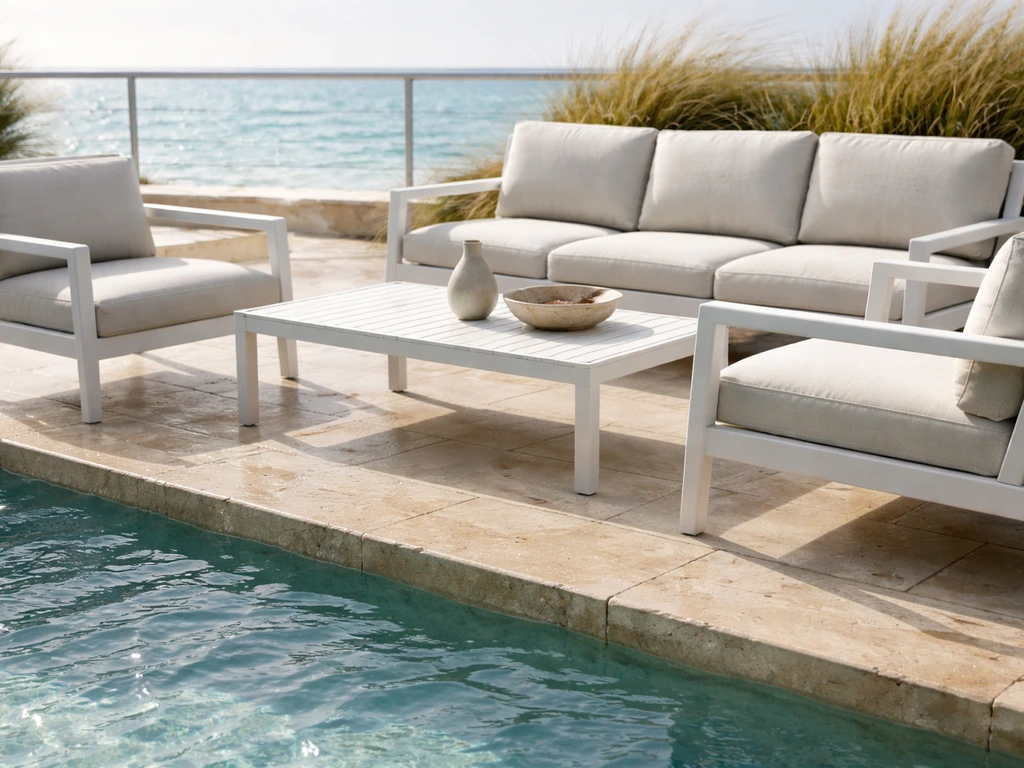
Why salt water pools are harder on furniture than you'd expect
Most people assume a salt water pool is gentler than a chlorine pool. And for swimmers, it often is. But for your patio furniture, a salt water pool is genuinely more corrosive than a standard backyard situation, and it's worth understanding exactly why.
Salt water pools work by running water through an electrolytic cell that converts dissolved sodium chloride into chlorine. So you still have chlorine in the water, and you also have airborne chloride ions misting off the pool surface every time there's splash, wind, or evaporation. Those chloride ions are the enemy. They attack the passive oxide film that protects metals like stainless steel and aluminum.
Once that film breaks down in even one small spot, you get pitting corrosion, tiny, deep pits that spread under the surface and are nearly impossible to reverse. This is especially true for stainless steel: even grade 304 stainless, which gets marketed as corrosion-resistant everywhere, is genuinely susceptible to chloride pitting. The science is clear that halide ions, especially chloride, are the primary driver of pitting in passivated metals.
Add in the humidity that pools create, and you've got a near-constant electrolyte film on every surface around the pool deck. That film is what connects dissimilar metals and accelerates galvanic corrosion, meaning if you have, say, a steel bolt holding an aluminum frame together, the bolt corrodes aggressively. Crevices and joints that trap that moist, salt-laden air are especially vulnerable.
Pool areas near the coast (Florida, Gulf Coast, Southern California) face a double load: pool chloride plus ocean salt air. If that describes your situation, the guidance for salt water pool furniture overlaps heavily with what I'd recommend for general salt air environments. For the best patio furniture for salt air, the same materials win: powder-coated aluminum, teak, and high-density polyethylene (HDPE) synthetic wicker.
The materials that actually hold up
Let's go through the real options, ranked by how well they handle long-term chloride exposure.
Powder-coated aluminum
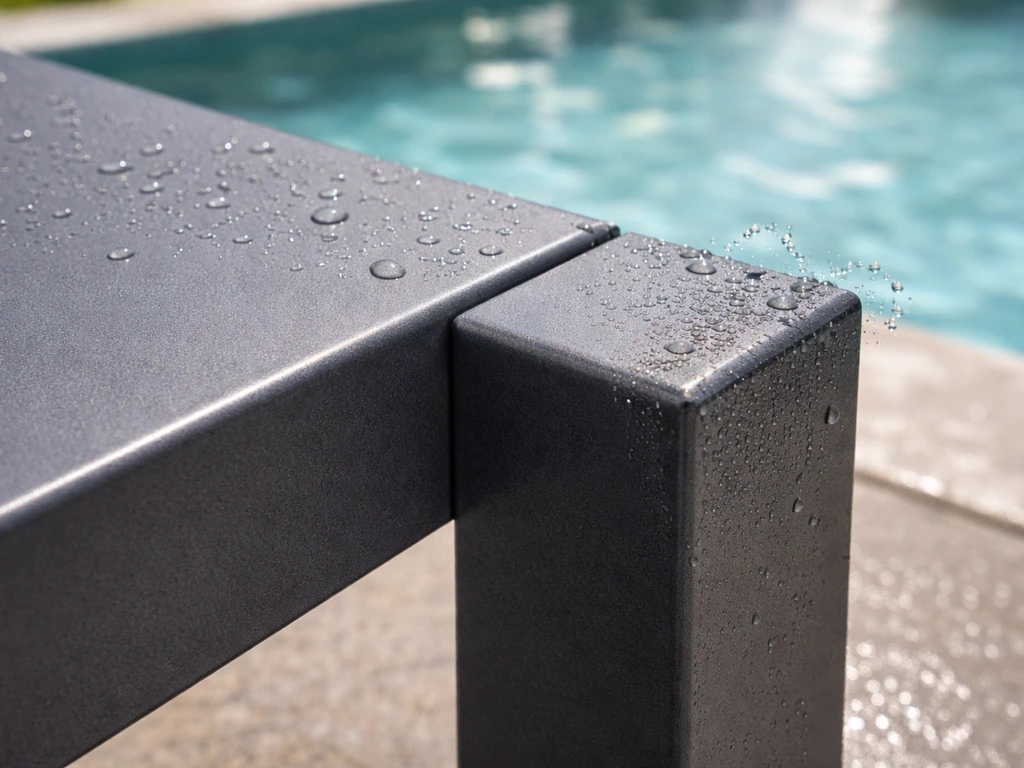
This is my top recommendation for most buyers. Aluminum doesn't rust, and a quality powder-coat finish adds a durable protective layer that resists salt and UV. The key word is quality: a thick, properly cured powder coat should pass ASTM B117 salt-spray testing at 1,000+ hours, some manufacturer-tested finishes exceed 1,900 hours before showing failure. That's the benchmark worth asking about when you're shopping.
Brands like POLYWOOD specifically market their aluminum through multi-step powder-coat processes and back it with a 5-year residential warranty on the finish not peeling. That's a meaningful commitment. For most pool-side applications, properly powder-coated aluminum is the best balance of weight, durability, and price. The main failure mode is chipping, once the powder coat is breached, bare aluminum is exposed and can corrode, so avoid dragging it on rough deck surfaces.
Teak
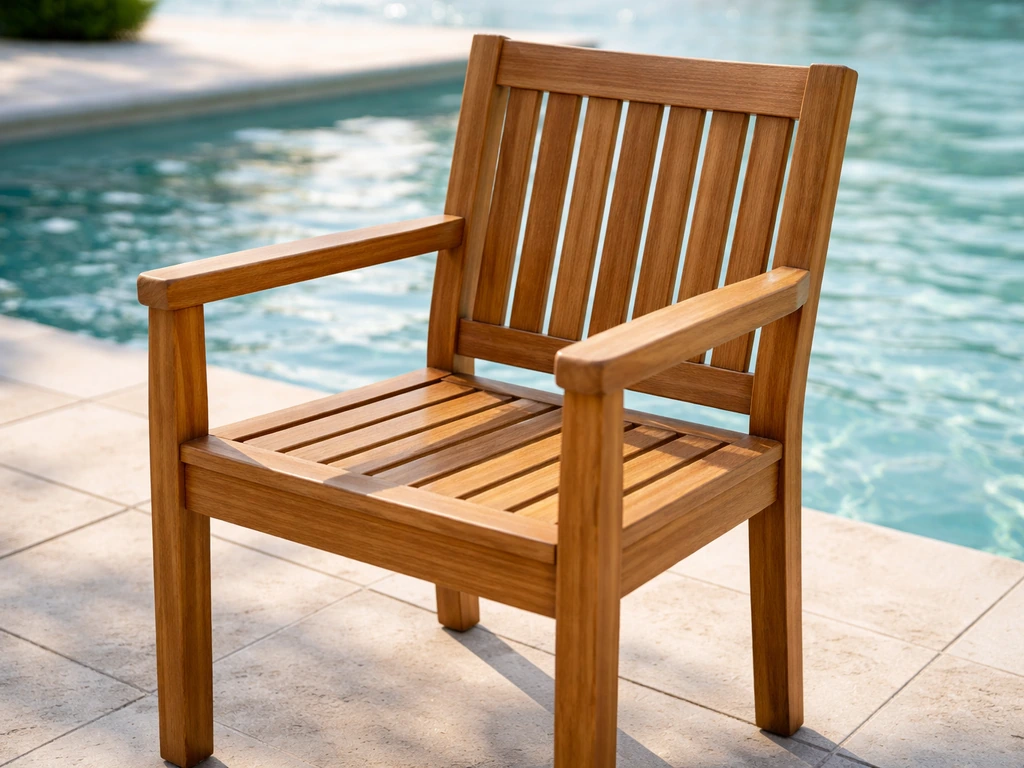
Solid teak is the classic choice for pools and coastal environments, and for good reason. Its natural oils create a built-in moisture barrier, and the wood is genuinely dense enough to resist warping even through constant wet-dry cycles. Teak itself won't mildew, but dirt and organic matter sitting in the grain can, so cleaning matters.
You can leave teak to weather to a silver-gray patina (which looks great to many people), or you can apply teak oil or sealer once or twice a year to maintain the golden color. Either way, a quality teak piece will outlast almost any coated metal if maintained properly. The trade-off: teak is expensive, heavy, and requires more hands-on upkeep than aluminum.
It's worth the investment for a permanent pool deck setup, but overkill for a rental property or a seasonal patio.
Synthetic wicker (HDPE resin)
All-weather wicker made from high-density polyethylene resin is completely non-porous, UV-stabilized, and dyed through the strand, meaning the color isn't a surface coating that fades or peels. It's genuinely mold and mildew resistant. Unlike natural rattan or even cheaper PVC wicker, HDPE resin wicker doesn't crack, split, or absorb salt mist. POLYWOOD's all-weather wicker line, for example, carries a 5-year structural warranty. The main thing to watch here is the frame underneath the wicker: insist on a powder-coated aluminum frame, not steel. A lot of mid-range wicker sets use steel frames to cut costs, and those frames rust through even when the wicker itself is fine.
Stainless steel (316 grade only)
Stainless steel is the one metal I'd consider for pool furniture, but only grade 316, and I'd use it for accents and hardware rather than full frames. Grade 316 contains about 2 to 3 percent molybdenum, which significantly increases resistance to chloride pitting compared to the far more common grade 304.
Grade 304 is what you find on most "stainless" outdoor furniture and grills. Near a salt water pool, 304 will pit. A study of 304L stainless steel in crevice environments also notes that chloride ions can accumulate on stainless surfaces, attack the passive film, and drive localized corrosion such as pitting under chloride-containing exposures [304 stainless is susceptible to chloride pitting](https://www. mdpi.
com/1996-1944/15/9/3055). It may take a year, it may take three, but it will happen. Grade 316, used in marine applications, is the right call. For full furniture frames, 316 stainless is expensive and heavy, I'd reserve it for table legs, umbrella poles, or hardware where strength in a small component matters.
Recycled HDPE (poly lumber)
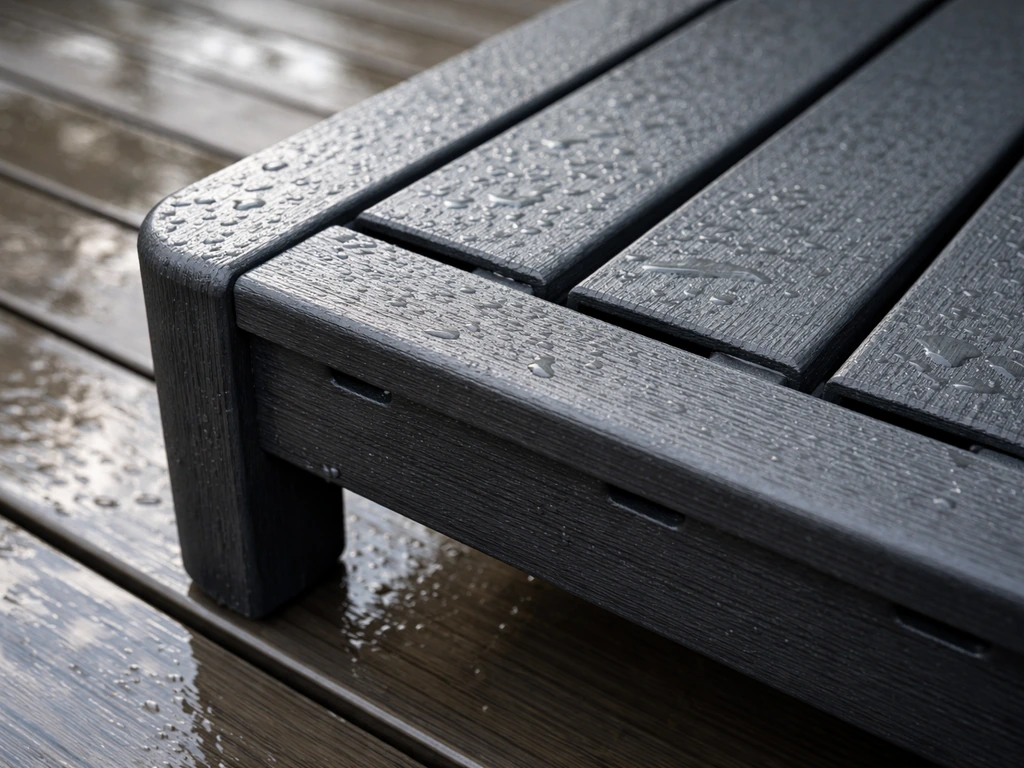
Solid poly lumber made from recycled HDPE plastic is another excellent option that doesn't get enough attention. It looks like painted wood, needs almost zero maintenance, won't rot or rust, and handles salt spray without issue. It's heavier than aluminum, which is actually a plus near a pool since wind gusts are common. POLYWOOD and others build full collections in this material. The downside is aesthetics: it looks like plastic lumber, because it is, and it doesn't suit everyone's design preferences.
Material comparison at a glance
| Material | Salt resistance | Maintenance level | Weight | Typical lifespan near pool | Relative cost |
|---|---|---|---|---|---|
| Powder-coated aluminum | Excellent (with quality coat) | Low | Light | 10–15+ years | Mid |
| Solid teak | Excellent | Medium | Heavy | 15–25+ years | High |
| HDPE synthetic wicker (aluminum frame) | Excellent | Low | Medium | 10–15 years | Mid to high |
| 316 stainless steel | Very good | Low-medium | Heavy | 10–20 years | High |
| Recycled HDPE (poly lumber) | Excellent | Very low | Heavy | 15–20+ years | Mid to high |
| 304 stainless steel | Fair (pits over time) | Medium | Heavy | 3–7 years | Mid |
| Painted/coated steel | Poor | High | Heavy | 1–3 years | Low to mid |
| Natural rattan/wicker | Poor | High | Light | 1–2 seasons | Low |
Best furniture types for a salt water pool setup
Lounge chairs
Chaise loungers are the most important piece to get right around any pool, because they spend the most time directly in splash range. Look for sling-style loungers with a powder-coated aluminum frame and Textilene or Phifertex sling fabric. Sling construction eliminates cushions entirely from the seat and back, which removes one of the biggest maintenance headaches. Textilene is a polyester-core, acrylic-wrapped woven fabric that's low maintenance and handles chloride exposure well.
Phifertex is similarly durable and is specifically mold and mildew resistant, it can even be cleaned with a diluted bleach solution without damage. If you prefer a cushioned lounger, put it at least 6 to 8 feet from the pool edge and use only quick-dry foam cushions with removable, machine-washable covers.
Dining sets
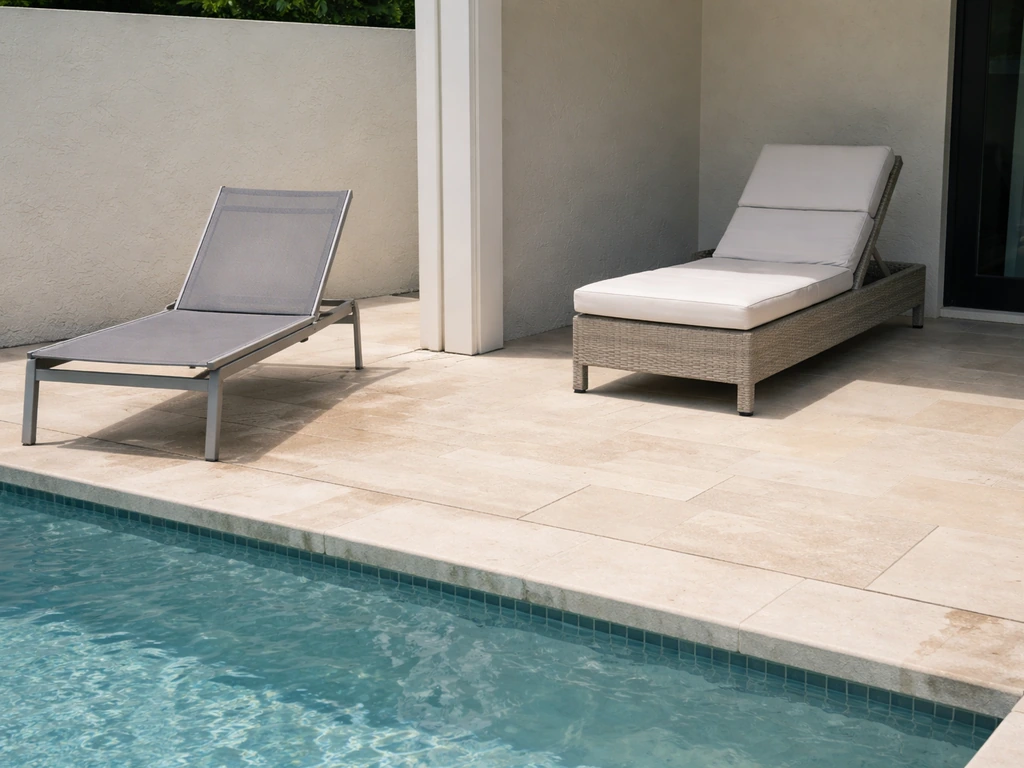
For poolside dining, a powder-coated aluminum table with a tempered glass or aluminum slat top is ideal. Skip wood table tops in the splash zone, even teak tops exposed to repeated salt water splashing will need more frequent oiling. Pair with sling dining chairs or fully aluminum chairs for closest proximity to the pool. If you want cushioned dining chairs, use them at a covered outdoor dining area set back from the water. Round tables in the 36 to 42 inch range with a center umbrella hole work best for a pool deck, since they leave more walkable deck space.
Sectionals and conversation sets
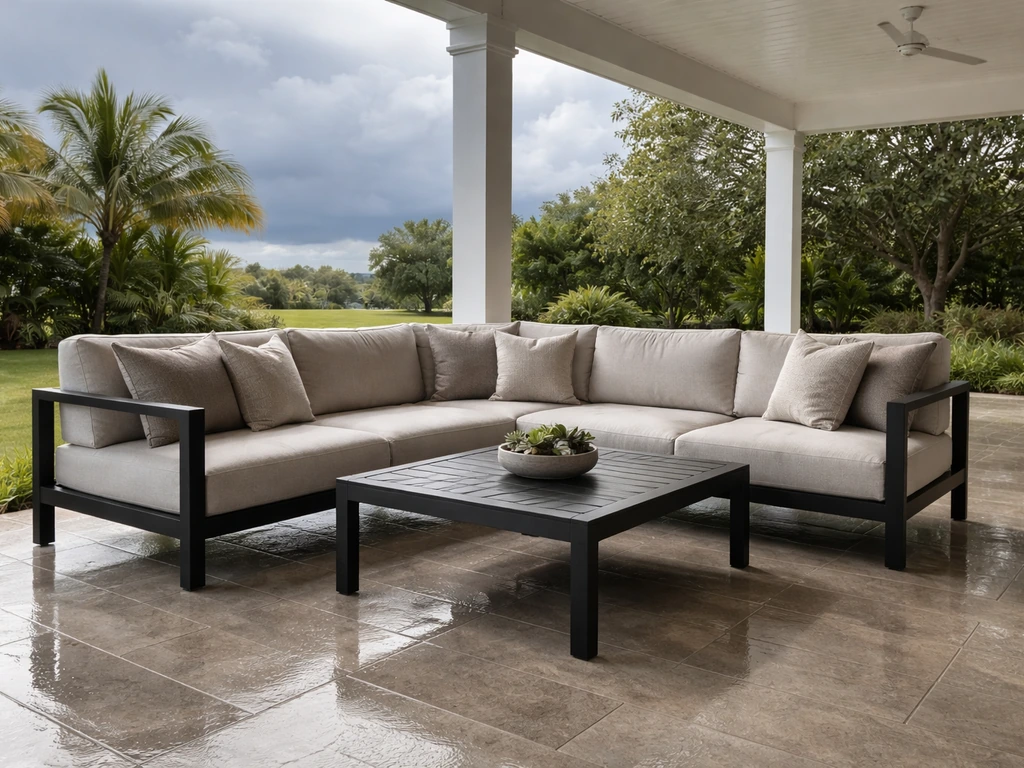
Sectionals make sense for covered pool patios or shaded areas 10 or more feet from the water. For these, synthetic wicker over a powder-coated aluminum frame is the go-to. The cushions matter enormously here: use quick-dry reticulated open-cell foam (sold under names like Dry Fast or Qik-Dri) that drains water almost instantly and resists mold by design. Solution-dyed acrylic fabric covers (Sunbrella is the best-known brand) are the right choice for covers on these cushions, they resist fading and can handle occasional bleach cleaning. Avoid sectionals with solid foam cushions and polyester covers near a pool; they'll be moldy within a summer.
Umbrellas
A market umbrella is essential near a pool for UV protection. Look for an aluminum or fiberglass pole (not steel), a powder-coated or anodized finish on any metal parts, and a solution-dyed acrylic canopy. Avoid umbrellas with steel center poles, they rust at the base where they contact moist deck surfaces. Fiberglass-ribbed umbrellas are especially good in windy pool environments because fiberglass flexes rather than snapping. Store umbrellas closed or fully retracted during high winds, and tilt them down when not in use to reduce UV stress on the canopy fabric.
Hardware, finishes, and cushions: what actually matters
Powder coating quality
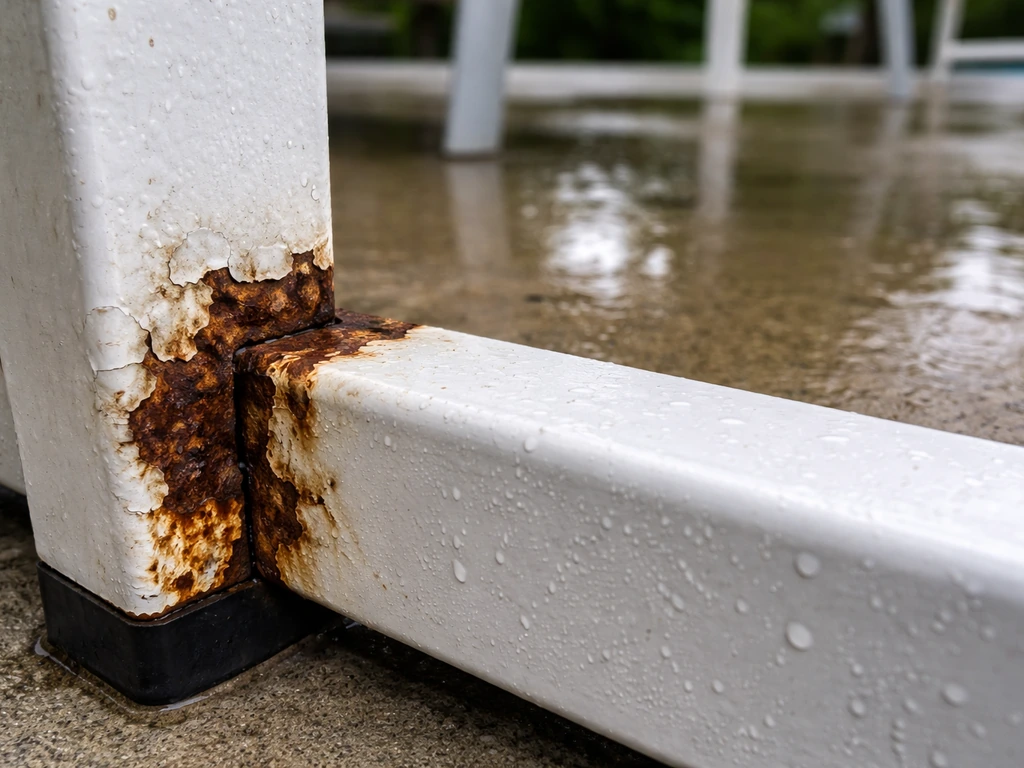
Not all powder coating is equal. A quality pool-area powder coat should be applied over a properly prepped aluminum surface, be at least 2 to 3 mils thick, and be cured at the right temperature to achieve full hardness. The ASTM B117 salt-spray standard is the industry test: passing 1,000+ hours is a reasonable baseline for a pool environment. When manufacturers specify salt spray hours, take that seriously. When they don't, that's a yellow flag. Also inspect the finish yourself before buying: run your hand over joints and welds. Rough, lumpy, or thin-looking coats around weld points are where failures start.
Fasteners and hardware
This is where budget furniture falls apart, literally. Cheap sets use zinc-plated or galvanized steel screws and bolts paired with aluminum frames. That pairing creates a galvanic couple in the presence of salt moisture, and the steel fastener corrodes fast, staining the aluminum and eventually failing structurally. Insist on 316 stainless steel fasteners, nylon-tipped set screws, or fully aluminum hardware. It's a detail manufacturers rarely advertise, so if you're buying in person, look at the screws. If they're magnetic, they're steel.
Cushion foam and fabric
Standard patio cushion foam is closed-cell or low-density foam that holds water like a sponge. Near a pool, it will be wet constantly, and mold will grow inside where you can't clean it. The right foam is open-cell reticulated foam, specifically marketed as Dry Fast or Qik-Dri type. It's an extremely open lattice structure that drains water almost immediately and allows airflow that prevents mold. For fabric, solution-dyed acrylic (Sunbrella and equivalents) is worth the premium: the color goes through the fiber, not just on the surface, so it doesn't fade in UV and can be cleaned with diluted bleach. Look for removable, machine-washable covers so you can actually launder them, not just hose them off.
Mesh and sling alternatives
For anything in the direct splash zone, sling or mesh seating eliminates the cushion problem entirely. Textilene sling fabric (polyester fibers wrapped in acrylic) and Phifertex mesh are both durable, quick-drying, and non-absorbent. They're easy to clean with soap and warm water, and they don't harbor mold the way foam does. The trade-off is comfort, for long lounging sessions, a cushioned piece feels better. The practical answer: use sling chairs and loungers at the pool edge, cushioned seating in a shaded area set back from the water.
Top picks by material and budget
I'm not going to list specific SKUs here because product lines change, but here's how to think about the tiers and what to prioritize at each one.
| Priority | Best material choice | Budget range | What to look for |
|---|---|---|---|
| Maximum lifespan | Solid teak + 316 SS hardware | $$$-$$$$ | FSC-certified teak, marine-grade fasteners, no filler wood |
| Best value for most buyers | Powder-coated aluminum + sling fabric | $$-$$$ | ASTM B117 rating, aluminum fasteners, Textilene or Phifertex sling |
| Best for design flexibility | HDPE synthetic wicker, aluminum frame | $$-$$$ | Aluminum (not steel) subframe, HDPE resin weave, quick-dry cushions |
| Lowest maintenance | Recycled HDPE (poly lumber) | $$-$$$ | All-HDPE construction, stainless or aluminum hardware, UV-stabilized color |
| Budget-friendly starter | Powder-coated aluminum sling chairs | $-$$ | Avoid steel frames, inspect welds, buy from brands with 3-year+ warranties |
Distance from the pool matters too
Think about furniture placement in zones. Within 4 to 6 feet of the pool edge (the splash zone): sling or mesh-only seating, aluminum or teak, no cushions or only quick-dry foam with waterproof covers you can remove instantly. From 6 to 12 feet out: cushioned chairs and loungers are fine but use quick-dry foam and solution-dyed acrylic fabric, and bring cushions in or cover them after use.
Beyond 12 feet, especially under a pergola or covered patio: most quality outdoor furniture will perform well, though chloride mist still settles on everything in the pool area, so material quality still matters. Coastal homeowners, especially in Florida or along the Gulf or Pacific, face an additional layer of salt air on top of pool mist, and should apply the strictest standard (316 hardware, powder-coated aluminum or teak) across the entire outdoor area.
If you're specifically shopping for the best patio furniture for florida, use the same rule set: prioritize powder-coated aluminum, teak, or HDPE wicker, and upgrade to 316 hardware where applicable.
Placement, maintenance, and your cleaning routine
Positioning your furniture
Beyond the distance zones above, think about airflow and drainage. Furniture legs that sit in puddles or against wet deck surfaces accelerate corrosion at contact points. Use rubber or plastic foot caps on aluminum legs if they're bare at the bottom. Position pieces so water can drain away from joints, not pool in them. Avoid pushing furniture directly against pool walls or fencing where it traps moisture on both sides. If you have prevailing winds that blow pool mist toward a specific area, that area gets the harshest exposure, choose your toughest materials there.
Your regular cleaning routine
Salt buildup is cumulative and invisible until it causes visible damage, so regular rinsing matters more than occasional deep cleaning. Here's a routine that works:
- Weekly: Rinse all aluminum and metal furniture with fresh water (a garden hose works fine) to remove salt mist and chloride deposits before they concentrate. POLYWOOD specifically recommends rinsing then towel-drying immediately to protect powder-coated surfaces.
- Monthly: Wash frames with warm water and mild dish soap, then rinse thoroughly with clean water. For powder-coated aluminum, the DecksDirect/Feeney care guidance specifically calls out salt chloride exposure as a reason to maintain this rinse routine.
- For teak: Rinse with clean water and wipe away excess moisture after any salt exposure. For stubborn salt or dirt marks, use a gentle teak cleaner and test on a hidden spot first. Don't use pressure washers — they open the wood grain and invite moisture.
- For cushions: Remove covers and machine wash on gentle cycle every 4 to 6 weeks during pool season. Air-dry the covers — never put them in the dryer. Allow cushion foam to fully dry before replacing covers. If cushions smell musty, the foam has moisture in it — prop them on edge in direct sunlight for several hours.
- Teak-specific: Apply teak oil or sealer once or twice per season if you want to maintain color. If you prefer the natural gray patina, skip oil but do a light sand with fine-grit paper (220 or finer) if the surface becomes rough or splintery. Remember that teak itself resists mildew, but dirt sitting in the grain can mildew — keep it clean.
What to avoid near a salt water pool
This section is as important as the buying recommendations, because a lot of attractive, marketed-as-outdoor furniture will fail fast near a pool.
- Regular steel frames: Even painted or powder-coated steel will corrode near a salt water pool. The coating chips, water and chloride get underneath, and rust spreads rapidly. Wrought iron is especially bad — it's heavy, it chips, and it rusts aggressively in any chloride environment.
- Grade 304 stainless steel for full frames: It's better than plain steel, but chloride pitting is a documented, predictable failure mode for 304 in pool environments. Use 316 for any stainless components.
- Mixed-metal construction with unlike metals: Any combination of dissimilar metals (steel bolts in aluminum frames, brass fittings on iron bases) creates galvanic corrosion risk. Salt water acts as the electrolyte that completes the circuit.
- Standard closed-cell foam cushions: They hold water indefinitely, and mold grows inside where you can't clean it. No amount of Scotchgard or fabric treatment changes what's happening inside the foam.
- Polyester cushion fabric marketed as 'outdoor': Polyester fades fast in UV and is not mold-resistant in a moist pool environment. Even if the label says outdoor, it's not rated for pool-side conditions. Look specifically for solution-dyed acrylic.
- Natural rattan or wicker: Any natural fiber breaks down quickly in pool humidity and salt mist. It's a waste of money near a pool regardless of how it's sealed at purchase.
- Cheap galvanized hardware: Galvanization helps, but in a chloride environment it's not enough. The zinc coating sacrifices itself to protect the steel beneath — which is actually its design — but in a pool environment, it depletes faster than expected and the steel underneath follows.
- Untreated or poorly finished wood other than teak: Cedar, pine, and pressure-treated lumber all absorb moisture and salt and will warp, split, and rot near a pool faster than their inland performance would suggest. Even eucalyptus, which is often positioned as a teak alternative, requires more diligent sealing near a pool.
Lifespan, warranties, covers, and other real questions
How long should pool furniture realistically last?
With the right materials and basic maintenance, powder-coated aluminum furniture should last 10 to 15 years near a pool. Quality teak, properly maintained, can go 20 to 25 years. Synthetic wicker on an aluminum frame should give you 10 to 15 years. Cushions are the weak link in every case, even with quick-dry foam and quality fabric, plan on replacing cushion covers every 4 to 6 years and the foam inserts every 6 to 8 years in a pool environment. That's just the reality of fabric and foam in constant UV and moisture.
What do furniture warranties actually cover near a pool?
Read the fine print carefully, because pool environments are often carved out of warranty coverage. POLYWOOD's warranty, for example, covers welds, joints, and powder-coat peeling for 5 years (residential) and cushion fabric for 1 year against mildew and excessive fading, but it explicitly excludes damage from "corrosive atmospheres" including harmful chemicals and vapors. Salt water pool environments may fall under that exclusion depending on how the damage presents.
This isn't unique to POLYWOOD, most outdoor furniture warranties have similar carve-outs for chemical exposure. The warranty tells you what the manufacturer believes the furniture can handle under normal conditions; near a pool, you're pushing those limits. Buy quality, maintain it properly, and treat the warranty as a sign of build confidence rather than a replacement guarantee.
Do furniture covers actually help near a pool?
Covers are a mixed bag, and I want to be honest about this. A cover protects against UV, bird droppings, and falling debris, all real benefits. But near a pool, the bigger risk is covers trapping moisture against surfaces. If you cover furniture while it's still damp from pool mist or rain, you're essentially creating a warm, humid, sealed environment, exactly the conditions mold needs.
Multiple sources in the outdoor furniture care space warn specifically that covers can trap heat and moisture and turn the space into a mini greenhouse that damages upholstery and warps materials. The guidance from Coverini's instructions is direct: never fold or store a wet cover, as it will develop mildew. The practical approach: use covers, but only when furniture is fully dry, and remove covers on sunny days to let everything air out.
For cushions specifically, it's often better to store them inside or in a deck box than to leave them outside covered.
What about teak covers and mildew?
Teak is interesting here. The wood itself won't mildew, its natural oils prevent that. But dirt and debris sitting on the surface can mildew, and if you cover teak before it's completely clean and dry, you're locking that contamination in. Terra Outdoor Living's care guidance is specific: don't cover teak unless it's completely dry and free of dirt. A quick fresh-water rinse and wipe-down before covering is a good habit for any teak pieces near a pool.
Is salt water pool furniture the same problem as ocean salt air?
There's significant overlap, but they're not identical. Ocean salt air (relevant for beach houses and coastal patios) is a constant, omnidirectional exposure to chloride, it settles on everything all the time, even furniture not near water. Pool salt air is more localized and concentrated around the pool deck, with less overall atmospheric exposure if you're not on the coast. That said, the material and maintenance recommendations are nearly identical.
Using the same corrosion-resistant approach, you can choose the best patio furniture for ocean air by prioritizing powder-coated aluminum, teak, and marine-grade hardware. If you're near the coast and have a salt water pool, treat it as maximum chloride exposure and apply the strictest standards across all outdoor furniture, not just what's nearest the pool.
FAQ
Can I use regular outdoor patio furniture (like wood or standard stainless) near a salt water pool?
Yes, but you still need to limit where cushions and fabric go. Use sling or mesh within about 4 to 6 feet of the pool edge, then if you want cushions closer in, choose quick-dry foam with removable, machine-washable covers and rinse cushions soon after heavy splashing.
Should I upgrade the whole frame to 316 stainless for the best patio furniture for a salt water pool?
Prefer a 316-grade stainless finish or hardware where failure would be visible and structural (table bases, chair joints, umbrella pole attachments). For full furniture frames, powder-coated aluminum or teak is usually a better long-term cost-to-risk tradeoff than betting on 316 for everything.
How can I tell if the fasteners on my patio furniture are truly safe for a salt water pool?
Check the screw and connector type, not the product description. If fasteners are magnetic, they are likely steel. Also look for stainless or aluminum washers at contact points, because salt moisture concentrates at washers and joints.
Is it safe to keep furniture covered year-round near a salt water pool?
Set covers up as a drying tool, not a storage solution. Cover only when the furniture is fully dry, and remove covers on sunny days to vent. If you cannot guarantee dryness, use deck-box storage for cushions and keep frames uncovered.
What rinsing routine is best for removing salt buildup from patio furniture around a salt water pool?
Routine rinsing matters, but do it intelligently. Use fresh water to flush chloride mist off frames, especially joints and welds, then dry with a soft cloth or allow airflow. Avoid abrasive brushes on powder coat, they can wear the coating and create chip points.
Why does expensive powder-coated aluminum still fail early near my pool?
Yes, poor placement can reduce the life of even high-quality materials. Keep furniture from resting against pool walls, planters, or fence panels where wet air is trapped, and ensure legs can drain. Rubber or plastic foot caps help prevent corrosion at the contact surface.
What cushion type holds up best in the splash zone of a salt water pool?
For cushions, the biggest upgrade is drainage. Reticulated open-cell foam drains fast, but you still need removable covers so you can actually launder them. In practice, plan to replace covers on a regular schedule, and keep cushions out of the direct splash zone whenever possible.
Do dissimilar metals matter if my furniture is already aluminum or teak?
Absolutely. Even the right materials can corrode if contact metals create a galvanic pair. Use only compatible hardware (for example, stainless fasteners with aluminum frames), and avoid mixing steel bolts into aluminum or teak assemblies.
How do I verify an all-weather wicker set is truly corrosion-safe for a salt water pool?
Not necessarily. HDPE wicker resists moisture and salt, but the frame underneath is often steel in mid-range products. Make sure the frame is powder-coated aluminum, because rust usually starts at the hidden frame points before the wicker looks damaged.
How far should I place loungers and dining chairs from a salt water pool?
If a piece is used right next to the pool, assume it will be splashed and wet repeatedly, so choose sling/mesh for that area. Use cushioned seating farther back under shade, and use quick-dry foam and solution-dyed acrylic only where you can keep exposure intermittent.
Next Articles
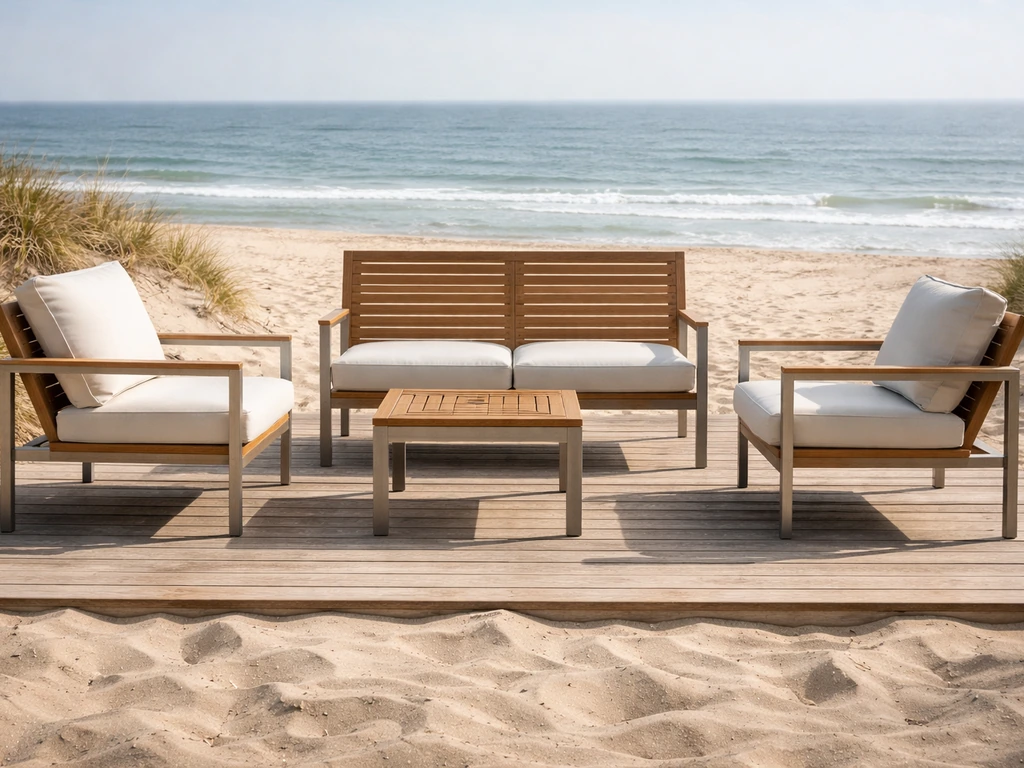
Best Patio Furniture for Beach: What to Buy Today
Beach-ready patio furniture picks with salt-air durability, top material options, buying checklist, and maintenance for
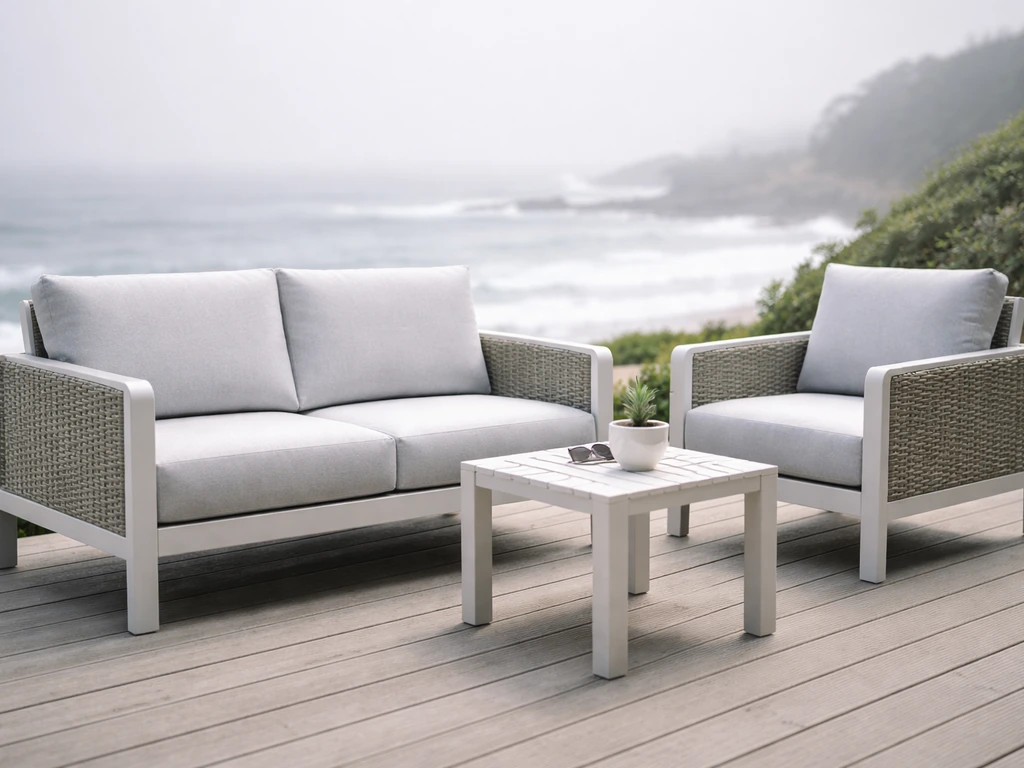
Best Patio Furniture for Salt Air: What Actually Lasts
Material-by-material picks for salt-air patios, with rust-proof metal, treated wood, moisture-ready wicker, and durable
Best Patio Furniture for Florida: Materials That Last
Best patio furniture for Florida: pick durable materials and features for heat, rain, and salt air, with care tips.