
For salt air environments, marine-grade aluminum, 316 stainless steel hardware, high-density polyethylene (HDPE) lumber, and synthetic resin wicker are the most reliable patio furniture materials you can buy. Teak and other dense hardwoods work well too, but they need more maintenance. Powder-coated aluminum frames with stainless fasteners and solution-dyed acrylic cushions are the combination that holds up longest at the coast without demanding constant attention. If you're within about a mile of the ocean, those choices aren't optional extras, they're the baseline.
Best Patio Furniture for Salt Air: What Actually Lasts

Theo Tierney
18 May 2026
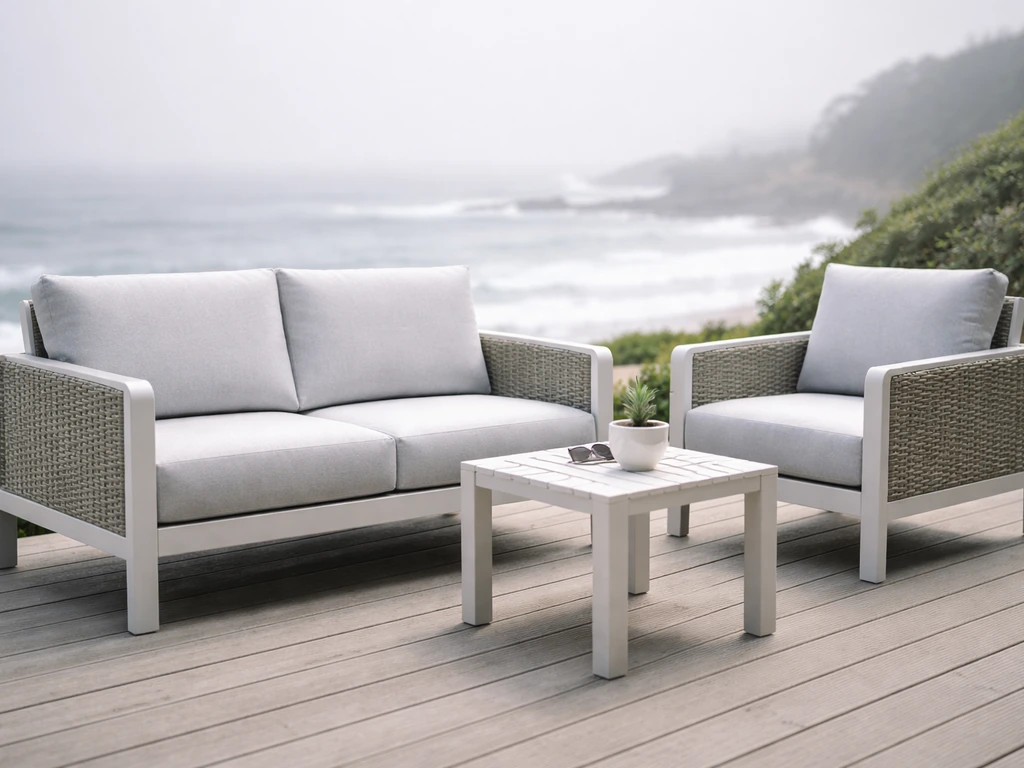
Why salt air tears through patio furniture so fast
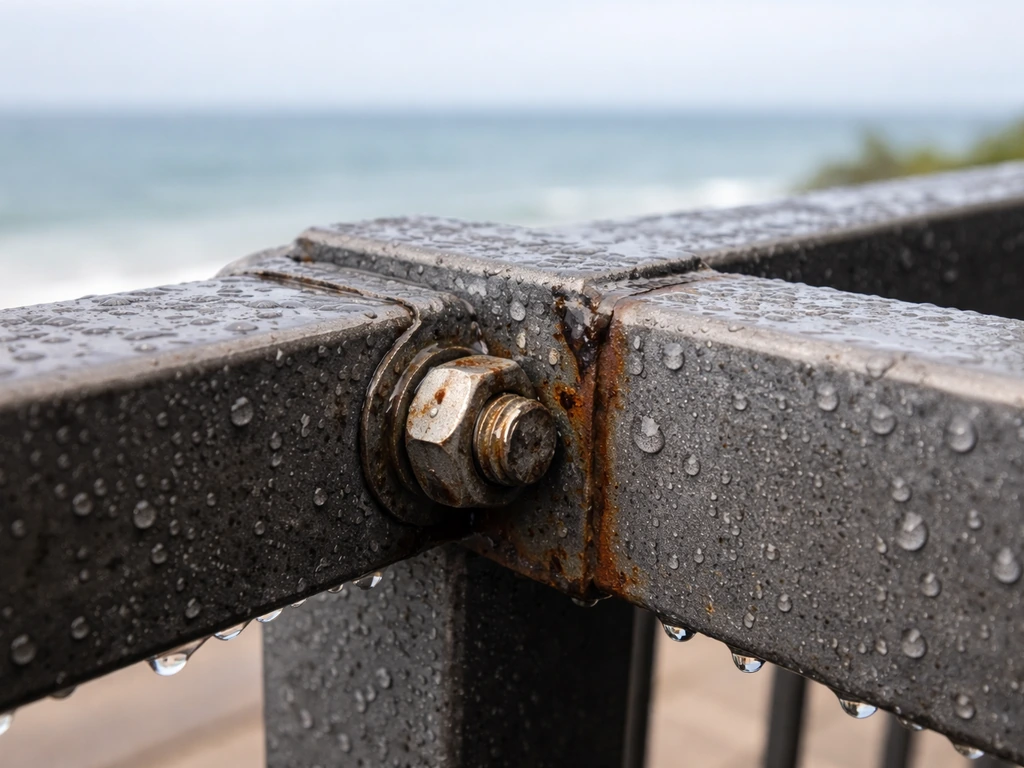
Salt air is corrosive in a specific, aggressive way that goes well beyond normal outdoor weathering. When airborne chloride ions land on a metal surface and moisture is present, they attack the protective oxide layer and drive what's called pitting corrosion, small but deep pits that eat through metal from the inside out. NASA corrosion research describes how rust bubbles (tubercules) on a metal surface signal that pitting is already happening, and the chemistry inside those bubbles is worse than the surrounding environment: more chlorides, lower pH, creating a self-reinforcing corrosion loop that accelerates damage.
There's a second threat that's easy to overlook: galvanic corrosion. This happens when two dissimilar metals, say, a steel bolt through an aluminum frame, are in electrical contact with a conductive liquid like salty condensation. The less noble metal corrodes faster than it would on its own. Salt water is an excellent electrolyte, so coastal conditions trigger galvanic corrosion more readily than inland environments. The fix is simple in theory: keep dissimilar metals separated by non-conductive material like plastic washers or sleeves. Whether a piece of furniture was built that way is a different question, and it's one worth asking before you buy.
Coatings and finishes face their own salt-air problems. In humid coastal climates, moisture and salt can infiltrate microscopic cracks in powder coating, creating what's called osmotic blistering. That leads to chalking, bubbling, and peeling that eventually exposes the substrate underneath. A thin or poorly applied powder coat fails years earlier than a thick, properly cured one. This is why finish quality, not just finish type, matters enormously when you're buying furniture for a salt-air location.
Fabrics and wicker absorb salt too. Salt crystals left in fiber weaves are hygroscopic, meaning they draw moisture back in repeatedly, keeping materials damp longer after rain or sea spray. That persistent dampness accelerates mold, mildew, rot, and fiber breakdown. How close you are to the water matters a lot here, direct beachfront exposure is brutal, while a property a mile or two inland with good airflow is substantially easier on furniture.
Best materials for salt air, ranked honestly
Marine-grade aluminum
Aluminum is the top choice for salt-air frames for most people, and for good reason. It doesn't rust because it has no iron content, and it's lightweight enough to move inside when a storm rolls through. The catch is that not all aluminum is equal. Look for 6061 or 6063 alloy grades (sometimes called marine-grade or architectural-grade aluminum) with a powder coat that's at least 60 to 80 microns thick. Thinner coatings chip and fail faster. The powder coat should be applied electrostatically and oven-cured, if the product listing doesn't say, ask the retailer or check the brand's spec sheet. Frames welded at connection points hold up better than those using rivets or screws, since those attachment points are where corrosion starts.
Stainless steel (choose the right grade)
Stainless steel is heavier and more expensive than aluminum, but genuinely beautiful and extremely durable when you get the right grade. The key distinction is 304 vs. 316 stainless. Grade 304 is the common "food grade" stainless you see everywhere. Grade 316 adds molybdenum to its alloy composition, which directly improves pitting resistance in chloride environments, this is why it's called marine-grade stainless. The British Stainless Steel Association (BSSA) describes something called PREN (Pitting Resistance Equivalent Number) as a way to compare grades theoretically: 316's higher PREN makes it meaningfully better for salt exposure. For full furniture frames, 316 is overkill for most budgets, but for hardware (bolts, screws, brackets), 316 is the minimum you should accept in a salt-air environment.
Teak and dense hardwoods
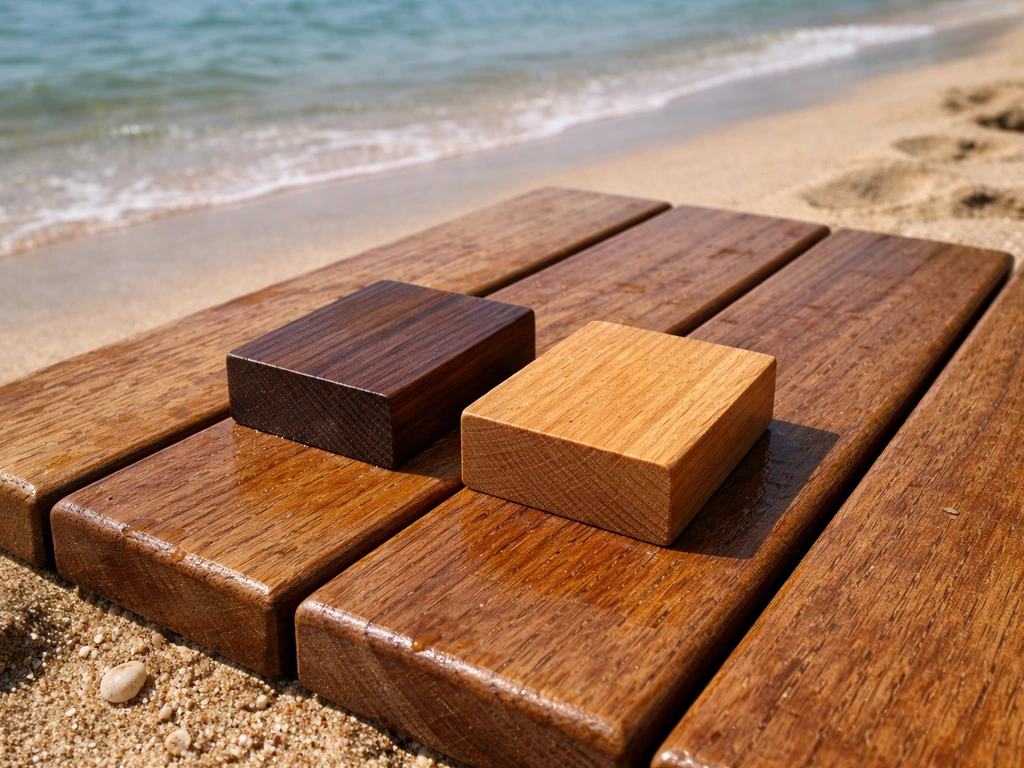
Teak has been the coastal furniture standard for centuries, and it earns that reputation. Its natural oils resist moisture, salt, and insects without much help. Left untreated, teak weathers to a silver-gray patina that many people love. Sealed and oiled, it retains its warm golden-brown color. The downside is cost, quality teak is expensive, and maintenance. If you want to keep it looking good, you'll need to clean and re-oil it once or twice a year. At the beach, that's a real commitment. Eucalyptus and shorea (also called meranti or lauan) are affordable teak alternatives with similar density and oil content, though they don't quite match teak's longevity at the extreme end. Avoid softwoods like pine, cedar, or spruce in high-salt environments; they absorb salt and moisture readily and won't last.
HDPE and composite lumber
High-density polyethylene (HDPE) lumber, sometimes marketed as recycled plastic lumber or poly lumber, is one of the most underrated choices for salt-air use. It doesn't absorb moisture, won't rot, can't rust, and holds up to UV without the discoloration that lower-quality plastics develop. It's also recyclable. Brands like Polywood and LOLL Designs have built strong reputations using HDPE, and their furniture legitimately lasts 10 to 20 years in coastal conditions with very little maintenance. The tradeoff is aesthetic, HDPE has a plastic look that some people find less appealing than wood or metal, and it can get hot to the touch in direct sun. It's also heavy, which limits repositioning.
Synthetic resin wicker vs. natural wicker
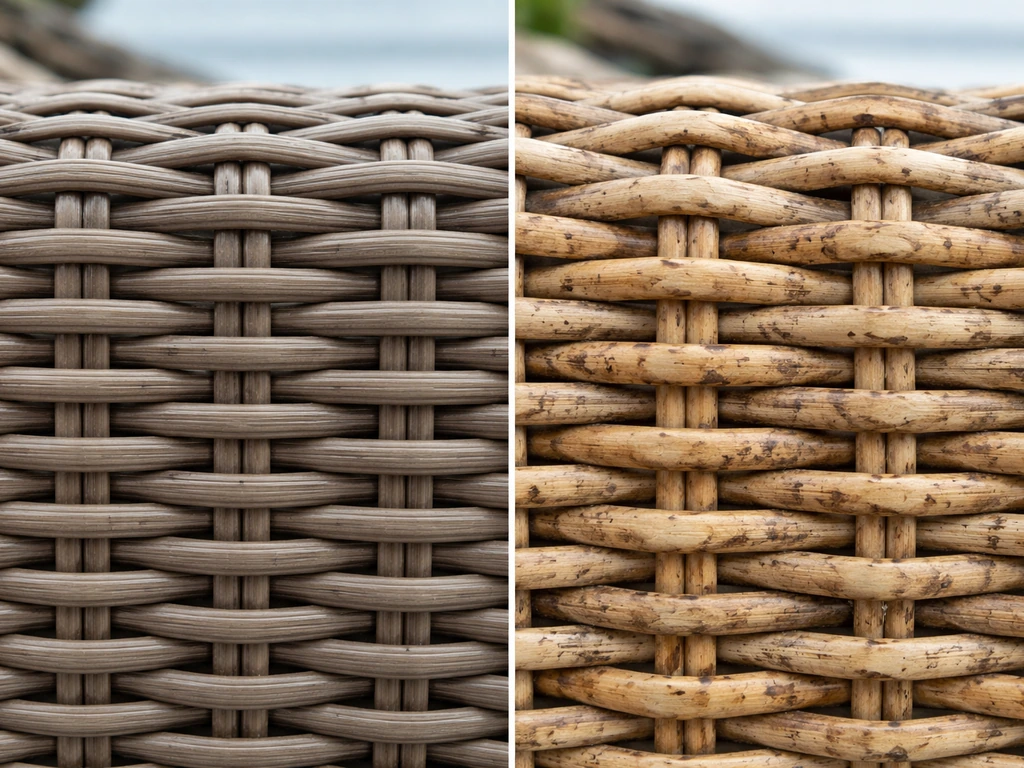
Natural wicker (rattan, sea grass, bamboo) has no place in a salt-air environment. It absorbs moisture, salt, and mold, and it will deteriorate within a season or two of direct coastal exposure. Synthetic resin wicker is a different material entirely. High-quality synthetic wicker is made from polyethylene or PVC strands woven over a frame, often powder-coated aluminum. The weave itself resists UV and moisture, and since the frame is aluminum, you get the dual protection of a rust-resistant core. What matters most here is weave density (tighter is better), UV-stabilized resin (look for this in the product description), and frame gauge. Thin frames and loose weaves show wear first. Stick with synthetic resin wicker from brands that sell it specifically as all-weather or outdoor wicker, not just "wicker-style" products that use inferior materials.
Hardware, finishes, and fabrics: where cheap furniture actually fails
The frame material gets all the attention, but the hardware is often where salt-air failure starts. Every bolt, screw, bracket, and glide on a piece of outdoor furniture is a potential corrosion point. Stainless steel hardware (preferably 316 grade) is the standard for quality coastal furniture. Zinc-plated or chrome hardware looks fine in the store but will show rust spots within a year of salt exposure. When you're evaluating a product, specifically look for the hardware specification, if the listing just says "rust-resistant hardware" without naming the material, that's a red flag.
When dissimilar metals meet (aluminum frame with stainless fasteners, for example), manufacturers should separate them with non-conductive washers or sleeves to prevent galvanic corrosion. This detail rarely shows up in marketing copy, but it's worth asking about for furniture you plan to invest in. Some higher-end brands include this in their construction specs; budget brands typically don't.
For cushions and fabrics, solution-dyed acrylic is the gold standard. Sunbrella is the best-known brand, but other quality solution-dyed acrylics from brands like Perennials or Outdura perform similarly. The key with solution-dyed fabric is that the color is baked into the fiber itself rather than applied as a surface coating, which means UV fading and salt bleaching are dramatically reduced. These fabrics are also mold and mildew resistant, which matters in humid coastal air. Avoid polyester outdoor fabrics in high-salt environments, they fade faster, hold moisture longer, and are harder to clean.
Cushion construction matters too. Look for quick-dry foam cores (open-cell foam or foam with drainage channels) rather than solid closed-cell foam, which holds water inside. Cushions with removable, machine-washable covers are practical, salt-encrusted fabric that can't be washed easily will degrade faster and smell worse. Drainage holes in seat cushions are a small detail that makes a real difference.
Best picks by style and use case
Dining sets
For coastal dining, a powder-coated aluminum frame with a glass, ceramic, or aluminum slatted tabletop is the most practical combination. Glass is easy to clean and doesn't absorb salt, though tempered safety glass (at least 5mm, preferably 6mm) is essential to handle wind-blown debris and thermal expansion. Ceramic and porcelain tabletops are excellent in salt air and nearly impossible to corrode. Avoid untreated steel table bases or zinc-cast legs, which are common cost-cutting choices on budget sets. Polywood makes solid HDPE dining sets that are genuinely low-maintenance and hold up well without cushions needing much attention.
Lounge chairs and chaise lounges
Aluminum-framed chaise lounges with synthetic wicker or sling fabric are the most practical lounge option for salt air. Sling fabric (a tightly woven synthetic mesh stretched across the frame) is extremely weather resistant, dries instantly, and eliminates the cushion problem entirely. Telescope Casual, Brown Jordan, and Tropitone all make commercial-grade sling lounges built for coastal resort use. HDPE Adirondack-style chairs are another strong pick, zero maintenance, UV stable, and they simply don't care about salt air.
Conversation and sectional sets
Deep-seat conversation sets are where cushions are most important because they're the majority of the comfort experience. For salt-air use, prioritize sets with aluminum frames, UV-stable synthetic wicker (if wicker style), and Sunbrella or equivalent cushions included. Sets that come with inferior polyester cushions are a poor value at the coast, you'll be replacing them quickly. OVE Decors, Agio, and Woodard offer sets in this category with genuinely salt-air-appropriate specs. For sectionals, modular designs that can be reconfigured and stored more easily during storm season are worth the premium.
Storage-friendly and compact options
If you're close enough to the water that you'll be moving furniture in and out regularly, weight matters. Lightweight aluminum folding chairs and stackable aluminum or HDPE chairs are the easiest to store. Avoid heavy cast aluminum or concrete furniture if you need to move it frequently, they're durable but cumbersome. A good furniture dolly makes a real difference when moving heavier sectional pieces. Vertical storage in a shed or garage over peak storm season extends life substantially, even for the most salt-air-resistant materials.
How to read product specs before you buy
Most patio furniture listings are written to sell, not inform. Here's how to cut through the marketing language and evaluate what you're actually getting. ISO 9227:2022 specifies salt spray test methods and the test apparatus, reagents, and procedures, including neutral salt spray (NSS), acetic acid salt spray (AASS), and copper-accelerated acetic acid salt spray (CASS), for evaluating corrosion resistance of metallic materials ISO 9227:2022 salt spray tests (NSS, AASS, and CASS).
- Check the frame material spec, not just the style name. 'Aluminum' without a grade or alloy specification could be anything. Look for 6061, 6063, marine-grade, or architectural-grade aluminum.
- Find the hardware specification. Stainless steel hardware should be called out explicitly. 'Rust-resistant' or 'coated hardware' are vague terms that may mean zinc-plated steel.
- Look for powder coat thickness or coating specification. Quality powder coating is 60 to 80 microns. If no thickness is listed, check whether the brand publishes technical spec sheets.
- Ask about salt spray testing. BIFMA's outdoor furniture standard includes a 72-hour salt spray test at 5% salt concentration with a pass criterion of no corrosion pits. Brands targeting coastal buyers should be able to reference testing like this.
- Check the cushion fabric. Sunbrella or equivalent solution-dyed acrylic should be explicitly named. 'Outdoor fabric' or 'weather-resistant fabric' is not a specific claim.
- Look at the warranty language carefully. A '1-year warranty' on frame and finish is a signal that the manufacturer doesn't expect it to last long. Quality coastal furniture brands offer 5-year or longer frame warranties and should be specific about what corrosion coverage includes.
- Search for real owner reviews from coastal owners specifically. Search '[product name] salt air' or '[product name] beach' and look for reviews from owners in Florida, the Carolinas, or the Pacific coast who describe real-world durability over multiple years.
Be skeptical of marketing phrases like 'coastal collection' or 'beach-inspired', those describe aesthetics, not material specs. The furniture that actually works at the coast looks the same as good outdoor furniture everywhere else, but the materials list and construction details are more specific.
Salt-air material comparison at a glance
| Material | Corrosion Resistance | Maintenance Level | Weight | Lifespan (coastal) | Best For |
|---|---|---|---|---|---|
| Marine-grade aluminum (powder coated) | Excellent | Low | Light | 10–20 years | Frames, dining sets, lounges |
| 316 stainless steel | Excellent | Low–Moderate | Heavy | 20+ years | Hardware, accent pieces |
| Teak hardwood | Very Good | Moderate–High | Moderate | 10–25 years | Tables, chairs, benches |
| HDPE / poly lumber | Excellent | Very Low | Heavy | 15–20+ years | Adirondacks, dining, low-maintenance sets |
| Synthetic resin wicker (aluminum frame) | Good–Very Good | Low | Light–Moderate | 8–15 years | Conversation sets, lounges |
| Natural wicker / rattan | Poor | High | Light | 1–3 years | Not recommended for salt air |
| Painted steel | Poor | High | Heavy | 2–5 years | Avoid in salt-air environments |
Your maintenance plan: what to actually do and when
The right furniture choice cuts your maintenance load dramatically, but nothing is completely maintenance-free in a salt-air environment. The single most impactful thing you can do is rinse your furniture regularly with fresh water. Salt left on surfaces, especially in weave joints, around hardware, and under cushions, is what drives ongoing corrosion and deterioration. If you're close to the ocean, a monthly rinse during peak season and after storms is a reasonable minimum. Beachfront properties might benefit from more frequent rinsing.
Aluminum and metal frames
Rinse aluminum frames monthly with fresh water. For deeper cleaning, mild dish soap and a soft brush work well, avoid abrasive scrubbers that can scratch powder coating and give moisture a way in. Inspect frames once or twice a year for chips or scratches in the coating. Touch up chips with a color-matched spray paint or powder coat touch-up pen before corrosion starts. Pay special attention to welds, joints, and hardware attachment points, which are the first places to show wear.
Teak and hardwood
Teak needs an annual or biannual cleaning with a teak cleaner (avoid bleach, which damages wood fibers) followed by teak oil or sealant. If you want to maintain the golden color, apply teak oil before the surface starts to gray, once it's fully gray, you'll need a two-part teak cleaner to restore the color before oiling. In salt-air environments, the frequency of oiling may increase to once a year or more depending on direct sun exposure and proximity to the water. Sand lightly before re-oiling if the surface has roughened.
Cushions and fabrics
Brush off dry salt deposits before they get wet, this removes a lot of the corrosive material before it can work into fibers. Wash Sunbrella and solution-dyed acrylic fabrics with mild soap and cold water; a soft brush handles mildew spots. For heavier mildew, a diluted bleach solution (1 cup per gallon of water) is safe for Sunbrella specifically, check other brand care instructions before using bleach. Air-dry completely before storing. Never store damp cushions; that's how mold takes hold. Store cushions in a ventilated indoor space or quality storage bag when furniture is not in use for extended periods.
Covers and winter storage
Furniture covers help in salt-air environments, but only if used correctly. A cover that traps moisture against a metal frame does more harm than good, you want breathable covers with ventilation panels, not solid waterproof tarps. Look for covers rated for UV, wind, and moisture with breathable backing. In storm-prone coastal areas, move furniture inside or to a covered area rather than just covering it; even good covers can act as sails and take the furniture with them. If indoor storage isn't practical during storm season, anchor systems for furniture are worth the investment.
Mistakes to avoid and what value actually means at the coast
The most common mistake is buying based on price without adjusting for the coastal environment. A $300 steel patio set that lasts two seasons and requires replacement costs more over five years than an $800 aluminum set that's still going strong. Real value at the coast is measured in cost-per-year, not purchase price. This is especially true if you're on the beachfront or within a half-mile of the ocean, where deterioration is fastest.
- Buying steel frames for beachfront use: even galvanized steel corrodes faster in salt air than aluminum or quality composites.
- Assuming 'outdoor rated' means 'coastal rated': those are different standards. General outdoor furniture is tested for rain and UV, not salt spray.
- Ignoring hardware: beautiful frames fail at the bolt when hardware corrodes and seizes. Check the hardware material, not just the frame.
- Skipping the rinse routine: salt accumulation between cleanings is the primary cause of accelerated wear in well-made furniture. Fresh water is your best maintenance tool.
- Using non-breathable covers year-round: trapped moisture under a cover is as damaging as direct salt exposure in some cases.
- Over-sealing teak: applying too much oil prevents the wood from breathing and can cause surface buildup. Wipe off excess oil within 30 minutes of application.
- Buying matching sets for the aesthetic without checking whether each piece has the same material quality: some sets combine quality frames with inferior hardware or cheap cushion fabric that undermines the whole investment.
How close you are to the ocean should calibrate how strict you are about these standards. If you're directly on the water with regular wind-driven spray, treat every one of these recommendations as non-negotiable. A mile or two inland with tree cover and good air circulation, you have more flexibility, a quality powder-coated aluminum frame with 304 stainless hardware might be perfectly adequate where beachfront exposure would demand 316. The same logic applies to furniture choices for pools near salt water or in climates like Florida where humidity compounds the problem year-round. For the best patio furniture for salt water pool setups, focus on marine-grade materials, corrosion-resistant hardware, and protective finishes pools near salt water. If you want the best patio furniture for Florida, start by matching the materials and hardware to how humid and salt-exposed your outdoor space really is climates like Florida where humidity compounds the problem year-round. Understanding your specific exposure level helps you spend where it matters and save where you can.
The bottom line: prioritize frame material and hardware quality first, cushion fabric second, and finish/coating quality third. Everything else is secondary. Buy from brands that publish actual material specifications, not just marketing language, and build a simple maintenance routine around fresh-water rinsing and seasonal inspection. Do those things and your furniture will last a decade or more, even in genuine coastal conditions. Using the right materials and construction is what determines the best patio furniture for beach homes, not just the style.
FAQ
Can I use patio furniture that is labeled “coastal” or “rust-resistant” if it still says the material details are vague?
Yes, but only if it is truly powder-coated with adequate thickness and sealed properly, and you use 316 stainless (or at least fully corrosion-rated) hardware. If the listing does not specify alloy grade (for aluminum) and coating thickness in microns, assume the coating is thin and plan on more frequent touch-ups.
What details should I verify in the listing before trusting a brand’s “salt-air ready” claim?
The right test is to look for named components: alloy (6061 or 6063), hardware grade (explicit 316 for fasteners), and fabric type (solution-dyed acrylic). For cushions, also check whether the foam drains or has open-cell/quick-dry construction, because trapped water is a faster failure trigger than salt alone.
Will furniture covers make my coastal furniture last longer, or can they make things worse?
Covers can help if they are breathable with ventilation panels, but they can also trap salt moisture against metal. If you use covers, rinse the furniture first, ensure airflow under the cover, and remove the cover after storms so surfaces can dry completely.
Is HDPE actually a better choice than teak if I want the least maintenance at the coast?
For most coastal buyers, HDPE is a better “set-and-forget” material than untreated wood, but it can feel hotter in sun and sometimes has a different aesthetic. If your priority is minimal maintenance, choose HDPE frames plus solution-dyed cushions (or sling) rather than focusing only on wood alternatives.
What’s the quickest way salt air can ruin a “mostly aluminum” furniture set?
If a table or chair has steel parts anywhere, especially bolts, brackets, or leg hardware, you must treat those areas as failure points unless they are stainless 316 or protected with non-conductive separation. Even a mostly aluminum or aluminum-framed set can corrode quickly if steel fasteners are used at joints.
My aluminum frame has small rust spots or powder-coat bubbling, what should I do first?
If you see rust spots, bubbling powder coat, or paint that looks like it is lifting at edges, do not wait for the furniture to get worse. Chip the affected area down to clean metal, touch up with a color-matched coating, and inspect the same joint again after the next storm cycle.
How can I tell whether “synthetic resin wicker” is truly suitable for salt air, not just decoratively outdoor?
Not necessarily. Resin wicker made for outdoor use should be UV-stabilized and woven over a corrosion-resistant frame. “Wicker-style” often uses lower-grade resin or less protected frames, so you should confirm it is explicitly all-weather wicker and check the frame material and coating details.
Do solution-dyed acrylic cushions still need special care in salt air, or are they truly low-maintenance?
Solution-dyed acrylic tends to resist fading and salt-bleaching, but you still need to prevent moisture retention. Avoid storing cushions damp, rinse after storms, and confirm the cover is removable and washable if you frequently get heavy spray.
If my teak has turned gray, can I just re-oil it to restore the original color?
Yes, but it must be done with matching products and correct timing. Teak oil can keep color from graying, but if the wood is already fully gray, you may need a two-part teak restoration process before oiling. Also avoid bleach-based cleaners, they can damage fibers and make future restoration harder.
What’s the biggest mistake people make when cleaning coastal furniture, especially aluminum powder coat?
A common mistake is using the wrong cleaning pressure or chemistry. Use mild dish soap for routine cleaning on powder coat and soft brushes, avoid abrasive scrubbers that scratch coatings, and never assume “harsher cleaner” equals better corrosion prevention.
How should I handle storms if I cannot store furniture inside for months?
For storm areas, prioritize storage and anchoring over covering alone. Vertical storage in a shed or garage is most protective, and if you cannot store indoors, anchor furniture so wind cannot lift the cover and act like a sail.
How do I decide between “heavier but sturdy” furniture and “lighter but movable” furniture for frequent coastal storms?
Weight matters less for permanently placed pieces, but for move-in or move-out situations, choose stackable or folding aluminum/HDPE designs. If you are buying a sectional that stays out year-round, modular designs still help because you can reconfigure and cover smaller sections rather than one large piece.
How often should I rinse or wash patio furniture in salt air if I do not live beachfront?
If you rinse regularly, you reduce ongoing corrosion, but you should tailor frequency to exposure. A safe starting point is monthly in peak season and after storms, then increase if you are beachfront or in frequent wind-driven spray.
Do I really need to worry about galvanic corrosion if the hardware is stainless?
If two metals contact directly, galvanic corrosion risk increases, even if both are “rust-resistant.” Use non-conductive washers or sleeves where dissimilar metals meet, and if the product spec does not mention separation at joints, treat it as a question to ask the retailer.
Next Articles
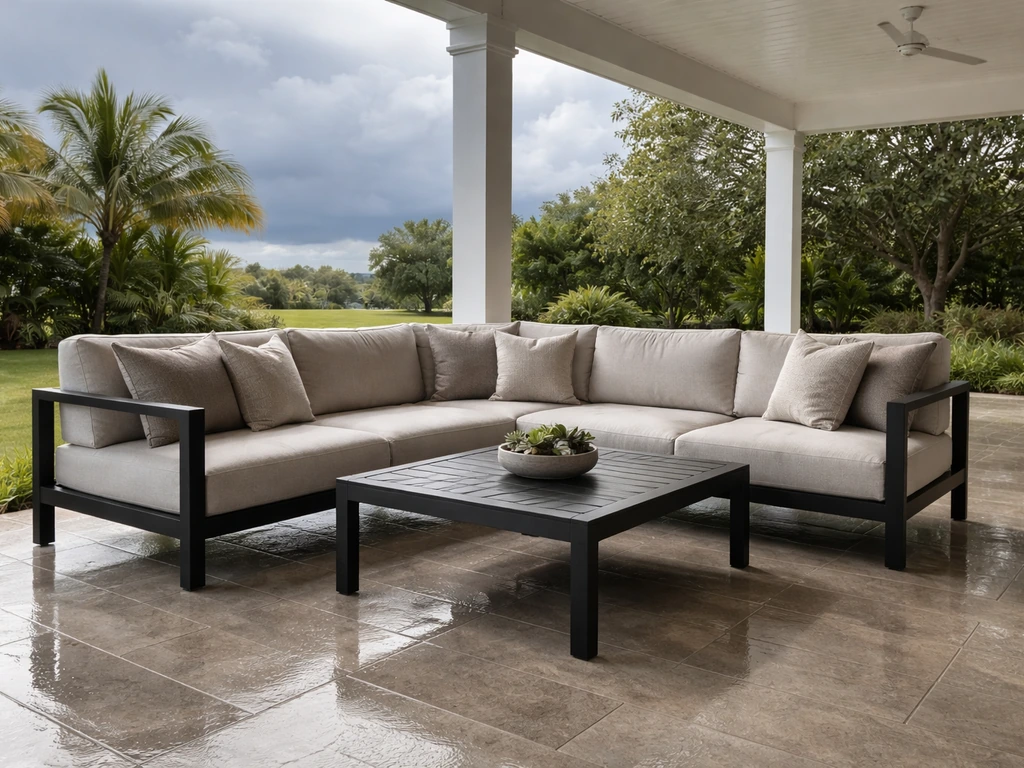
Best Patio Furniture for Florida: Materials That Last
Best patio furniture for Florida: pick durable materials and features for heat, rain, and salt air, with care tips.
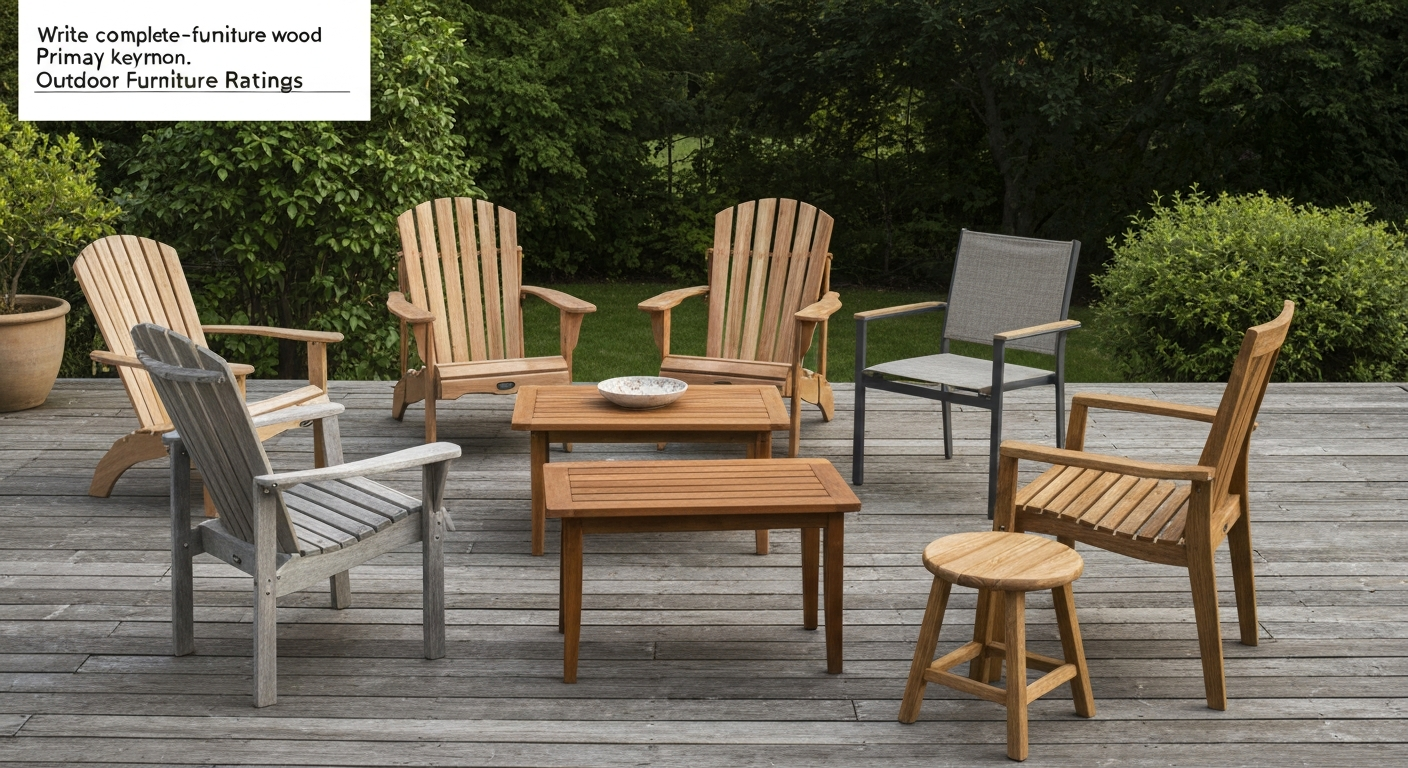
Common Patio Furniture Wood: Best Choices, Care & Tips
Compare common patio furniture wood types, teak, cedar, redwood, oak, with durability, finishes, and care tips.
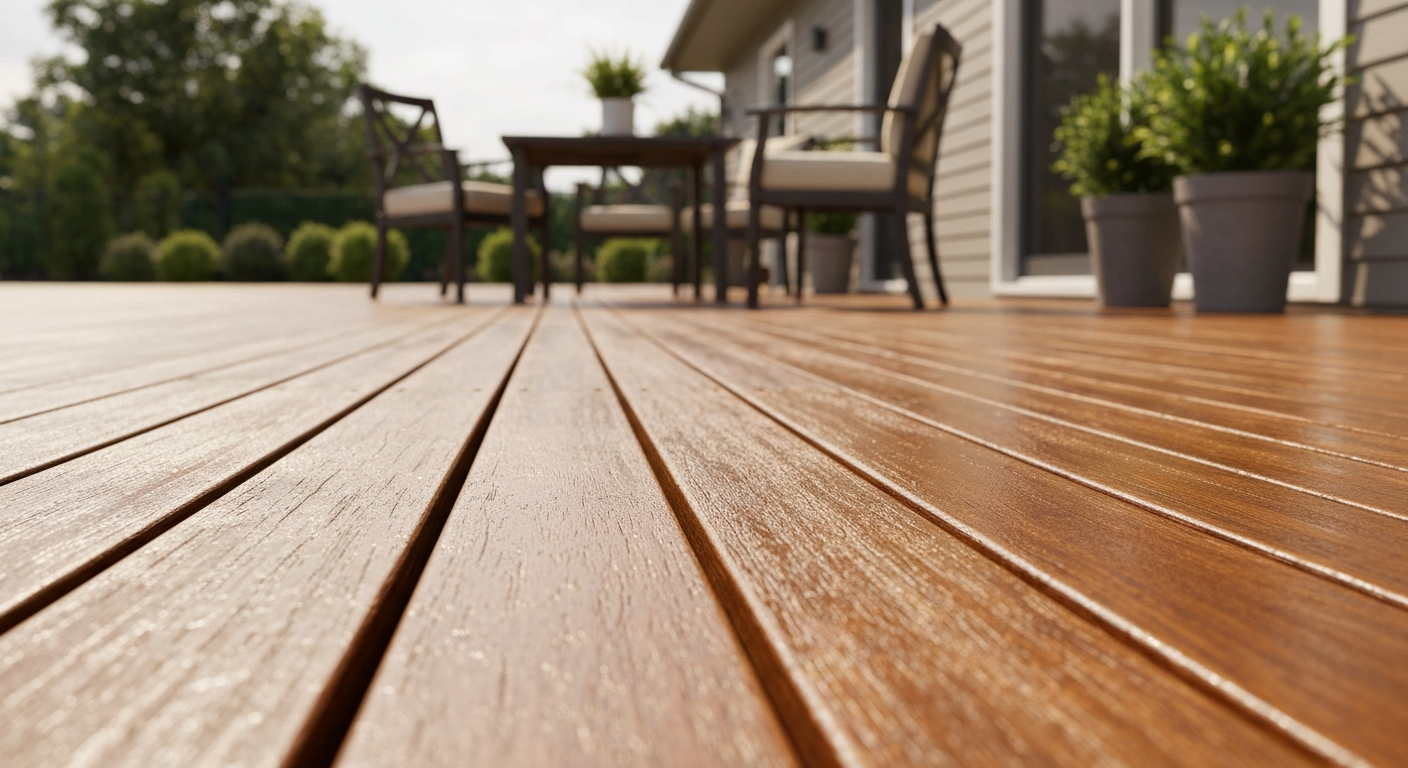
Best Wood Patio Stain: Choosing Durable, Low-VOC Finishes
Compare and choose the best wood patio stain: durability, finish, climate tips, prep, and top product picks.