
For a beach patio, you want marine-grade aluminum, high-density polyethylene (HDPE) lumber, or teak as your frame materials, paired with solution-dyed acrylic fabric (like Sunbrella), stainless steel or aluminum hardware, and a powder coat finish rated for coastal exposure. For anyone searching for the best patio furniture for salt air, start with marine-grade aluminum, teak, or UV-stabilized HDPE, then back it up with corrosion-resistant hardware and solution-dyed fabric. Anything less, and salt air, UV, and humidity will start breaking it down within two to three seasons, sometimes faster if you are sitting right on the water.
Best Patio Furniture for Beach: What to Buy Today

Theo Tierney
3 Jun 2026
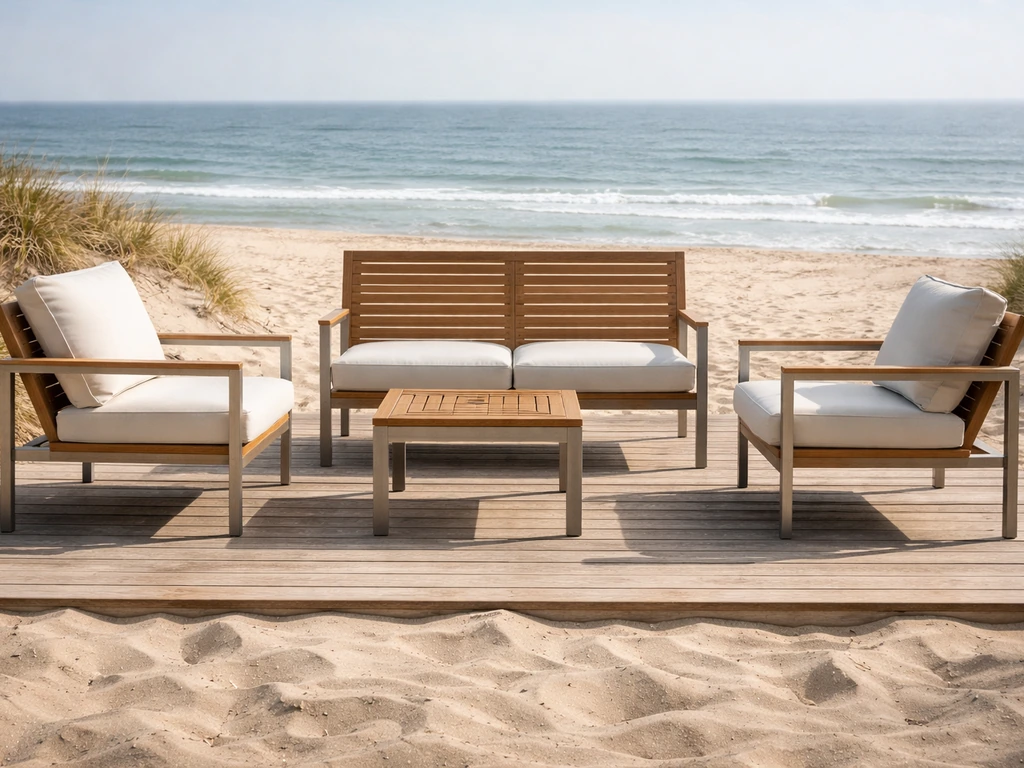
What beach conditions are actually destroying your furniture
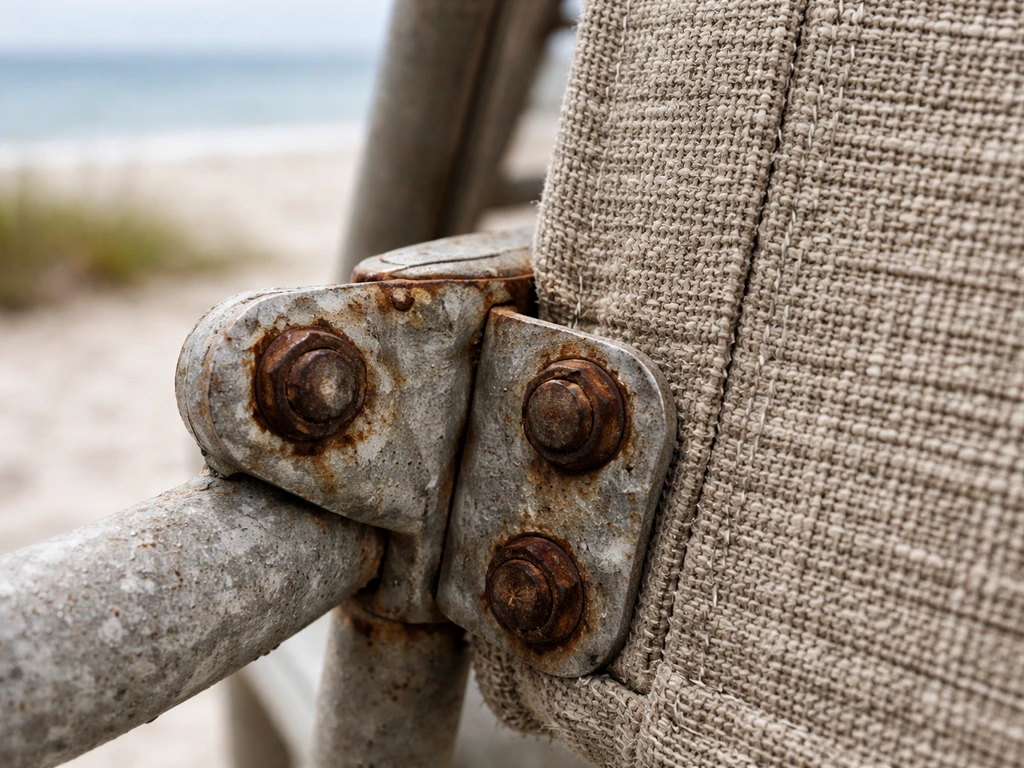
Beach patios are one of the harshest environments you can put outdoor furniture in, and it is not just the salt spray hitting it directly. Salt-laden air can carry inland on onshore winds and maintain elevated chloride levels well beyond the shoreline. If you are within a few hundred feet of the water, you are in a high-exposure zone. Even if your patio is 100 or more feet back and partially sheltered, you are still dealing with conditions that will degrade most standard furniture faster than a landlocked backyard.
Here is what is actually working against your furniture at the beach, and why each one matters for material selection:
- Salt air and chloride exposure: Salt accelerates corrosion on metals and degrades surface coatings over time. It causes filiform corrosion, which spreads beneath powder coatings on aluminum and steel, lifting and blistering the finish from the inside out.
- High humidity: Persistent moisture swells wood, fosters mildew on fabric and wicker, and speeds up rust on any ferrous metal, including hidden fasteners and hardware.
- Intense UV and heat: Coastal sun is relentless. It fades fabrics, breaks down resin and plastic, dries out and cracks wood, and degrades lesser powder coats, making them chalky and porous.
- Wind-driven spray and rain: Spray carries salt directly onto surfaces and into joints, while wind loads stress the structure itself. Lightweight furniture can tip or slide without ballasting or anchoring.
- Occasional storms: High winds require furniture that can be secured or quickly moved. Furniture stored improperly during a storm is furniture you will be replacing next season.
The real-world failure timeline matters here. Low-grade materials, think wrought iron, untreated steel, or budget resin wicker, can start visibly failing within 24 to 36 months in a high-salt coastal environment. Choosing the right material from the start is not a luxury decision, it is the only way the math works in your favor over five or ten years.
Best materials for beach patio furniture
Not all outdoor furniture materials are created equal for coastal use, and the marketing language on most product pages does not help you tell the difference. Here is how the main options actually compare when salt air is part of the picture.
Marine-grade aluminum
This is my top recommendation for most beach patios. Aluminum does not rust, it is light enough to move when a storm rolls in, and it is strong enough to build solid, substantial furniture around. The catch is the grade and the finish. You want furniture built from 6000-series or marine-grade aluminum alloy, not thin-walled generic extrusions.
The powder coat finish needs to be thick, well-adhered, and formulated for salt-air exposure. Look for brands that reference salt-spray testing in their specs, ideally aligned with [ISO 9227 standards](https://www. iso. org/cms/%20render/live/en/sites/isoorg/contents/data/standard/08/17/81744.
html? browse=tc), which is the benchmark corrosion test for coatings in chloride environments. A quality marine-grade powder coat should show no significant corrosion after hundreds of hours of salt-spray testing. If a brand cannot or will not tell you about their coating process, that is a red flag.
Teak wood
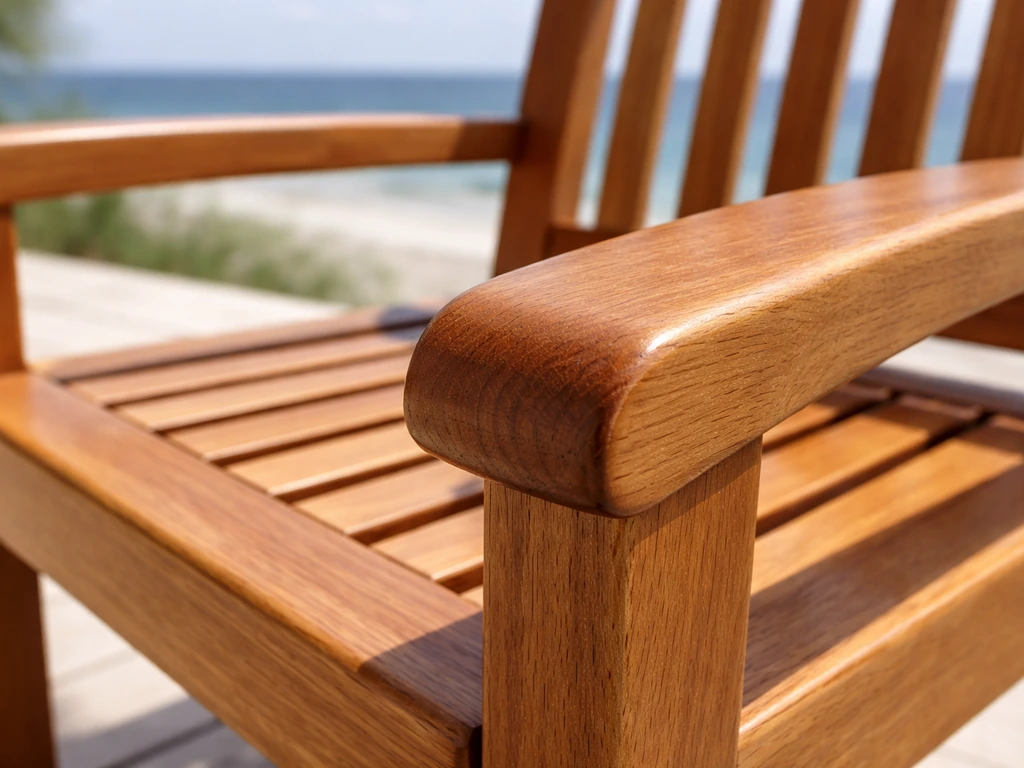
Teak is the gold standard for coastal wood furniture, and has been for a long time, because it contains natural oils that resist moisture, insects, and rot without requiring constant treatment. Grade A teak (cut from the heartwood center of mature trees) is denser and more durable than Grade B or C. Left untreated, it weathers to a silver-gray patina that many people find attractive. Treated with teak oil or sealer annually, it holds its warm honey-brown color.
The downside is price, quality teak is expensive, and there is a lot of mislabeled or lower-grade teak being marketed under that name. Verify FSC certification and the country of origin when possible. For beach settings specifically, teak tables and benches are excellent; teak lounge chairs and sofas hold up well too, though they are heavy to move before a storm.
HDPE lumber (high-density polyethylene)
HDPE lumber, sometimes marketed as recycled poly or Polywood-style lumber, is one of the most practical materials for beach use. It does not absorb water, it will not rot, splinter, or corrode, and UV-stabilized HDPE holds its color reasonably well for years. It requires virtually no maintenance beyond rinsing. The trade-off is that it can look and feel more utilitarian than teak or aluminum, though the better manufacturers have improved the aesthetics significantly. It is also heavier than aluminum, which can be a plus for wind stability but a minus if you need to move furniture often.
Resin wicker (synthetic wicker)
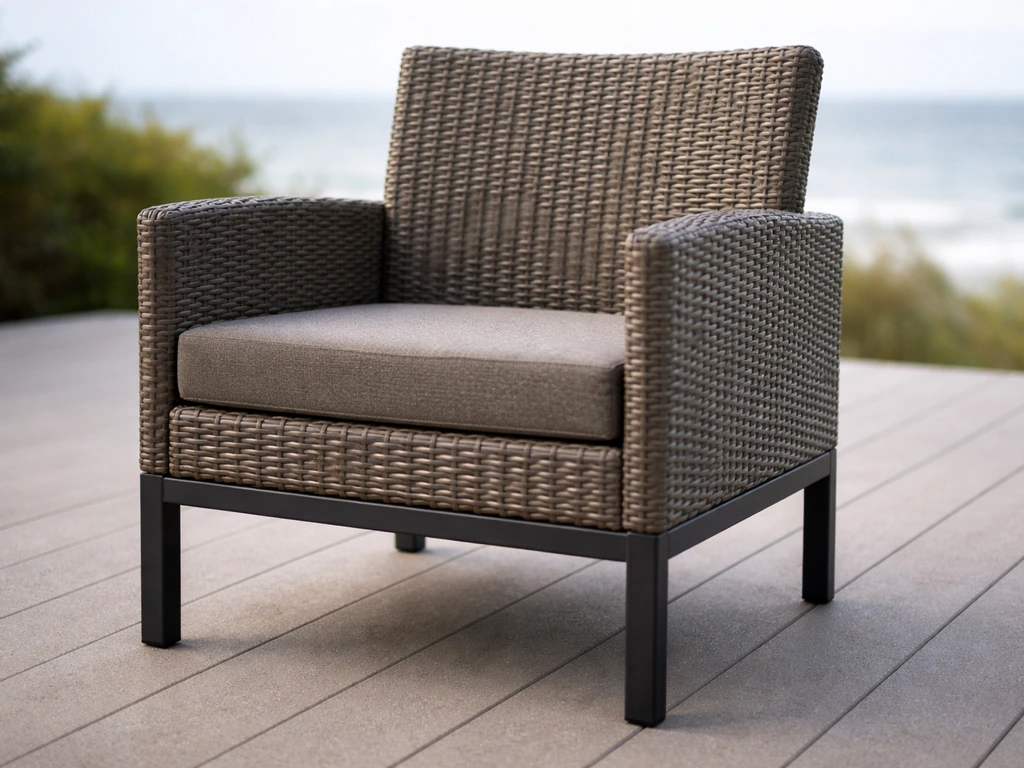
Real rattan wicker falls apart quickly at the beach. Synthetic resin wicker, woven over an aluminum frame, is a different story. The key is the quality of both the weave and the frame underneath. Look for UV-stabilized resin wicker that is described as all-weather or marine-grade, and confirm the underlying frame is aluminum, not steel. Low-grade resin wicker (especially on steel frames) is exactly the type of furniture that fails within two to three seasons in a salt environment. High-quality synthetic wicker from reputable brands, on the other hand, can hold up well for five or more years with basic care.
What to avoid
- Wrought iron and untreated steel: Both rust aggressively in salt air, even with paint or powder coat, once the surface is compromised.
- Untreated or budget wood (pine, eucalyptus without sealing, rubberwood): These absorb moisture, crack, and rot much faster than teak in a coastal climate.
- Cheap resin wicker on steel frames: The frame corrodes from the inside and the weave yellows and becomes brittle.
- Standard aluminum without a marine-rated powder coat: The base metal is fine, but an inadequate finish will fail and leave the aluminum looking oxidized and pitted.
| Material | Corrosion Resistance | UV Resistance | Maintenance Level | Best For | Lifespan at Beach |
|---|---|---|---|---|---|
| Marine-grade aluminum | Excellent | Excellent (with quality powder coat) | Low | Dining sets, sectionals, frames | 10+ years |
| Grade A teak | Excellent | Good (with annual treatment) | Moderate | Tables, benches, loungers | 10–20+ years |
| HDPE lumber | Excellent | Very good (UV-stabilized) | Very low | Casual seating, tables, Adirondacks | 10–15+ years |
| Resin wicker (aluminum frame) | Good | Good (UV-stabilized) | Low-moderate | Conversation sets, lounge chairs | 5–10 years |
| Wrought iron / steel | Poor | Poor | High | Not recommended for beach | 2–4 years |
| Budget resin wicker (steel frame) | Poor | Fair | High | Not recommended for beach | 2–3 years |
Furniture types that work best for beach patios
Beyond material, the type and layout of furniture you choose matters at the beach. Here is how to think through each category for a coastal setting.
Dining sets
A dining set is usually the anchor piece on any beach patio. For material, aluminum or teak frames are the most reliable. Look for a table with a slatted or perforated top rather than a solid top, especially if you are in a windy location. Slatted tops let wind pass through rather than creating sail-like resistance. Round and square tables up to 48 inches work well for smaller patios or decks; rectangular tables work better for larger covered spaces. Extendable tables with marine-grade mechanisms are useful if you entertain, but check that the slide mechanism is stainless steel or aluminum before buying.
Lounge chairs and chaise loungers
These are the workhorses of a beach patio. Aluminum-framed stackable sling chairs are extremely practical: lightweight to move, easy to store before a storm, and the sling fabric (look for vinyl-coated polyester or solution-dyed acrylic) dries fast and resists salt. Chaise loungers with adjustable backs and rust-proof hardware are worth the investment for a pool deck or sunbathing area. Avoid chaises with complicated folding mechanisms made of plated steel hardware. That hardware is the first thing to seize up or rust.
Sectionals and conversation sets
A sectional or conversation set works well on a covered porch or lanai where there is some protection from direct spray. For open beach patios, sectionals are harder to manage before a storm because the pieces are bulky and heavy. If you want this look on an exposed patio, choose a modular design with lightweight aluminum frames so you can break it down and move pieces under cover when needed. Make sure the cushions are stored-able, ideally in a weather-resistant storage box nearby. High-quality synthetic wicker conversation sets look great and hold up reasonably well in this type of application when built on aluminum frames.
Bar sets and counter-height options
Bar sets are popular on beach patios with built-in bars or counters. The same material rules apply: aluminum or teak frames, marine-grade hardware. Pay extra attention to barstool footrest hardware, that is a high-wear, high-moisture point that corrodes quickly on cheaper stools. Fully welded aluminum frames are better than bolted-together designs for bar stools because there are fewer corrosion points.
Outdoor storage
A deck box or storage bench is genuinely useful at a beach house, not optional. You need somewhere to put cushions quickly when a storm comes in, or simply at the end of the day to protect them from overnight dew and salt air. Look for HDPE or resin deck boxes with UV-resistant finish and a stay-open lid hinge. Avoid metal-framed storage boxes at the beach for obvious reasons.
Construction details, hardware, and finishes that actually matter
The frame material is the headline, but the details in the construction are often what separates furniture that lasts a decade from furniture that starts failing in year two. Here is what to look at closely before buying.
- Hardware and fasteners: Every screw, bolt, and bracket needs to be 304 or 316 stainless steel, or solid aluminum. Zinc-plated or chrome-plated steel hardware will rust and stain the frame around it within a couple of seasons at the beach. 316 stainless is the better grade for high-exposure coastal settings.
- Weld quality on aluminum frames: Look for fully welded joints rather than bolted assemblies at stress points. Welds that are smooth and continuous indicate better manufacturing. Rough, uneven welds on structural joints are a durability concern.
- Powder coat thickness and adhesion: A quality coastal powder coat should be applied over a properly prepared, etched surface, not just sprayed over bare extrusion. Some manufacturers add a conversion coating (like chromate or zirconium-based primer) before powder coating for additional adhesion and corrosion resistance. Ask or look for this in product specs.
- Teak joinery: For teak furniture, mortise-and-tenon joinery held with marine-grade stainless bolts is the standard to look for. Dowel joinery is less durable under the humidity cycles at the beach.
- Feet and glides: Plastic or rubber feet on aluminum or teak furniture prevent galvanic corrosion where the frame contacts a concrete or tile patio. Metal feet on metal surfaces create a contact point that holds moisture and promotes corrosion.
- Weight and wind stability: Heavier is better for wind resistance, but if the furniture is too heavy to move before a storm, have a plan for anchoring or covering it. Some manufacturers offer optional ground anchors for lounge chairs and tables.
Cushions, fabrics, and umbrellas for salt-air and UV exposure
The fabric and cushion situation at a beach house is where a lot of people go wrong. They get the right frame and then put cheap cushions on it that fade, mildew, and fall apart in one season. At the beach, you need fabric engineered for this environment, not just labeled outdoor.
Solution-dyed acrylic is the standard
Sunbrella is the most recognized brand, and for good reason. The key technology is solution dyeing, where color is added to the fiber before the fabric is formed, not coated onto the surface afterward.
This means UV exposure does not burn away a surface color layer, it would have to degrade the fiber itself to fade the color. In practice, solution-dyed acrylic holds its color dramatically longer than surface-dyed polyester or olefin fabrics. Sunbrella also resists mold and mildew, repels water, and can be cleaned with a diluted bleach solution (around 1 part bleach to 4 parts water with mild soap) for any mildew that does develop.
For a beach patio, do not compromise on fabric. Sunbrella or a comparable solution-dyed acrylic from another manufacturer is the only fabric I would put on beach cushions intended to last.
Cushion construction and foam
The outer fabric matters, but so does the interior. Look for quick-dry foam or open-cell foam wrapped in a polyester fiberfill that drains and dries fast after rain or spray. Closed-cell foam holds water and creates a mildew environment inside the cushion even if the outer fabric is Sunbrella. Zippered, removable covers make cleaning and replacement much easier. Some manufacturers use drainage holes in the bottom of the cushion shell, which is a useful feature on exposed patios.
Umbrellas for beach patios
A patio umbrella at the beach needs a corrosion-resistant pole (aluminum or fiberglass, not steel), stainless or aluminum hardware throughout the canopy mechanism, and a canopy made from solution-dyed acrylic or marine-grade polyester. Fiberglass ribs flex better in wind and are less likely to snap than aluminum ribs in a gust. A good beach umbrella should also have a vent at the top to reduce wind uplift. For stability, use a weighted base (50 pounds or more for a standard 9-foot umbrella) and secure it when strong winds are expected, or bring it down entirely. Wind is the biggest umbrella killer at the beach, not sun.
Maintenance routine for beach patio furniture
Even the best beach furniture needs regular attention to achieve its full lifespan. The good news is that the maintenance routine for quality coastal furniture is actually not that labor-intensive if you stay consistent. The problems come when people ignore the furniture for months and then try to reverse damage that has already compounded.
Weekly and after-storm care
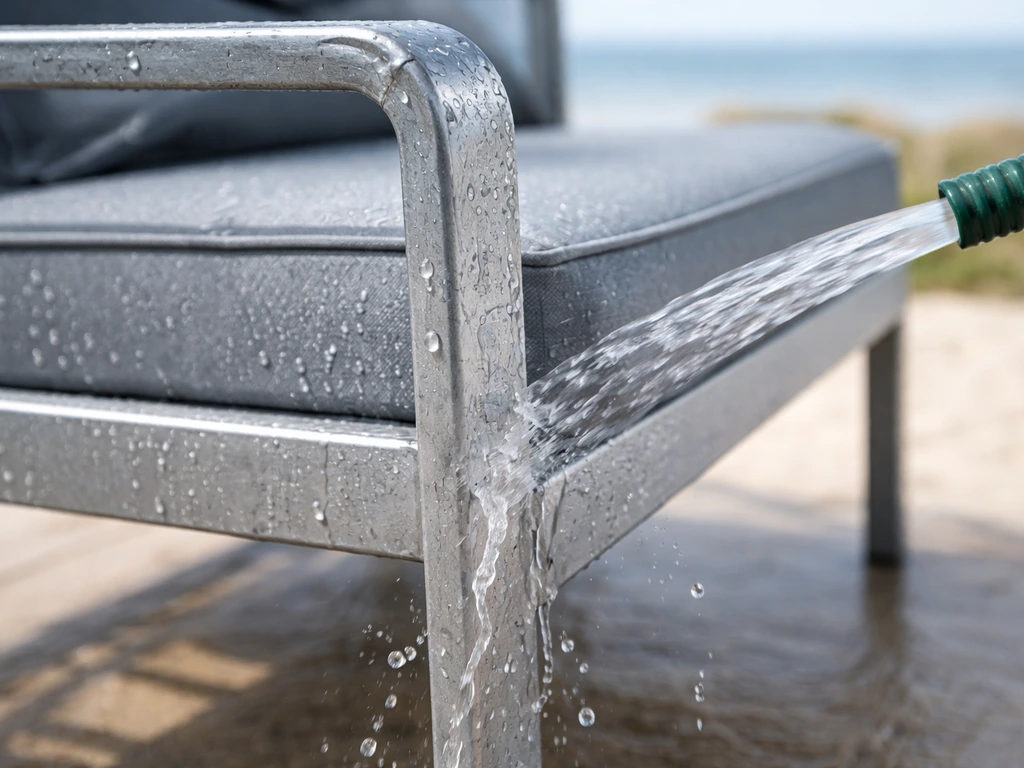
- Rinse aluminum and other metal frames with fresh water weekly (or after any significant salt spray event) to remove chloride deposits before they can work under the finish. A garden hose is sufficient.
- Wipe down frames with a mild soap solution monthly, rinse thoroughly, and let dry.
- After a storm, inspect all joints, hardware, and fasteners. Tighten anything that has worked loose. Dry any standing water in hollow sections if possible.
- Bring cushions indoors or into a deck box overnight and any time significant rain or salt spray is expected. Even Sunbrella will benefit from not sitting saturated in salt water constantly.
Seasonal care for aluminum and metal
- Inspect the powder coat finish at the start and end of each season. Any chips, scratches, or areas where the coating has lifted need to be addressed immediately. Touch-up with a compatible powder coat or automotive-grade enamel to prevent corrosion from starting at the exposed point.
- Apply a coat of marine wax (carnauba-based) to powder-coated aluminum surfaces once or twice a year. This adds a layer of protection between the salt air and the finish.
- Check all stainless hardware for any rust staining (usually from a less-than-pure grade of stainless picking up surface rust). A paste of baking soda and water or a stainless steel cleaner will remove surface staining without damaging the metal.
Seasonal care for teak
- If you want to maintain the warm brown color of teak, apply a quality teak sealer or teak oil once or twice per year, in spring and again mid-season in high-exposure locations.
- Before applying oil or sealer, clean the surface with a teak cleaner to remove any gray oxidation, salt residue, and mildew. Let dry completely before oiling.
- If you prefer the natural gray patina, simply clean the teak periodically with mild soap and water. The wood is still protected by its natural oils even as it weathers to gray.
Storm prep and off-season storage
Before any named storm or significant wind event, bring cushions inside, fold or collapse umbrellas and remove them from their bases, and either bring lightweight furniture indoors or stack and strap it down. Heavy teak furniture and HDPE furniture can often stay out if secured, but lightweight aluminum chairs and tables should be moved. If you live in an area with a distinct off-season, invest in quality outdoor furniture covers made from breathable, water-resistant material. Covers that trap moisture create a mildew and corrosion problem, so avoid the cheap plastic tarps and use covers designed for outdoor furniture. This is especially relevant for beach homes that sit empty for months at a time.
Distance from water and shelter matter more than you might think
If your patio is set back 100 feet or more from the water and has a roof, pergola, or windbreak providing some shelter, your maintenance burden drops noticeably and you may be able to use a slightly wider range of materials without the same failure risk. A covered lanai even a short distance from the shoreline is a very different environment than an open deck right at the water's edge. This is a real factor in how strictly you need to apply these guidelines, and it is why the same blanket advice does not apply equally to every beach property.
Buying checklist and furniture to shortlist
Before you pull the trigger on any beach patio furniture purchase, run through this checklist. It will help you cut through vague marketing claims and focus on what actually matters for long-term value in a coastal environment.
- Frame material: Is it marine-grade aluminum, Grade A teak, HDPE lumber, or high-quality resin wicker on an aluminum frame? If it is steel or iron, pass.
- Hardware and fasteners: Are all screws, bolts, and hinges stainless steel (304 or 316 grade) or aluminum? Ask specifically if not labeled.
- Powder coat specification: Does the brand reference salt-spray testing or a coastal-rated finish? Marine-grade powder coat with proper surface prep is the minimum for beach aluminum.
- Fabric: Is it solution-dyed acrylic (Sunbrella or equivalent)? Do not accept vague terms like 'outdoor fabric' or 'water-resistant polyester' for beach cushions.
- Cushion construction: Does it use quick-dry foam? Are covers removable and washable? Are there drainage features?
- Wind stability: Is the furniture heavy enough to resist wind, or does it come with anchoring options? For umbrellas, does it have a vented canopy and a weighted base?
- Umbrella materials: Fiberglass ribs, aluminum or fiberglass pole, stainless canopy hardware, and a solution-dyed canopy fabric.
- Warranty terms: Quality coastal furniture manufacturers back their products. Look for at least a 5-year structural warranty on frames and 3 years on fabric. Short or vague warranties are a signal about material confidence.
- Storage plan: Do you have or will you buy a quality deck box or furniture covers for cushions and off-season storage?
Brands and categories worth shortlisting
For aluminum furniture, look at brands like Telescope Casual, Tropitone, and Woodard, all of which produce marine-rated aluminum collections with proper coastal finishes and stainless hardware. For HDPE lumber, Polywood is the benchmark brand and has a comprehensive range of styles. For teak, look at Barlow Tyrie and Kingsley Bate for Grade A certified teak with documented sourcing. For resin wicker conversation and lounge sets, Ratana and Lloyd Flanders use high-quality aluminum frames with UV-stabilized weaves. For cushion fabric, specify Sunbrella by name, or ask specifically for solution-dyed acrylic from whichever manufacturer you are considering.
If your beach home is in a particularly intense salt-air environment, like directly on the Florida Gulf Coast, oceanfront in the Carolinas, or on a New England seacoast, push harder toward fully aluminum or HDPE furniture and be skeptical of anything that requires significant ongoing maintenance to survive. If you are shopping for the best patio furniture for florida, this is the approach that holds up best in high-salt coastal conditions fully aluminum or HDPE furniture.
The goal is furniture that fits your life at the beach, not a weekend project every month. Investing in the right materials upfront, maintaining them consistently, and storing cushions properly is genuinely all it takes to keep a beach patio looking and functioning well for a decade or more. If you want the best patio furniture for ocean air, prioritize marine-grade aluminum and solution-dyed acrylic that are built for chloride environments.
To narrow it down to the best patio furniture for a salt water pool, prioritize marine-grade aluminum frames, solution-dyed acrylic fabrics, and stainless or aluminum hardware right materials upfront.
FAQ
If I get the right frame material, can I use any outdoor cushions? (Common mistake)
In most beach settings, the biggest longevity win is upholstery and hardware, not just the frame. If your chairs are aluminum but your cushions use standard outdoor polyester or foam that holds water, you can still get mildew, fading, and early replacement within a season or two. For maximum life, pair marine-grade frames with solution-dyed acrylic (or equivalent) plus quick-dry, open-cell foam (or another drainage-first cushion design).
My beach patio is not right on the water. How close is “too close” for coastal materials?
If you are within a few hundred feet of the shoreline, assume chloride-laden air will reach your patio even when it feels “protected.” The practical decision aid is to treat any furniture that cannot be moved as permanent in place, and buy only materials with proven corrosion resistance (6000-series or marine-grade aluminum, teak of known Grade A sourcing, or UV-stabilized HDPE). Everything else becomes a gamble.
Can I solve beach maintenance by covering the furniture off-season? What cover type should I avoid?
Yes, but only if you select covers designed to breathe and you manage moisture. Use breathable, water-resistant covers, keep them clean, and remove them to let furniture dry after heavy mist or fog days. Avoid airtight coverings and cheap plastic tarps, they trap humidity and accelerate corrosion and mold even on “rust-proof” frames.
When a brand says “stainless hardware,” is that always enough for salt air?
Do not rely on “stainless” as a blanket guarantee. For coastal use, look for explicit hardware specifications (for example, marine-grade stainless), and check whether the vendor lists fastener corrosion resistance or salt-spray testing. Salt can still find weak points like hinge pins, bolt holes, and bracket welds.
How do I tell whether a beach cushion will actually stay mildew-resistant?
An easy test is to look for drainage and fill construction, not just “quick dry.” Choose cushions with drainage holes or channels, open-cell foam that can release water, and removable, washable covers. If the bottom is fully sealed and the foam is closed-cell, water can sit inside and create a mildew environment even when the outer fabric looks fine.
What should I prioritize for a beach umbrella, the fabric or the base?
For umbrellas, wind handling matters more than fabric. Pick a vented canopy, a corrosion-resistant pole (aluminum or fiberglass), and hardware made for coastal conditions. Also choose a base that is heavy enough for your typical wind, and plan to remove the umbrella during strong events rather than “hoping” it survives.
Should I bring furniture inside before storms, or only the cushions?
Generally, yes. You can often leave heavy, non-wicking materials outside if they are secured, but cushions and loose accessories should come in before storms. Lightweight aluminum sets can turn into windborne hazards, and slings can get waterlogged if left uncovered. A simple rule is, if it can move or trap moisture, move it.
Is teak maintenance really worth it, or will it look good even if I do nothing?
Teak quality varies widely, even when it is sold as “outdoor teak.” To reduce the risk of mislabeled wood, verify Grade A heartwood sourcing when possible, ask about treatment or mill origin, and expect a natural weathering cycle if you skip annual oiling. If consistent color is important, budget for annual sealing or oiling and plan for reapplication.
How can I tell whether “powder-coated aluminum” is truly coastal-grade?
For marine exposure, powder coat performance depends on how the coating was applied and checked, not just the word “powder coated.” Look for details about coating thickness, adhesion, and salt-spray performance (for example, test references aligned to chloride corrosion evaluation). If the listing is vague about coatings or hardware grade, it is safer to choose a brand that states the testing or process.
Which furniture designs fail first on beach patios: welded vs bolted, modular vs fixed, or folding mechanisms?
In most cases, fully welded aluminum and well-built modular designs reduce failure points at joints and stress areas. Bolted bar frames, hardware exposed to pooling water, and complicated folding mechanisms with plated steel parts are common weak links. If you want a conversation or bar setup for open exposure, choose fewer, simpler moving parts and plan for easy storage.
Next Articles
Best Patio Furniture for Salt Air: What Actually Lasts
Material-by-material picks for salt-air patios, with rust-proof metal, treated wood, moisture-ready wicker, and durable
Best Patio Furniture for Florida: Materials That Last
Best patio furniture for Florida: pick durable materials and features for heat, rain, and salt air, with care tips.
Common Patio Furniture Wood: Best Choices, Care & Tips
Compare common patio furniture wood types, teak, cedar, redwood, oak, with durability, finishes, and care tips.