
For most of Florida, powder-coated aluminum frames with solution-dyed acrylic cushions (think Sunbrella or equivalent) are the most practical choice. Aluminum doesn't rust, the powder coating handles UV and humidity well, and solution-dyed acrylic fabric holds its color and resists mildew even through a Florida summer. If you're on the coast in South Florida or within a few miles of salt water, that recommendation gets stricter: you want marine-grade 316 stainless steel hardware, extra-thick powder coating, and resin or HDPE components anywhere aluminum isn't appropriate. The rest of this guide breaks down exactly why, and what to look for when you're actually shopping.
Best Patio Furniture for Florida: Materials That Last

Theo Tierney
5 May 2026
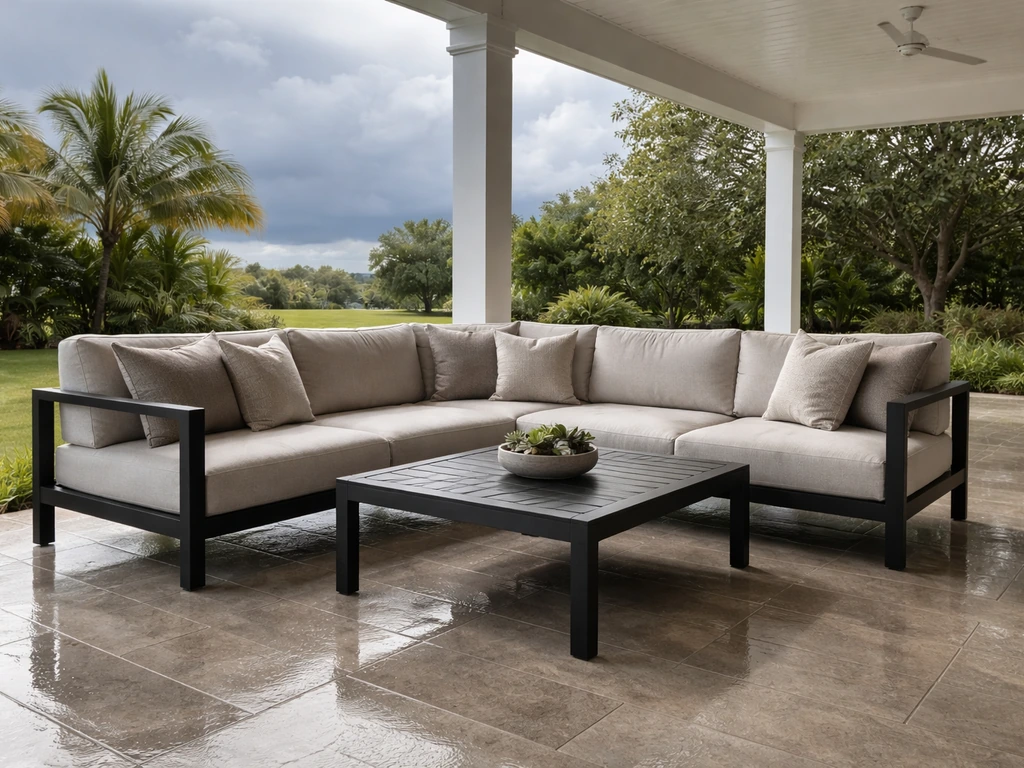
What Florida's climate actually does to patio furniture
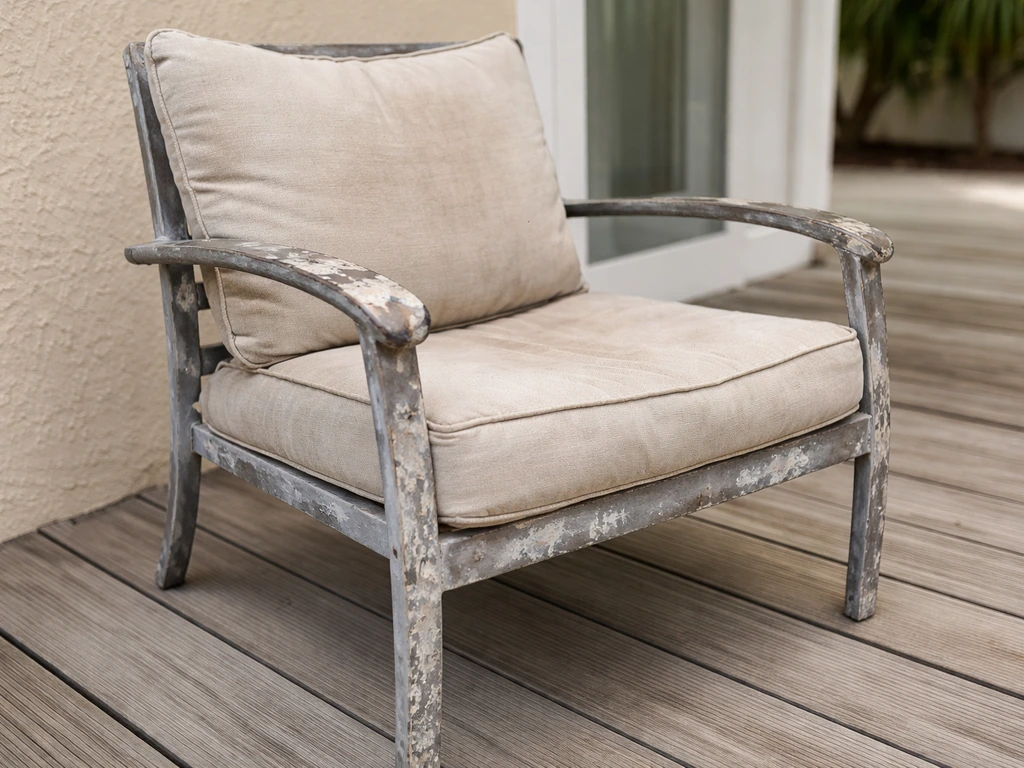
Florida isn't just hot. It's a combination of intense UV radiation, humidity that rarely drops below 70%, daily summer rain, and for coastal areas, salt-laden air that accelerates corrosion on almost every material. That combination is genuinely brutal on outdoor furniture in ways that cooler, drier climates never are. A piece of furniture that lasts 15 years in Ohio might give you three or four in South Florida without the right materials and some basic maintenance.
Here's what you're really fighting against. UV breaks down finishes and fades fabrics, Florida's sun is more direct and relentless than most of the country. Humidity and frequent rain promote mold and mildew growth, especially in furniture with crevices, cushion interiors, or porous materials. Salt air, particularly within a mile or two of the ocean or a bay, deposits chlorides on every surface, and when moisture evaporates it concentrates those chlorides, eating through standard metal hardware and frames surprisingly fast. And then there's hurricane season: strong winds can turn unsecured patio furniture into dangerous flying debris, and heavy prolonged rainfall soaks everything for hours or days at a stretch. Planning for all of these hazards, not just aesthetics, is what separates furniture that lasts from furniture you replace every few years.
The best materials for Florida patio furniture, ranked honestly
Each of the four main material categories has a place in Florida, but their durability ranges wildly. Here's a straight comparison across the factors that matter most in this climate.
| Material | Rust/Corrosion | UV/Fade Resistance | Mold/Mildew Risk | Weight/Storm Risk | Maintenance Level | Typical Lifespan in FL |
|---|---|---|---|---|---|---|
| Powder-coated aluminum | Excellent | Good (quality coating) | Low | Light (needs anchoring) | Low | 10–20 years |
| HDPE/resin composite | Excellent | Excellent | Very low | Moderate | Very low | 15–25 years |
| All-weather resin wicker | N/A (frame matters) | Good–Excellent | Low if well-drained | Light | Low | 8–15 years |
| Teak wood | N/A | Good (weathers gray) | Moderate if neglected | Heavy (storm advantage) | Moderate | 10–20+ years |
| Steel (standard) | Poor without coating | Moderate | Low | Heavy | High | 3–7 years |
| Natural rattan/wicker | N/A | Poor | High | Light | High | 1–3 years (not recommended) |
Powder-coated aluminum: the Florida workhorse
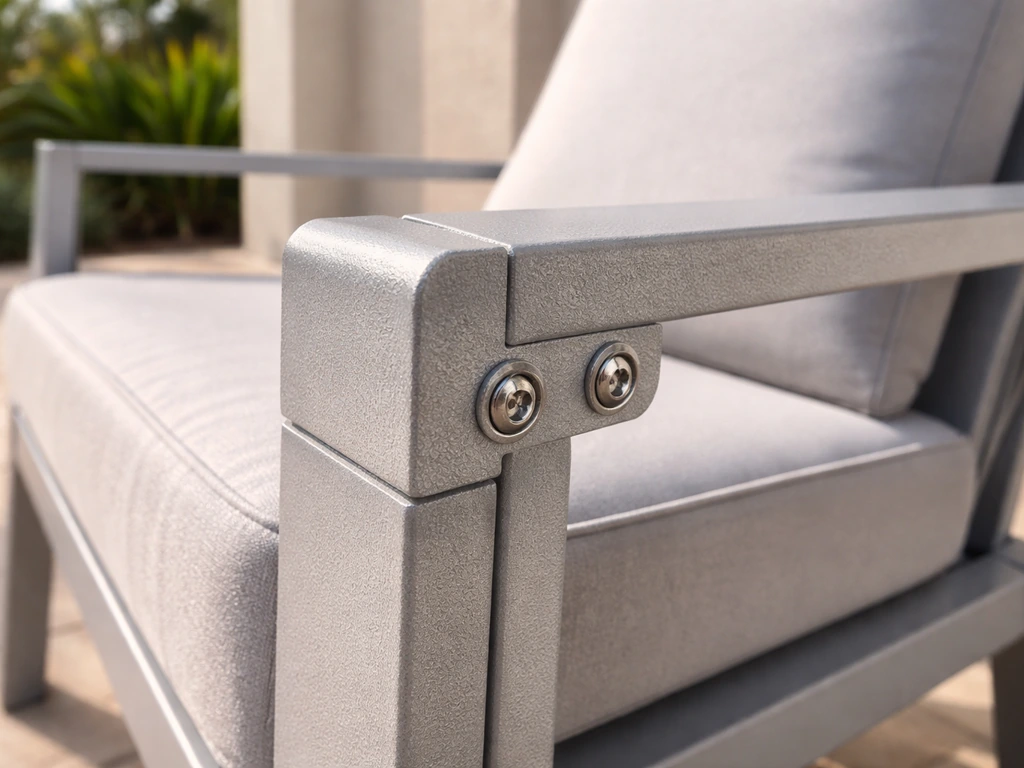
Aluminum is the material I recommend most often for Florida patios. It doesn't rust, it's lightweight enough to move when storms approach, and powder coating creates a hard, UV-resistant surface that handles moisture well. The key word is quality: a thick, properly cured powder coat from a reputable manufacturer will hold up for a decade or more. Thin or cheap powder coating chips, and once bare aluminum is exposed to salt air and humidity, you start seeing white oxidation staining. When you're shopping, ask specifically about coating thickness (40+ microns is a reasonable benchmark) and whether the frame is cast aluminum or extruded tubular aluminum. Cast aluminum is denser and holds up better at joints where cracking is more likely.
HDPE and resin composites: the low-maintenance long-hauler
High-density polyethylene (HDPE) furniture, often marketed as recycled plastic lumber or Polywood, is genuinely excellent in Florida. It doesn't absorb moisture, it won't rot or rust, UV-stabilized HDPE holds its color far better than cheaper plastics, and it requires almost no maintenance beyond occasional cleaning. The trade-off is aesthetic: some people find the look too casual or plasticky, and cheaper resin furniture from big-box stores is not the same thing, it becomes brittle and faded within a few years. True HDPE furniture is heavier and noticeably more solid. Polywood says its HDPE lumber blends light-stable pigments and UV inhibitors into the material before forming the boards, so the color is blended throughout rather than just painted on True HDPE furniture is heavier and noticeably more solid.. If you want something that will outlast your mortgage with minimal effort, this is the most practical choice in Florida.
All-weather resin wicker: good if the frame is right
Resin wicker (also called all-weather wicker) is popular in Florida and works reasonably well, but the durability depends almost entirely on what's underneath. The wicker strands themselves are synthetic and UV-resistant, but the internal frame is usually steel or aluminum. A steel frame will rust in Florida's humidity, especially in coastal areas, often before the wicker weave shows any visible damage. If you're buying resin wicker, insist on an aluminum frame and check that the weave is a closed, tight pattern with no gaps that trap standing water. Good drainage is critical, any wicker piece that pools water in horizontal surfaces is going to develop mold in the cushion area and at contact points.
Teak wood: the premium natural option
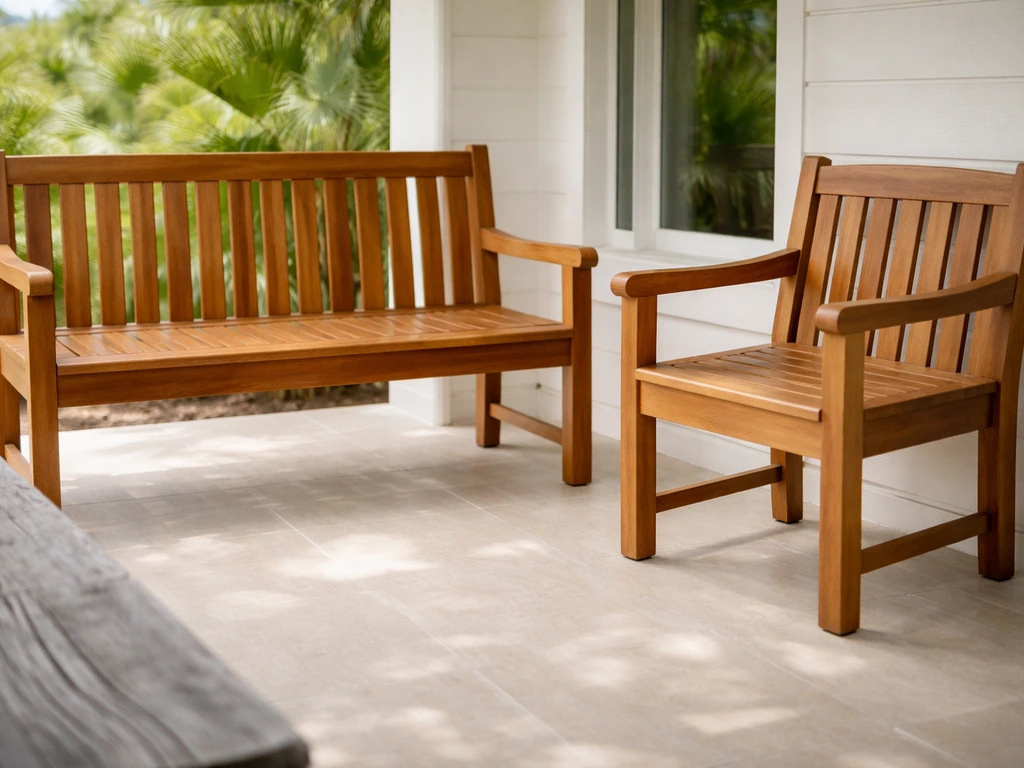
Teak is the one wood I'd feel comfortable recommending for Florida. Its natural oil content resists moisture penetration and decay far better than cedar, pine, or eucalyptus, and its density means it's heavy enough to stay put in moderate wind. Left untreated, teak weathers to an attractive silver-gray. Treated with teak oil or sealant, it stays the warm honey-brown color most people prefer. The real issue is cost and maintenance. Teak is expensive, and in Florida's humidity it needs cleaning and occasional oiling or sealing to prevent mold from growing on the surface. Surface mold on teak doesn't necessarily damage the wood, but it looks bad and requires scrubbing with detergent and water followed by complete drying. If you don't want to do that seasonal maintenance, teak will still survive but it will look weathered faster. Other woods, including painted or stained softwoods, are not worth the hassle in Florida, they warp, crack, peel, and become mold magnets.
Steel: mostly avoid it in Florida
Standard steel furniture, even powder-coated, is a poor choice for humid Florida environments and a genuinely bad one within salt-air distance of the coast. The coating inevitably chips or scratches, and rust begins immediately at those points. The exception is stainless steel, specifically 316 stainless steel. The molybdenum content in 316 gives it significantly better chloride resistance than the more common 304 grade, making it appropriate for coastal use. But 316 stainless furniture is expensive and typically found only in high-end commercial or marine-grade products. For most homeowners, aluminum is a better answer at lower cost.
Matching your furniture to your specific Florida setup
Covered patios and lanais
A screened or covered lanai gives you real flexibility. You're protected from direct rain and most UV, which extends the life of almost any material. That said, humidity inside a screened enclosure can actually be higher than outside on a breezy day, so mold on cushions is still a legitimate concern. Covered patios are where resin wicker and even some fabric-based pieces (with proper cushion care) perform best. You can use lighter-weight furniture since wind loading is reduced, and you have more finishing options because UV exposure is less intense.
Uncovered patios and open yards
Full sun and full rain exposure is where material quality matters most. Stick with powder-coated aluminum or HDPE frames, solution-dyed acrylic cushions, and UV-stable finishes throughout. Avoid anything with a painted-on finish rather than a powder coat or integral color, Florida's UV will break down surface-applied coatings within two to three seasons. Lighter furniture also needs to be either anchored or stored when tropical storms threaten. The CDC explicitly recommends moving lawn furniture indoors or under shelter before hurricanes, and this is genuinely good practice starting at tropical storm watch level.
Pool areas
Pool environments add chlorine to the salt and humidity equation. Chlorinated splash water is corrosive to metals and degrades many fabric coatings over time. For pool decks, HDPE furniture is the strongest choice because it genuinely doesn't care about chlorine, UV, or moisture. If you prefer aluminum, make sure the hardware is stainless (316 ideally) and that the powder coat is marketed as chemical-resistant. Avoid galvanized hardware near pools, the zinc coating degrades fast in chlorine-heavy environments. Cushion fabrics for pool-side use should be quick-drying, and solution-dyed acrylic is again the best answer here. If you are outfitting a saltwater pool area, focus on corrosion-resistant frames, chemical-resistant finishes, and quick-drying cushion materials that can handle chlorine exposure.
Coastal patios with salt air exposure
If you're within roughly a mile or two of salt water, ocean, bay, or inlet, you're dealing with a qualitatively different corrosion environment. Salt deposits on every surface, and when moisture evaporates it concentrates chlorides that eat through standard materials. This is where the material and hardware specifications covered in the South Florida section below become non-negotiable. The salt-air patio environment also affects fabric differently: salt residue embedded in fibers holds moisture and can accelerate mildew growth, so rinse cushions and frames regularly with fresh water.
South Florida vs. the rest of Florida: where the standards change
North and Central Florida, think Orlando, Tampa, Jacksonville, Gainesville, deal with serious heat and humidity but are mostly inland and have a genuine winter season that gives furniture some recovery time. South Florida, from roughly West Palm Beach through Miami and the Keys, is a different story. You have year-round heat and humidity, no real dry winter season, and for coastal properties, persistent salt air and the constant threat of major hurricanes. The furniture that's "good enough" in Central Florida is often genuinely inadequate in South Florida, especially on barrier islands, waterfront properties, or anywhere with consistent ocean breezes.
For South Florida specifically, here's where I'd tighten the specifications. Hardware should be 316 stainless steel, not zinc alloy or standard stainless. Frame welds should be clean and fully sealed, because any gap or crevice traps salt-laden moisture. Powder coating should be thicker and ideally include a marine-grade primer underneath. HDPE furniture becomes even more attractive because it simply has no corrosion pathways at all. Teak is viable if you're committed to the maintenance, but many South Florida homeowners find it easier to use HDPE and spend the saved maintenance time doing something else. Resin wicker with an aluminum frame works, but inspect the frame connections carefully and rinse everything with fresh water weekly if you're on the water.
South Florida also means hurricane planning is not optional. Heavy HDPE and teak furniture has some advantage here due to weight, but no patio furniture should be left unsecured when a storm is approaching. Think about storage solutions before you buy: do you have a garage, storage room, or space to bring pieces inside? If not, consider furniture weight and your ability to move it, and look for furniture that can be stacked or nested efficiently.
Cushions, fabrics, and finishes: getting this right matters as much as the frame
A high-quality aluminum frame paired with cheap cushions is still going to disappoint you in Florida. Cushions and fabric are where most Florida patio furniture fails first, and the right choice here adds years to your overall setup.
Solution-dyed acrylic fabric is the clear winner
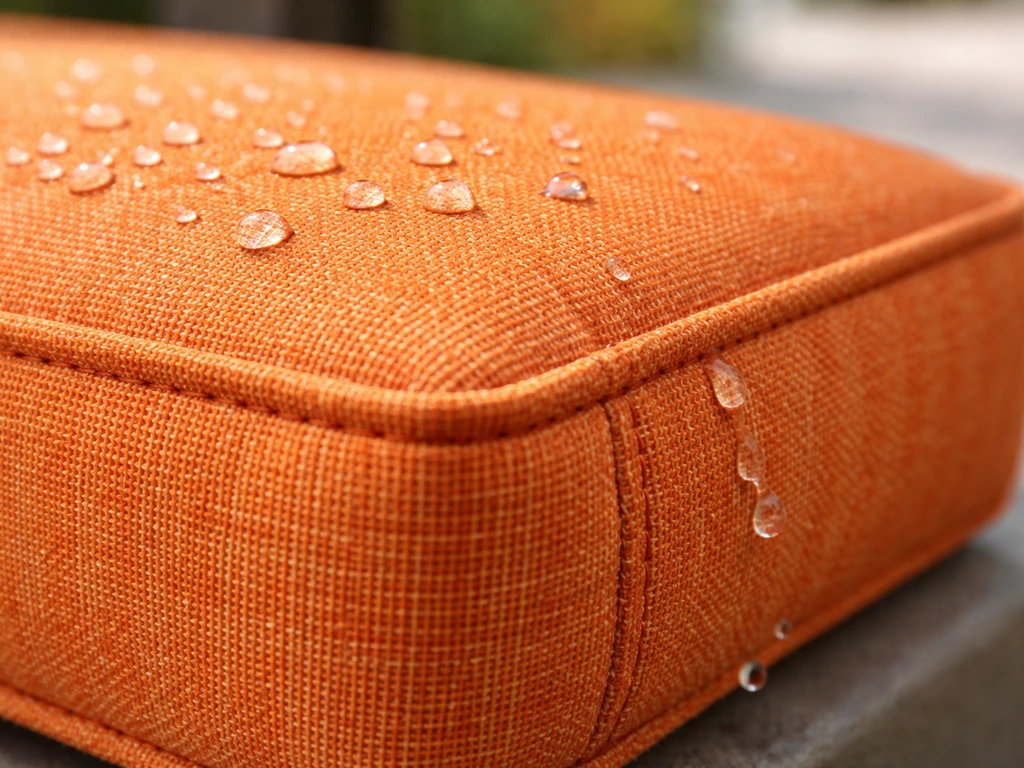
Sunbrella is the best-known brand of solution-dyed acrylic outdoor fabric, and the reason it dominates the outdoor furniture market is that the technology genuinely works. In solution-dyed acrylic, the color pigment is integrated throughout the fiber during manufacturing, not applied as a surface coating. This means UV can't strip the color away because there's no exterior dye finish to degrade. The pigments are UV-stable and the performance characteristics don't wash off over time. In humid Florida conditions, this matters enormously: solution-dyed acrylic is inherently mold and mildew resistant, it repels water, and because it's breathable (rather than a solid coated fabric), moisture doesn't get trapped against the cushion interior. Sunbrella specifically markets this fabric for humid climates precisely because moisture trapping is what leads to mildew in cushion cores. Other brands make comparable solution-dyed acrylics with similar warranties (some offering 10-year fade, rot, and mildew warranties), so you're not locked into one brand, but "solution-dyed acrylic" is the spec you want on the label.
Cushion inserts and drainage
The fabric cover is only part of the equation. Inside the cushion, you want a quick-drying foam or a wrapped insert that sheds water rather than absorbing it. Quick-dry foam inserts with drainage holes are standard on quality outdoor cushions and make a real difference in Florida's near-daily summer rain. When cushions do get wet, tip them on their sides with the zipper facing down and unzipped to let water drain, then let them fully air-dry before using or covering. Cushions that stay damp develop mildew in the interior foam, and once that happens it's very difficult to remediate, porous materials with mold growth often need to be replaced entirely.
Frame finishes and hardware
Beyond the frame material itself, pay attention to how it's finished and fastened. Powder coating should be smooth, consistent, and free of bubbles or thin spots at edges and corners. Bolts, screws, and connector hardware are often the first failure point on otherwise solid furniture: cheap zinc or galvanized hardware corrodes fast in Florida's humidity, and once hardware fails you're stuck with furniture that wobbles or disassembles. Stainless hardware is worth paying for, and on coastal properties 316 stainless is worth the premium. Look for hardware that's either fully concealed or has caps over it to reduce direct exposure.
What to look for when you're actually shopping
Before you buy anything, measure your space carefully. Note not just square footage but clearance space around furniture for chairs to pull out, traffic paths, and gate or door widths if you need to move pieces inside for storms. A dining set that looks proportional online can overwhelm a real patio, and a loveseat that barely fits through a screen door becomes a problem when a hurricane watch is posted.
When evaluating specific pieces, here's what to actually check and ask about:
- Frame material and grade: ask whether aluminum is cast or extruded, and what alloy grade is used
- Powder coat specification: thickness, any underlying primer, and whether it's warranted against chipping
- Hardware material: stainless steel preferred, ask about specific grade for coastal use
- Cushion fabric specification: look for "solution-dyed acrylic" explicitly, not just "outdoor fabric"
- Cushion insert construction: quick-dry foam with drainage? Zippered covers for cleaning?
- Warranty terms: what exactly is covered and for how long (fade, rust, structural failure)
- Weight and storability: how will you move this before a storm, and where will it go?
- Frame joinery quality: welds should be clean and smooth, not rough or gapped; legs should feel solid, not wobbly
- UV-stable finishes: for any wood or composite component, confirm UV inhibitors are in the finish or material, not just applied as a topcoat
Don't be shy about asking retailers these questions directly. A reputable seller who stocks Florida-appropriate furniture will know the answers. If a salesperson can't tell you what alloy grade the aluminum is or whether the fabric is solution-dyed, that's telling you something about the product's quality tier.
A maintenance plan that actually extends lifespan in Florida
Even the best materials need some care in Florida's climate. The good news is that with the right furniture, the maintenance is simple and infrequent. Here's a practical seasonal approach.
Routine cleaning (monthly or after heavy rain/storms)
Rinse frames with fresh water, especially if you're in a coastal area where salt deposits accumulate. Wipe down hard surfaces with mild soapy water and rinse thoroughly. For cushion fabric, brush off any surface dirt and rinse. Solution-dyed acrylic fabric is bleach-cleanable for stubborn mold or stains without losing color, which is a genuine practical advantage over other outdoor fabrics. After any cleaning, always let everything dry completely before replacing cushions or covering furniture, because covering damp furniture traps moisture and promotes mold growth. If you need to cover pieces for more than a few days, remove cushions entirely and store them dry.
Mold and mildew: act quickly
Florida's humidity means mold can establish on surfaces within days given the right conditions. The EPA's guidance on mold cleanup is straightforward: scrub mold off hard surfaces with detergent and water, dry completely, and fix whatever moisture problem allowed the mold to grow in the first place. Skipping the "fix the moisture" step means it comes back. For porous materials like cushion foam that develop interior mold, the honest reality is that cleaning is often insufficient, mold grows into the empty spaces inside porous material, and the EPA notes that moldy porous materials often need to be replaced rather than salvaged. This is why preventing the problem by keeping cushions dry is far more practical than trying to remediate it after the fact.
Pre-storm preparation
When a tropical storm or hurricane watch is posted, bring furniture inside or under solid shelter. The CDC recommends this explicitly as part of standard hurricane preparation, and for good reason: unsecured patio items become projectiles in high winds, threatening your home's windows, your neighbors' property, and anyone nearby. If you can't bring pieces inside, group them together and use furniture straps to secure them to a fixed structure. Stack chairs and invert tables to reduce wind loading. Never leave umbrellas up in storm conditions.
Annual inspection and touch-up
Once a year, usually at the start of dry season (late October through November is a good time in Florida), do a full inspection of frames, hardware, and finishes. Look for any chipping in powder coat and touch it up with matching paint to stop corrosion before it starts. Check all hardware connections for looseness, corrosion, or cracking. On teak furniture, assess whether a cleaning and oiling is needed based on the look and feel of the wood. Refinish or reseal teak before it dries and checks, not after. Covers should be used during the off-season or extended periods of non-use, but only after thoroughly cleaning and drying everything first.
The practical shortlist: best picks for Florida conditions
To bring it all together: for most Florida homeowners, a powder-coated aluminum frame with solution-dyed acrylic cushions is the best all-around choice, offering durability, manageable weight, low maintenance, and a wide range of style options. If you want absolute minimum maintenance and don't mind a more casual aesthetic, HDPE furniture outlasts everything else with almost zero upkeep. For a covered lanai or screened porch, you have more flexibility and resin wicker with an aluminum frame can look great and last well. Teak is a premium natural option for those who enjoy the maintenance ritual and want the warmth of real wood.
For South Florida coastal properties specifically, upgrade every specification: marine-grade 316 stainless hardware throughout, thicker powder coating with a marine-grade primer, HDPE or properly specified aluminum frames only, and weekly freshwater rinses if you're on the water. The same general principles apply to any coastal setup where salt air is a daily factor, whether that's on a beach-facing patio or a waterfront pool area. If you're exploring options specifically for salty, marine environments, the material and fabric considerations here overlap closely with what makes furniture work near the ocean or around a saltwater pool, the core requirements are the same: corrosion resistance, UV stability, and moisture management. If you're shopping for the best patio furniture for ocean air, start with those same corrosion-resistant specs for salt-laden breezes. These guidelines will help you choose the best patio furniture for salt air without overpaying for the wrong materials.
The through-line in all of this is to buy quality once rather than replace cheap furniture every few years. Florida's climate will expose every shortcut a manufacturer took, usually within the first two summers. A set that costs more upfront but uses the right alloys, coatings, and fabrics will almost always cost less over a five- or ten-year span, and you won't spend your weekends dealing with rust stains, mildewed cushions, or furniture that's falling apart at the welds.
FAQ
How do I choose the best patio furniture for Florida if I live near the ocean, but not directly on the beach?
If you are within about a mile of salt water (or you have ocean spray from wind patterns), prioritize corrosion-resistant specs over “seasoning” to the environment. For frames, use powder-coated aluminum with stainless fasteners, or HDPE. For cushions, insist on solution-dyed acrylic and quick-draining inserts. Even good inland furniture can fail quickly near the coast because salt concentrates as moisture evaporates.
Can I use fabric patio furniture in Florida full sun, or will it mildew and fade too fast?
Yes, but only if the product is built for Florida. Avoid “outdoor” canvas with surface-dyed color or thin coatings, because UV and humidity fade and weaken coatings. If you want fabric furniture in full sun, match the cushion guidance in the article: solution-dyed acrylic cushions and quick-dry foam that can drain fully. Also look for removable covers that can dry between rain cycles.
Does powder-coated aluminum last long enough in Florida if the hardware is not stainless?
Not automatically. Powder coat should be uniform and thick, and you still need stainless hardware because the joints are where corrosion starts. After storms or long rains, check for small chips at bolt holes and the underside of frames. If you see any rust bloom around fasteners, clean it promptly and touch up powder coat so salt water cannot get under the finish.
What’s the best way to prevent mildew in solution-dyed acrylic cushions during Florida’s constant rain?
Solution-dyed acrylic typically performs better, but it still needs drying habits. If your cushions stay damp overnight, mildew can start in the interior foam even with breathable fabric. Use the drainage technique (zipper down, tip sideways, keep uncovered until fully dry) and keep cushions off the ground during wet spells, especially under trees where rain splashes and puddles form.
Is resin wicker still a good choice for a screened-in patio in Florida, or does it mildew differently?
For covered lanai or screened rooms, humidity can pool in corners and under furniture. Choose materials that handle moisture without absorbing it, like HDPE or aluminum frames with solution-dyed cushions. If you use resin wicker, confirm the frame is aluminum and that the weave design drains instead of trapping water on the bottom.
Should I cover my patio furniture in Florida to extend its life, or can covers cause mold?
A cover helps, but it can also trap humidity if it is not breathable or if you cover furniture before it is fully dry. In Florida, aim for a fit that sheds rain and allows airflow, and only cover after cleaning and complete drying. If cushions were exposed to storms, remove cushions for drying rather than covering the entire set while it’s still damp.
What should I upgrade first if my budget is limited, cushions or frame hardware?
Start with the cushions and fasteners, because they fail first in Florida. Look for solution-dyed acrylic with a stated fade, rot, and mildew performance (warranty details help), and quick-dry foam with drainage. Then verify the frame has thick, properly cured powder coat and stainless hardware, ideally 316 stainless if you are coastal.
What’s the safest way to prepare patio furniture for a tropical storm if I can’t bring everything inside?
For hurricane season, avoid relying on weight alone, even with heavy HDPE. Use a plan: store pieces if possible, otherwise secure furniture straps to a fixed structure, and group items so fewer pieces become projectiles. Also remove or collapse umbrellas and keep them indoors, because umbrella poles and canopies catch wind and turn into missiles.
Can teak patio furniture handle Florida storms and humidity with minimal maintenance?
Yes, but it is location and storage dependent. Teak can survive Florida conditions, but the look depends on whether you clean and oil or seal it on a schedule. If you want less upkeep, let it weather naturally (silver-gray) but still rinse off salt spray and wipe away organic debris to reduce surface mold staining between cleanings.
How can I tell if resin wicker patio furniture is actually Florida-appropriate, not just marketed as all-weather?
Many “all-weather” wicker sets have hidden steel. If the product description does not clearly specify an aluminum frame (not just “resin wicker”), treat it as a red flag. Confirm the frame material at the retailer, check for drainage gaps in the seat and bottom surfaces, and inspect the connection points where standing water collects.
What changes should I make to patio furniture choices if it’s beside a pool or in a chlorinated splash zone?
If your furniture is near a pool or gets chlorine splash, select HDPE as the primary frame, and avoid galvanized fasteners near the deck. Confirm cushion materials dry fast and use solution-dyed acrylic so the color and mildew resistance hold up. For aluminum sets, verify chemical-resistant powder coat and stainless fasteners, then rinse after heavy pool use to remove chlorinated residue.
What should I inspect during an annual Florida patio furniture check to catch problems early?
Yes, and it’s one of the easiest ways to extend life. Use your annual inspection to look for powder-coat chips, especially at corners, under rails, and around bolt heads. Clean and touch up promptly with matching coating, tighten hardware, and re-evaluate whether cushions still dry within a reasonable time after rain.
Next Articles
Common Patio Furniture Wood: Best Choices, Care & Tips
Compare common patio furniture wood types, teak, cedar, redwood, oak, with durability, finishes, and care tips.
Best Wood Patio Stain: Choosing Durable, Low-VOC Finishes
Compare and choose the best wood patio stain: durability, finish, climate tips, prep, and top product picks.
Common Patio Furniture Wood: Teak, Cedar, Redwood and More
Compare common patio woods like teak cedar redwood and pressure-treated: durability, quality checks, and care for long l