
For ocean air, your best patio furniture materials are marine-grade aluminum, teak (or other dense, naturally oily hardwoods), and HDPE composite. Those three hold up because they either don't corrode, repel moisture naturally, or are inert to salt altogether. Everything else, from wrought iron and cheap steel to natural rattan and bargain-brand wicker, needs either heavy qualification or a hard pass. The rest of this guide walks you through exactly why, what to buy in each furniture category, what construction details separate the good stuff from the junk, and how to keep whatever you buy lasting for years despite the salt, humidity, and UV your coastal patio throws at it.
Best Patio Furniture for Ocean Air: Coastal Buying Guide

Theo Tierney
7 Jul 2026
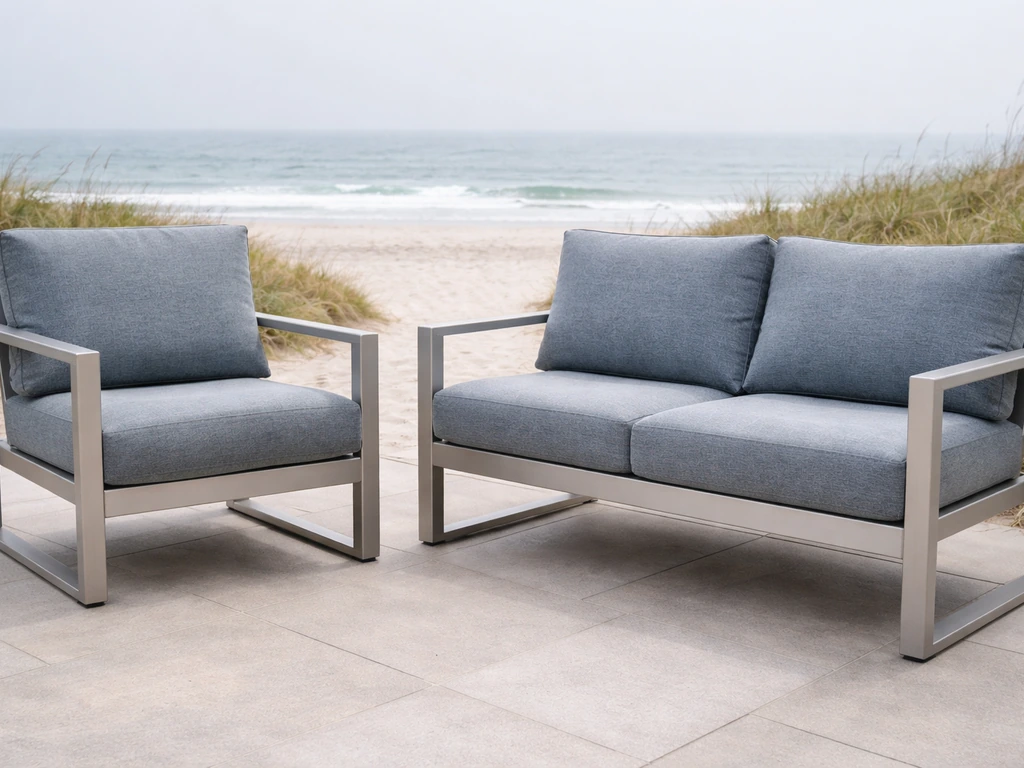
How ocean air actually destroys patio furniture
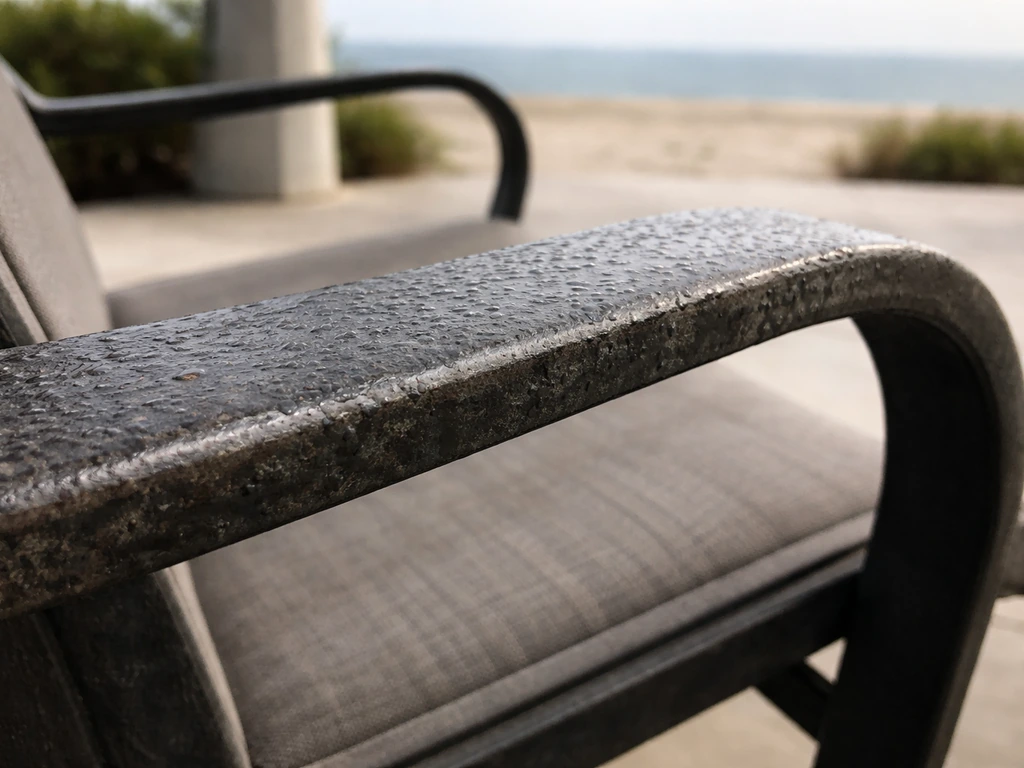
Ocean air doesn't just make things look old. It attacks through three simultaneous mechanisms, and understanding them changes how you shop.
Salt spray is the biggest offender. Wind carries fine salt particles inland, and they settle on every surface, especially in any gap, seam, or fastener hole where moisture can pool. That salt pulls moisture from the air and creates a persistently wet, highly conductive electrolyte that accelerates electrochemical corrosion far faster than rain alone. This is the same mechanism that ASTM B117 salt-spray testing simulates in labs, where coatings are evaluated for edge creep, blistering, and delamination under continuous salt fog. When a coating fails at the edges or scratches, the exposed metal underneath rusts aggressively. On untreated or lightly galvanized steel, this can happen in a single season near the water.
Humidity compounds everything. Coastal air stays humid even on sunny days, which means wood swells and contracts repeatedly, forcing open sealed joints. Cushion foam that never fully dries grows mildew inside even when the fabric surface looks dry. Metal joints that trap moisture never dry out between salt deposits. You'll often see the damage before you understand it: a subtle surface dullness, faint rust halos around screw heads, a faint mildew smell from cushions that still look presentable.
UV fading is the third layer. Coastal sun is intense, and salt air degrades UV-protective coatings faster than in inland environments because the salt itself can break down polymer chains in powder coats and fabric treatments. Sling fabrics, cushion covers, and even powder-coated frames fade and chalk noticeably faster than their inland counterparts unless they're rated for the specific combination of salt and UV exposure.
Which materials actually last (and which to skip)
Every material sold for outdoor use has a story. Here's the real one for each, specifically in a salt-air environment.
Aluminum: the closest thing to a worry-free option
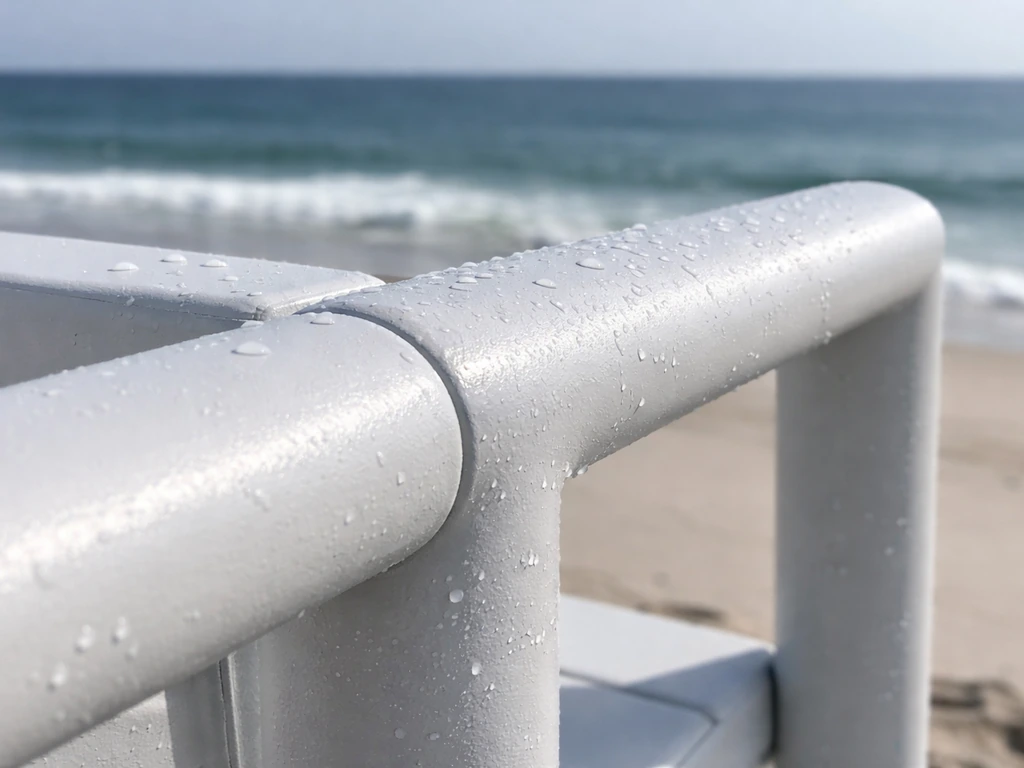
Marine-grade aluminum (typically 6061 or 6005 alloy) is the gold standard for coastal frames. Aluminum doesn't rust because it forms a stable aluminum oxide layer on its own surface that actually protects the metal underneath. That said, it's not completely invincible: low-grade aluminum alloys can pit over time in heavy salt exposure, and the powder coating over the frame can still fail if it's thin or poorly applied. What you want is cast or extruded aluminum with a thick powder coat (look for 3 to 4 mil dry film thickness) applied over a zinc phosphate or chromate conversion primer. Brands that publish coating specs are telling you something important. Brands that just say 'powder-coated finish' without details often aren't using a primer layer, and that coating will delaminate at the edges within a couple of seasons.
Teak and other hardwoods: the right wood matters enormously
Teak is the benchmark coastal wood for a reason. It's dense (around 40-45 lbs per cubic foot), contains natural silica and teak oil that repel water, and resists rot, insects, and warping better than virtually any other common outdoor wood. Properly maintained, a solid teak dining set or lounge chair will outlast most metal furniture near the ocean. The trade-off is cost and maintenance: good teak is expensive, and while you can let it silver gracefully without oiling, you do need to clean it and re-seal or re-oil annually if you want to preserve the color and prevent surface cracking in very dry coastal heat. Other acceptable hardwoods include eucalyptus (more affordable, similar density) and ipe (extremely hard, dense, slow to absorb moisture). What to avoid: pine, cedar (without heavy sealing), and anything labeled 'acacia' without knowing the specific species, since quality varies wildly. Also avoid furniture described as solid wood without specifying the species.
Steel and wrought iron: possible, but high maintenance
blank" rel="noopener noreferrer">Unprotected steel corrodes rapidly in salt air. FEMA's technical guidance on coastal construction is blunt about this: ungalvanized steel is not appropriate for salt-air environments without significant protection. That means if you want steel furniture near the ocean, you need heavy-gauge steel (minimum 1.5mm wall thickness for tubular frames, thicker for structural pieces), hot-dip galvanizing underneath a quality powder coat, and a very disciplined maintenance routine. Wrought iron has the same limitation. It looks beautiful and it's heavy enough to handle coastal wind, but it will rust through any coating eventually, especially at welds and cut edges. If you're committed to the iron look, budget for annual touch-up paint and expect to refinish frames every 3-5 years. For most people, aluminum gives you the same weight options without the rust risk.
Synthetic wicker and HDPE composite: surprisingly good
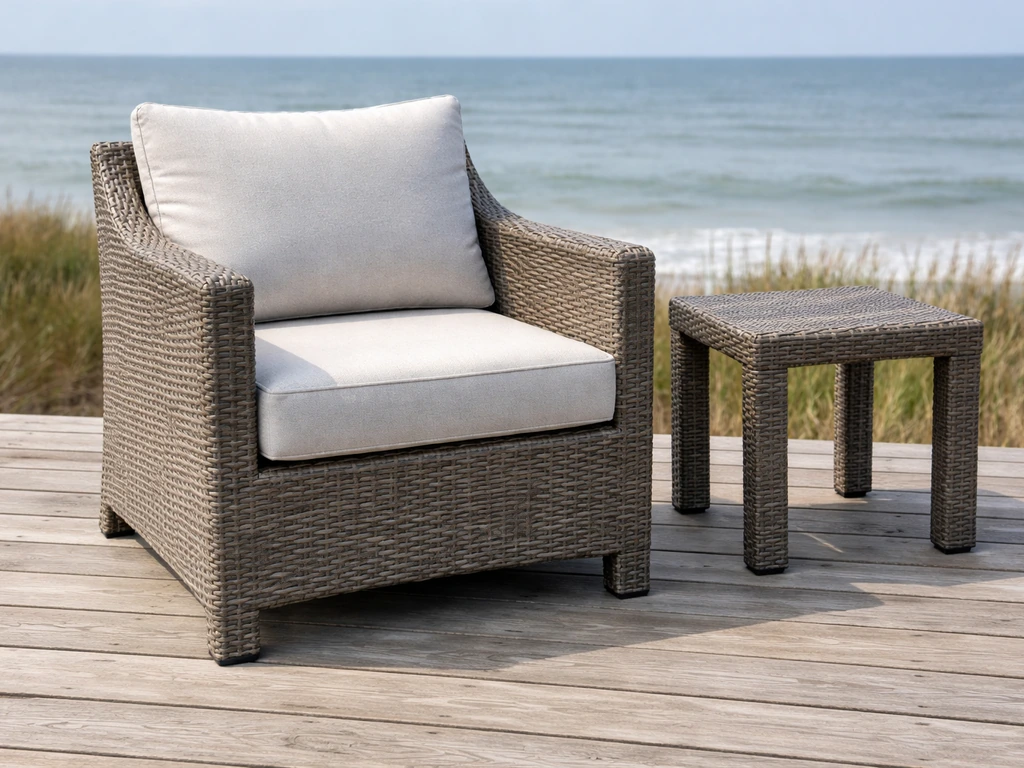
Real rattan and natural wicker are not coastal furniture. They'll swell, split, and mold within a season near the ocean. What's sold as 'all-weather wicker' today is almost universally a synthetic resin (polyethylene or PVC) woven over an aluminum or steel frame. The wicker material itself is inert to salt and moisture, but the frame underneath is what matters. Aluminum-framed synthetic wicker is excellent for coastal use. Steel-framed synthetic wicker is risky because if the powder coat gets scratched or the frame welds aren't sealed, salt water wicks in and the rust blooms out through the woven resin. HDPE (high-density polyethylene) furniture, the stuff that looks like painted wood planks, is completely inert to salt, won't rot or splinter, and needs almost no maintenance. It's not glamorous, but it genuinely does not care about ocean air. Quality HDPE furniture (Polywood is the well-known brand but there are others) can last 20 or more years with minimal upkeep.
Quick material comparison
| Material | Corrosion Risk | Maintenance Level | Typical Lifespan Near Ocean | Best For |
|---|---|---|---|---|
| Marine-grade aluminum | Very low | Low | 15-25+ years | All furniture categories |
| Teak / dense hardwood | None (rot risk if unsealed) | Moderate | 20-30+ years | Dining, lounging, benches |
| HDPE composite | None | Very low | 20+ years | Dining, Adirondacks, benches |
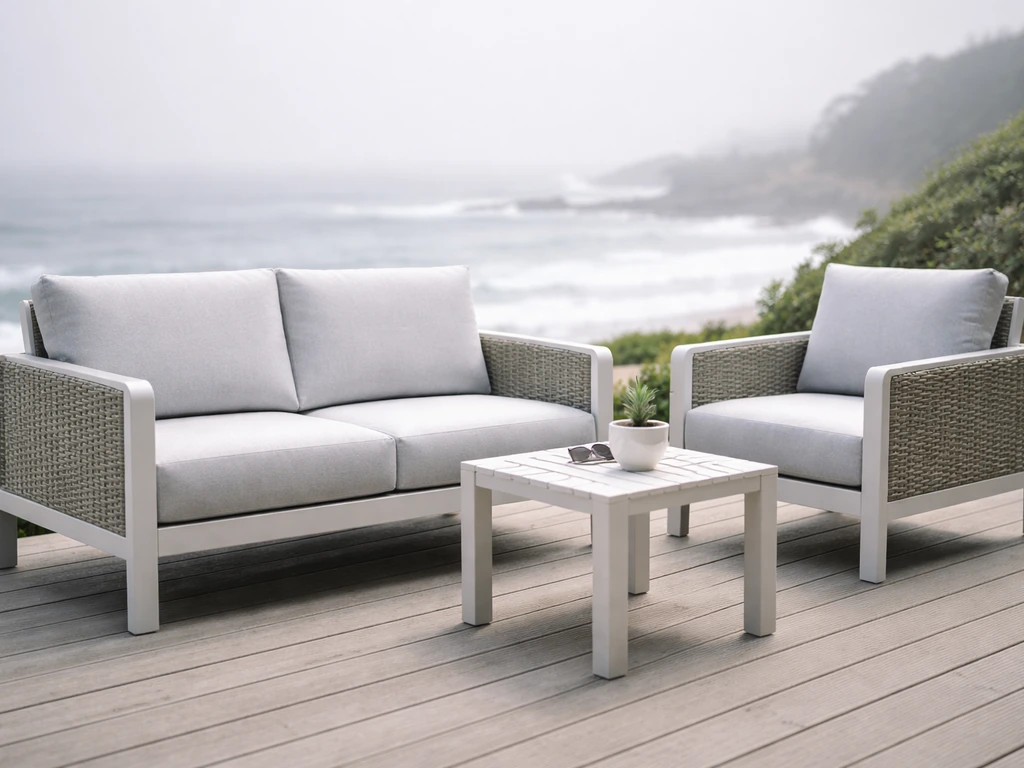
| Synthetic wicker (aluminum frame) | Low | Low-moderate | 10-15 years | Sectionals, lounge sets |
| Synthetic wicker (steel frame) | Moderate | High | 5-8 years | Lower-cost occasional use |
| Galvanized + powder-coated steel | Moderate | High | 5-10 years | Heavy seating only |
| Wrought iron | High | Very high | 3-7 years without refinishing | Not recommended coastal |
| Natural rattan / wicker | Extreme | Not viable | 1-2 seasons | Avoid entirely |
Best furniture categories for coastal patios
Dining sets
For a coastal dining set, lean toward cast aluminum or teak with a tempered glass or teak slab top. If you want the best patio furniture for salt air, choose a coastal dining set built from marine-grade aluminum or teak with non-corroding hardware. Tempered glass resists salt haze and wipes clean easily. Avoid painted MDF tabletops or faux-wood surfaces that chip at edges. Sling-style chairs (a UV-resistant fabric stretched over an aluminum frame with no cushion) are ideal for coastal dining because there's nothing to mildew and the sling dries instantly. Look for chairs with angled back legs and wide feet, since narrow-footed lightweight dining chairs blow over in coastal wind. If you prefer cushioned dining chairs, seat-only cushions with drainage holes are easier to manage than full back cushions.
Lounge chairs and chaises
Pool-grade aluminum chaises with sling fabric are the most practical coastal lounge option. They stack, resist corrosion, and dry immediately. If you want a more luxurious lounge, look for deep-seating chairs with Sunbrella (or comparable solution-dyed acrylic) cushions over powder-coated aluminum frames. Avoid lounge chairs with thick foam cushions that have solid fabric shells. Salt air speeds up mildew growth inside foam, and you can't always see it. Marine-grade foam (open-cell, quick-dry) and zippered, washable covers are the minimum you should accept.
Sectionals
Sectionals are the trickiest coastal furniture purchase because they're expensive, hard to store, and use a lot of cushioning. The best coastal sectionals have powder-coated aluminum frames (no steel), synthetic wicker over aluminum if you want that look, drainage holes in every cushion seat pan, and modular designs so you can rearrange or replace individual pieces. Avoid sectionals where the cushion platforms are solid surfaces with no drainage, because water and salt accumulate underneath cushions and destroy both the foam and the frame finish. Pay attention to how the sections connect. Metal connector hardware should be stainless steel (316 if possible) or solid aluminum, not zinc or chrome-plated.
Motion furniture (rockers, gliders, swivel chairs)
Motion furniture has more moving parts, which means more joints, pivots, and bearings that can corrode. The best coastal motion furniture uses sealed aluminum pivots or stainless steel bearing mechanisms. Cheap motion furniture uses unprotected zinc or plated steel internals that seize or rust through within a season or two near salt water. Ask specifically about the pivot and bearing material when evaluating swivel rockers. If the product listing doesn't say, that's usually a bad sign. Teak rocking chairs and gliders are another good option since the wood itself handles salt air well, and simple wooden joints have fewer failure points than mechanical pivots.
Umbrellas
A coastal patio umbrella needs a fiberglass or solid aluminum pole (not hollow painted steel) and a canopy fabric rated for UV and moisture resistance. Solution-dyed acrylic canopies (Sunbrella is the industry standard) hold their color and resist mildew far better than polyester canopies. The ribs should be fiberglass or aluminum, not painted steel wires that rust and bleed stains onto the canopy. For any patio exposed to real coastal wind, a heavy base (at least 50 lbs, ideally 75+ lbs for umbrellas over 9 feet) and a vented canopy design that lets wind pass through are essential. An umbrella that tips over repeatedly on your saltwater-exposed deck takes everything around it down with it.
Construction and hardware details that actually matter
The frame material is only part of the story. How the furniture is built determines whether the right materials actually deliver the right results.
Powder coating: what good looks like
A quality powder coat for coastal use starts with surface prep, specifically a zinc phosphate or chromate conversion coating applied before the powder to create chemical adhesion, not just mechanical adhesion. The dry film thickness should be 3 to 4 mils (you can ask a sales rep or check spec sheets from quality brands). Look for a multi-stage powder coat process, often described as a two-stage or three-stage process. Single-stage powder coat applied directly to bare aluminum or steel without primer will delaminate at edges and scratches within a few years. ASTM B117 salt-spray testing (often listed in spec sheets as 1,000-hour or 2,000-hour salt spray resistance) tells you how well the coating has been evaluated. Better brands publish these numbers. Generic brands don't.
Fasteners and hardware
This is where a lot of otherwise decent furniture fails near the ocean. The frame can be aluminum, but if the bolts, screws, and connecting hardware are zinc-plated or plain steel, you'll have rust bleeding through within a season. Per FEMA's coastal construction guidance, Type 304 stainless steel provides good corrosion resistance, and Type 316 (marine-grade stainless) provides superior resistance in the most aggressive salt-air conditions. For furniture near the ocean, look for 316 stainless hardware or solid aluminum fasteners. Avoid any furniture described as using 'rust-resistant' hardware without specifying the material, because that typically means zinc or chrome plating over steel, which fails at edges and screw heads quickly.
Drainage and frame design
Hollow frame members should have drainage holes at low points so water doesn't accumulate inside and corrode from within. Seat pans and platforms on deep-seating furniture should have punched drainage holes. Weld seams should be smooth and fully sealed, since gaps at welds are where salt and moisture concentrate and initiate corrosion. Feet and leg caps matter too: plastic feet caps trap salt water underneath them. Rubber feet with open drainage channels, or feet designed to sit slightly off flat surfaces, are better for coastal use. Teak plugs or stainless caps over countersunk screws on wood furniture prevent moisture from wicking into fastener holes.
Cushions, fabrics, and covers for salt air
The fabric you choose changes everything
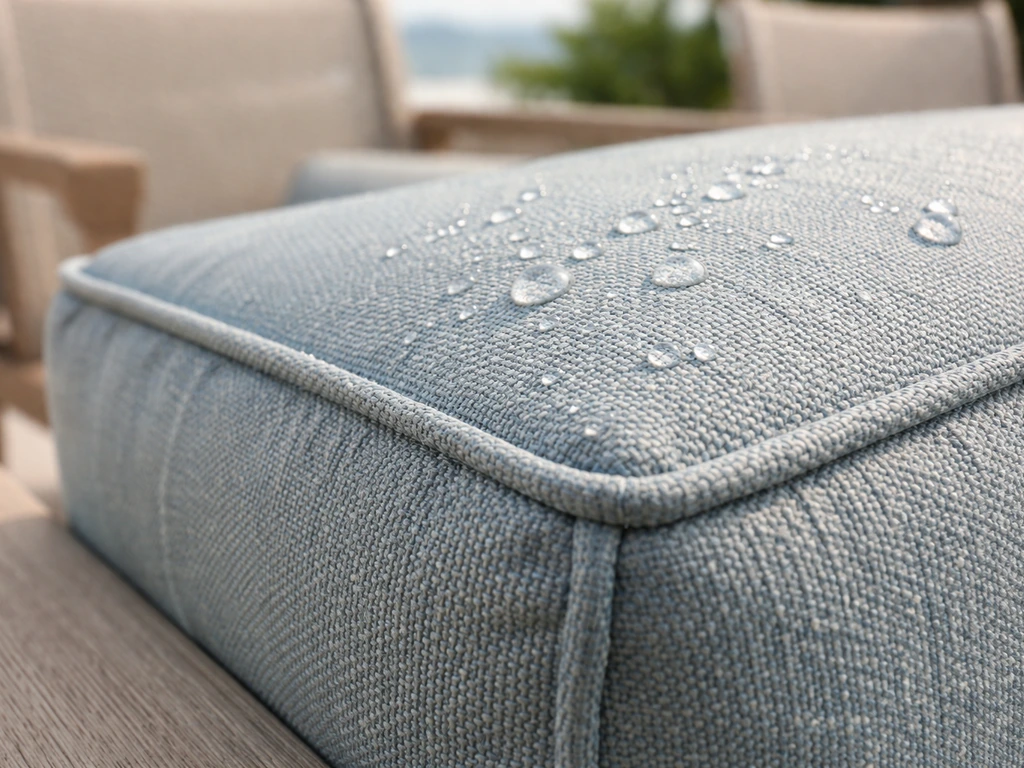
Solution-dyed acrylic is the fabric standard for serious coastal use. The dye is worked into the fiber during manufacturing, not applied to the surface, which means UV and salt can't bleach it out from the outside the same way they attack surface-dyed or printed fabrics. Sunbrella is the most widely known brand, but any fabric labeled solution-dyed acrylic with a mildew-inhibitor treatment is a reasonable choice. Polyester 'weather-resistant' fabrics are a step down: they hold color reasonably well but are more susceptible to mildew in constantly humid coastal air and degrade faster under intense UV. Olefin is a middle option, better than polyester, not quite as durable as solution-dyed acrylic.
Cushion construction for coastal conditions
Inside the cover matters as much as the cover itself. Solid foam cushions that aren't quick-dry rated will hold salt water inside for days and develop mildew you can't reach without opening the cushion. Look for open-cell, quick-dry foam cores, sometimes marketed as 'marine-grade' foam or 'outdoor foam.' The fill dries in hours instead of days. Removable, machine-washable or hose-washable covers are essentially non-negotiable for coastal use. Covers that are sewn shut require the cushion to air-dry as a unit, which takes too long in humid coastal air. Zippered covers with drainage holes at seams are the practical choice.
Furniture covers
Furniture covers near the ocean should be breathable, not just waterproof. A fully sealed waterproof cover traps salt-laden humidity underneath and creates a humid microclimate that's actually worse than leaving furniture uncovered. Look for covers made from solution-dyed polyester or polypropylene with air vents or breathable panels. Secure them with ties or straps rated for wind, because a coastal patio cover that blows off in a storm and wraps around a metal frame can scratch the powder coat, which is exactly the failure point you're trying to prevent.
A maintenance routine that actually keeps coastal furniture lasting
Near the ocean, maintenance isn't optional. The good news is that a consistent lightweight routine prevents the kind of damage that requires expensive repairs or early replacement.
Regular rinsing
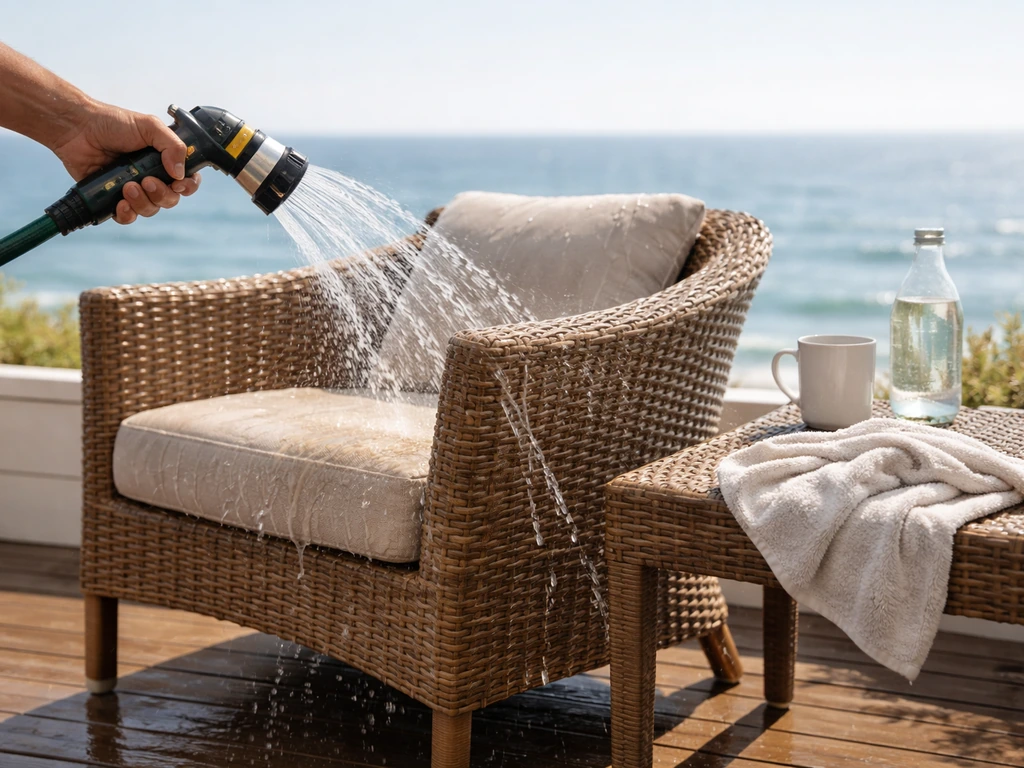
Rinse all metal and hard surface furniture with fresh water at least once a week during salt-spray season. This removes salt deposits before they can sit and draw moisture. After a storm or strong onshore wind event, rinse everything the same day if possible. Don't use a pressure washer on powder-coated frames at close range, since high-pressure water can chip the coating at edges and accelerate the very corrosion you're trying to prevent. A garden hose with a spray nozzle is sufficient. Pay attention to underneath the furniture: the legs, feet, and underside of frames are where salt deposits concentrate and are often missed.
Monthly cleaning
Monthly, wipe down metal frames with a mild soap solution and a soft cloth or brush. Avoid abrasive pads on powder-coated surfaces because they scratch the finish. After cleaning, rinse thoroughly to remove soap residue, which can itself attract salt particles. For teak and hardwood, a gentle deck brush and warm soapy water keeps the surface clean without stripping the natural oils. If you're maintaining the golden-brown color of teak, apply a teak sealer or teak oil annually after cleaning, once the wood is fully dry.
Cushion and fabric care
Bring cushions inside or into a breathable storage bag when they're not in use, especially overnight and during rain. Rinse cushion covers with fresh water after obvious salt exposure and air-dry them standing upright or on edge so water drains out rather than pooling inside. For solution-dyed acrylic covers, a mild soap and water scrub followed by a clean water rinse handles most mildew and salt staining. If mildew appears inside a foam cushion, a diluted bleach solution (1 part bleach to 10 parts water) with thorough rinsing and complete air-drying is effective, but only do this if the cover is washable or removable.
Annual inspections
Once a year, go over every piece with a careful eye for: rust halos or bleed-through around fastener heads, coating chips or edge delamination on powder-coated frames, loose or seized bolts on motion furniture and sectional connectors, checking weld seams for rust initiation, and any splits or checking in wood joints. Catch these early. A small chip in the powder coat can be touched up with matching paint pen or spray. A loose fastener can be replaced. Neither of these is a big deal at the annual inspection stage. Left for two or three years, they become structural problems.
Off-season storage
If you have a shoulder season at your coastal location, storing furniture in a garage or shed during the heaviest salt-spray months extends its life significantly. Stack chairs upside-down to keep rain from pooling in seat frames. Store cushions completely dry in breathable bags, not sealed plastic bins that trap residual moisture. For teak, storage indoors over winter prevents the repeated wetting and drying cycles that cause checking in less dense woods.
Buying checklists and the mistakes most people make
Budget tier: under $500 (a single piece or small set)
At this price point, your best realistic option is a single piece of quality HDPE furniture (an Adirondack chair, a bench, or a small side table) or a basic aluminum sling chair. For a saltwater pool, prioritize patio furniture materials and hardware rated for constant salt exposure, not just general outdoor use best realistic option. Do not try to buy a full dining or lounge set for coastal use at this budget and expect it to last. The corners cut at this price, especially in frame gauge, hardware quality, and powder coat process, will show up within a year near the ocean.
- Confirm the frame material: aluminum or HDPE only at this budget near salt water
- Avoid any set with steel bolts or zinc hardware (check the product description for fastener material, or contact the seller)
- Skip bargain cushion sets unless they specify solution-dyed acrylic or quick-dry foam
- Buy a single good piece rather than a matching set of mediocre pieces
- Don't be fooled by 'all-weather' or 'rust-resistant' claims without material specifics
Mid-range tier: $500-$2,000
This is where most coastal homeowners can get a complete dining set or lounge grouping in appropriate materials. The biggest mistake at this tier is buying 'coastal-looking' furniture (think white wicker with navy cushions) from a big-box store without checking the frame material and hardware. Many furniture sets in this range look coastal but are built for screened porches, not open salt-air exposure.
- Look for brands that publish powder coat specifications and frame alloy information
- Confirm the wicker weave (if applicable) is over an aluminum frame, not steel
- Verify cushion covers are removable and specify solution-dyed acrylic or olefin fabric
- Check for drainage holes in seat pans on deep-seating furniture
- Ask about or research the fastener material: ideally 304 or 316 stainless
- Budget for a cover and a can of touch-up paint on top of the furniture purchase
Premium tier: $2,000 and up
At this budget, you're buying from specialty outdoor furniture brands (Brown Jordan, Gloster, Woodard, Telescope Casual, and similar), where coastal durability is a design requirement rather than an afterthought. The biggest mistake here is paying premium prices for aesthetic brand reputation without verifying the specific construction specs. Even in this tier, some products use steel frames with cosmetic finishes that aren't appropriate for direct ocean exposure.
- Request or download the full product specification sheet before purchasing
- Look for published salt-spray test results (1,000 hours minimum, 2,000+ preferred)
- Confirm marine-grade (316) stainless fasteners for anything within 500 feet of the ocean
- Evaluate the warranty terms specifically for coastal/salt-air conditions, since some warranties exclude salt-air damage
- For teak: confirm it's Grade A plantation teak (the tight-grained, high-oil wood from older trees), not fast-grown Grade B or C
- Invest in custom-fit covers from the same brand, since they're designed for the exact piece geometry
Common mistakes to avoid at any budget
- Buying furniture based on looks first and material specs second. The most important decision near salt water is what the furniture is made of, not how it looks in the showroom.
- Assuming 'stainless steel' means corrosion-proof. Even 304 stainless can pit near the ocean with prolonged salt exposure. Maintaining and rinsing stainless regularly is still required.
- Skipping the maintenance. Ocean air damage is cumulative and progressive. Furniture that looks fine at the end of Year 1 with no maintenance can be structurally compromised by Year 3.
- Buying cushions without confirming they can be cleaned. Mildew in sealed cushions near salt water is almost inevitable. Cleanable, removable covers are essential.
- Ignoring wind stability. Lightweight furniture that works fine on an inland patio becomes a projectile on a coastal deck. Add weight, use furniture anchors, or store lightweight pieces when strong onshore winds are forecast.
- Treating all coastal environments identically. A covered lanai 300 feet from the water gets far less direct salt spray than an open deck 50 feet from the surf. Adjust your material requirements to your actual exposure level.
The overlap between ocean air furniture and other coastal scenarios is real: if you're also dealing with a saltwater pool nearby, the chlorine adds another corrosion layer on top of salt spray, and the same materials and construction principles apply but with even stricter standards for hardware and coating quality. Similarly, if you're furnishing a beach-facing property in Florida, the combination of year-round humidity, intense UV, and salt air year-round means that maintenance cadence and material quality need to be dialed up further compared to seasonal coastal properties in cooler climates.
FAQ
How do I tell if an aluminum patio set is truly “marine-grade” before I buy it?
Look for two specifics, alloy grade (often 6061 or 6005) and coating system details. If the listing only says “powder-coated” with no mention of conversion primer (zinc phosphate or chromate) and no target dry film thickness, treat it as unknown and verify via spec sheet or customer support.
Are stainless steel fasteners always safe for ocean air?
Stainless helps, but material grade matters. If the hardware is not clearly labeled 316 (or 304 at minimum), assume it could be chrome-plated steel or zinc hardware. Also check that the screws match the same grade statement, not just a single “stainless” component.
Can I use furniture covers if I live near the ocean, or do covers make things worse?
Covers can help, but only if they are breathable. A fully sealed “waterproof” cover traps salt-laden humidity underneath, which speeds corrosion and mildew. Use covers with venting or breathable panels, and secure them so wind cannot wrap or scratch the frame.
What’s the most common mistake people make with powder-coated coastal furniture?
Buying the right frame material but skipping the build details. The coating often fails first at edges, seams, and fastener points if there is no primer or the film is too thin. If you cannot confirm primer type and coating thickness, you are taking a gamble you usually will not win within a couple of seasons.
Is teak always the best wood choice for the coast?
Teak is among the most dependable, but “teak” still needs correct species and maintenance. Avoid products that call themselves “solid wood” without naming the species, and be aware that letting teak fully silver is fine aesthetically, but you may still need annual cleaning plus sealing or oiling if you want fewer surface cracks and a more uniform color.
How often should I rinse and clean coastal furniture if it’s only a few blocks from the water?
Even if you are not directly on the beach, plan on weekly fresh-water rinsing during salt-spray season. After strong onshore wind events, rinse the same day if possible, including the underside and legs, because salt settles and concentrates there first.
Are “all-weather” wicker and “outdoor wicker” actually good for ocean air?
Most “all-weather wicker” is synthetic resin woven over a frame, so the wicker itself is usually fine, the frame is what determines real durability. Choose aluminum-framed synthetic wicker, and be cautious with steel frames unless you can confirm a robust powder coat and fully sealed welds.
What should I do if I see rust halos around chair or table screw heads?
Treat it as an early coating failure, not cosmetic. Loosen and inspect the fastener area if possible, remove the affected hardware, and replace with the correct corrosion-resistant material (ideally 316 stainless or solid aluminum where appropriate). Then touch up chips promptly, because rust will wick outward under powder coat edges.
How can I reduce mildew on cushions without ruining the fabric or foam?
Choose quick-dry foam with removable, washable covers (zippered is best). Air-dry covers upright or on edge after any salt exposure, rinse with fresh water, and bring cushions in or into breathable storage during overnight humid periods. Avoid sealed storage containers that trap residual moisture.
Is a tempered glass tabletop always better for coastal dining?
Tempered glass is generally easier to maintain near salt air because it wipes clean and handles salt haze well. However, confirm the edge construction, avoid particle-board or MDF underlayers, and ensure the frame and fasteners beneath can withstand salt, since corrosion often starts at mounting points.
How do I evaluate coastal sectionals if I cannot store them easily?
Prioritize drainage and modularity. Look for cushion seat pans with drainage holes, powder-coated aluminum frames with no steel, and connectors using 316 stainless or solid aluminum. If storage is limited, modular designs let you remove and replace only affected pieces instead of discarding the full set.
What type of umbrella base and canopy design is safest in coastal wind?
Use a heavy base, at least 50 lbs and ideally 75+ lbs for larger umbrellas (over 9 ft). Choose a vented canopy that lets wind pass through, and use fiberglass or solid aluminum ribs and pole. A tip-prone umbrella will repeatedly stress seams and bearings, accelerating frame finish failure.
I have a budget set now, can I “upgrade” it for ocean air with better covers or maintenance?
Covers and rinsing help, but they cannot fix bad underlying corrosion resistance. If your current set has steel components, zinc-plated hardware, thin powder coat, or no drainage in hollow members, you will still see failure at seams and fastener heads. In that case, prioritize replacing the frame and hardware first, or limit use to sheltered hours and store indoors during peak salt-spray months.
Next Articles
Best Patio Furniture for a Salt Water Pool: Guide
Best patio furniture for salt water pool: corrosion resistant materials, construction checks, cushions care, and upkeep
Best Patio Furniture for Beach: What to Buy Today
Beach-ready patio furniture picks with salt-air durability, top material options, buying checklist, and maintenance for
Best Patio Furniture for Salt Air: What Actually Lasts
Material-by-material picks for salt-air patios, with rust-proof metal, treated wood, moisture-ready wicker, and durable