
The fabric you'll find on patio furniture cushions, sling chairs, and upholstered outdoor pieces falls into a few main categories: solution-dyed acrylic (think Sunbrella and its competitors), solution-dyed polyester, olefin, sling/textilene mesh, and occasionally canvas or natural fibers. Solution-dyed acrylic is the gold standard for outdoor upholstery because the color is locked into the fiber itself during manufacturing, not applied on top, which is why it holds up against UV, rain, and mildew far better than anything you'd use inside.
What Type of Fabric Is Used for Patio Furniture
Theo Tierney
8 Jul 2026
If you want to compare patio furniture material options side by side, start with how each fabric handles UV, mildew, and drying time patio furniture material comparison. If you want the short version: for cushions and upholstered pieces, look for solution-dyed acrylic or high-grade solution-dyed polyester. For sling and mesh chairs, look for PVC-coated polyester or textilene. Everything else is a compromise.
The main fabric types on patio furniture
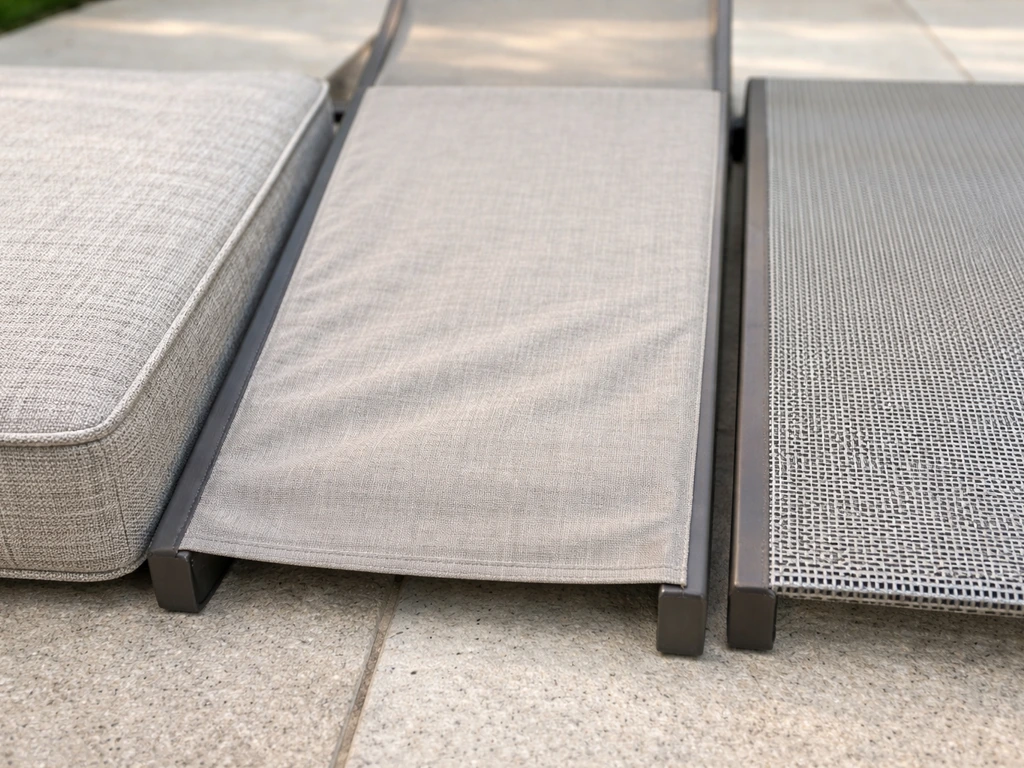
Patio fabric generally shows up in three forms: cushion upholstery (the fabric wrapped around foam or fill on seat and back cushions), sling fabric (the taut, suspended material that forms the seat itself on sling chairs), and sometimes full upholstery on lounge pieces or sofas. Most patio cushions are made by wrapping outdoor fabric around foam or other fill for the seat and back, so the fabric choice heavily affects how the cushions perform what are patio cushions made of. Each category uses different materials suited to its job.
Cushion and upholstery fabrics
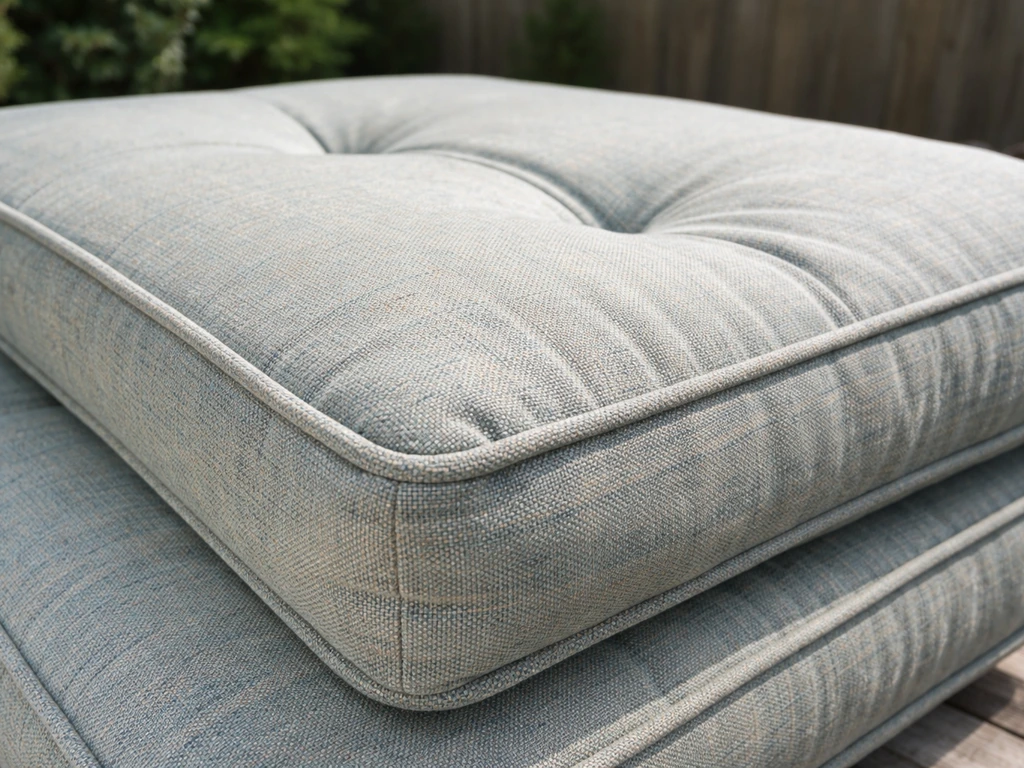
Solution-dyed acrylic is the benchmark. Brands like Sunbrella use this process because the pigment is added to the liquid polymer before the fiber is even extruded, meaning the color runs all the way through rather than sitting on the surface. That's why solution-dyed acrylic resists UV fading for years where a surface-printed polyester will look washed out in a single season. It's also inherently resistant to mildew growth on the fiber itself, though Sunbrella is clear that mildew can still grow on dirt and debris sitting on the fabric if you don't clean it. The trade-off is cost: quality solution-dyed acrylic costs noticeably more than polyester alternatives.
Solution-dyed polyester is the second tier. It uses the same dyeing principle as acrylic but polyester is less UV-stable by nature, so it will fade sooner under intense sun exposure. That said, high-denier solution-dyed polyester (think 600D or higher) performs reasonably well and is much more affordable. Many mid-range patio sets use it and it holds up fine in moderate climates or covered settings. Where it falls short is prolonged direct sun in hot climates and high-humidity environments where it's slower to dry.
Olefin (also sold as polypropylene) is another option you'll see at mid-price points. It's naturally hydrophobic, meaning water beads off it rather than soaking in, and it has decent colorfastness. It's not as UV-stable as solution-dyed acrylic but it's softer than many performance fabrics and dries quickly. Olefin is a reasonable choice for covered patios or climates without extreme sun.
Canvas and natural fabrics (cotton, linen blends) do show up occasionally on patio furniture, usually on pieces marketed more for style than weather performance. They look great when new but they absorb moisture, take forever to dry, and will mildew without aggressive maintenance. Unless the piece lives under a covered porch with minimal rain exposure, I'd avoid natural fibers for outdoor use.
Sling and mesh fabrics
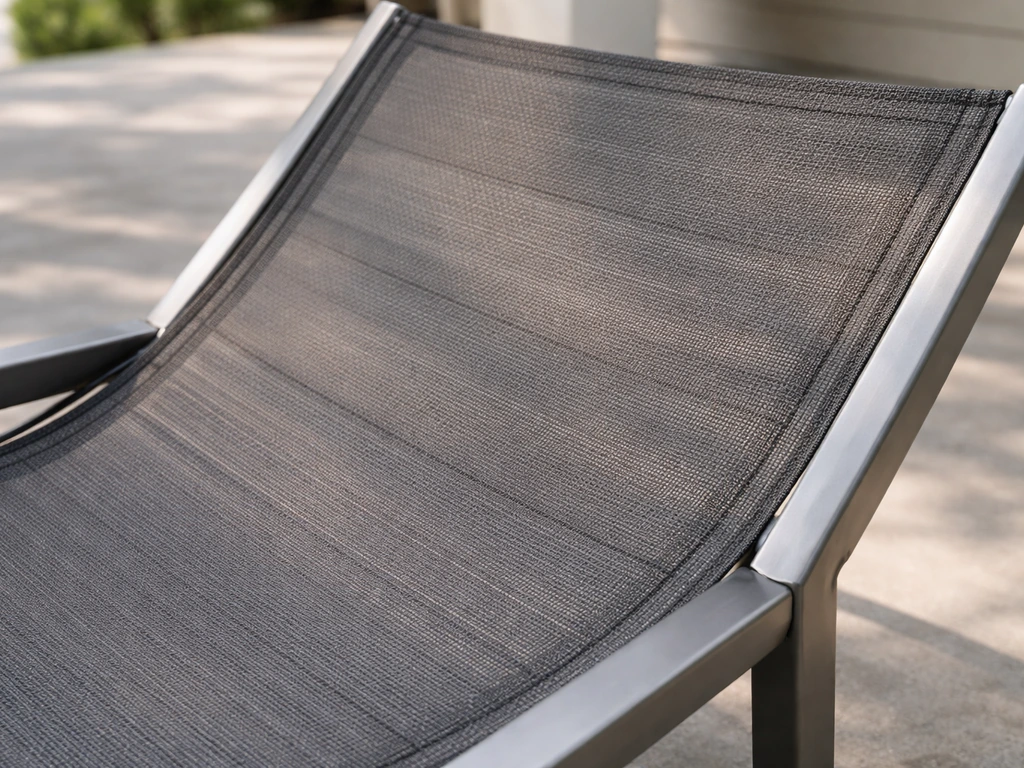
Sling chairs use a taut fabric panel suspended between the frame rails to form both the seat and back. The material is typically PVC-coated polyester or a textilene weave (a PVC-coated fiberglass mesh). Textilene is popular because it's extremely durable, dries almost instantly, and doesn't absorb sweat, making it comfortable in humid conditions. The weave density affects both breathability and sun blockage. Higher-quality sling materials are UV-stabilized in the PVC coating. Cheaper slings will crack, sag, or fade within a couple of seasons, so the quality difference here is very real.
What outdoor performance actually means
Outdoor fabric has to survive things indoor fabric never faces. Here's what actually matters when evaluating any patio fabric claim. ASTM G154 is a fluorescent UV lamp accelerated weathering practice used to simulate exposure to light, heat, and moisture when assessing resistance of nonmetallic materials to weathering ASTM G154 fluorescent UV lamp accelerated weathering practice.
- UV resistance: The sun breaks down polymer chains and bleaches dyes. Solution-dyed fibers resist this at the molecular level. Look for fabrics tested against standards like ASTM G154, which simulates UV, heat, and moisture exposure using fluorescent UV lamps. A meaningful UV rating should come from accelerated weathering data, not just marketing copy.
- Colorfastness: This is specifically about dye holding under UV light and environmental exposure. Industry test methods from organizations like AATCC measure colorfastness to light (such as the TM16 lightfastness method) and to perspiration (TM15). When a brand claims 'fade-resistant,' ask what test method backs that up.
- Water repellency vs. waterproofing: Most quality outdoor fabrics are water-repellent (they shed water) rather than truly waterproof. They use a durable water repellent (DWR) finish that wears off over time and needs to be refreshed. Cushion foam still absorbs moisture through seams, which is why quick-dry foam cores and drainage holes in cushion covers matter.
- Mildew and mold resistance: No fabric is mildew-proof if it stays wet and dirty. Solution-dyed acrylic doesn't feed mildew growth on its own, but organic material (pollen, dirt, food residue) sitting on any fabric can grow mildew. Regular cleaning is the real mildew prevention.
- Breathability: Tightly woven fabrics and vinyl-coated materials feel hot and sticky in direct sun. Open weaves and mesh fabrics (like textilene slings) breathe much better. For cushion upholstery, a moderate weave weight around 8 to 10 oz per yard is a reasonable balance of durability and breathability.
- Abrasion resistance: High-traffic seating needs fabric that handles repeated friction without pilling or wearing through. Denier rating (the thickness of individual fibers) matters here. Higher denier generally means more abrasion resistance.
How to figure out what fabric you're actually looking at
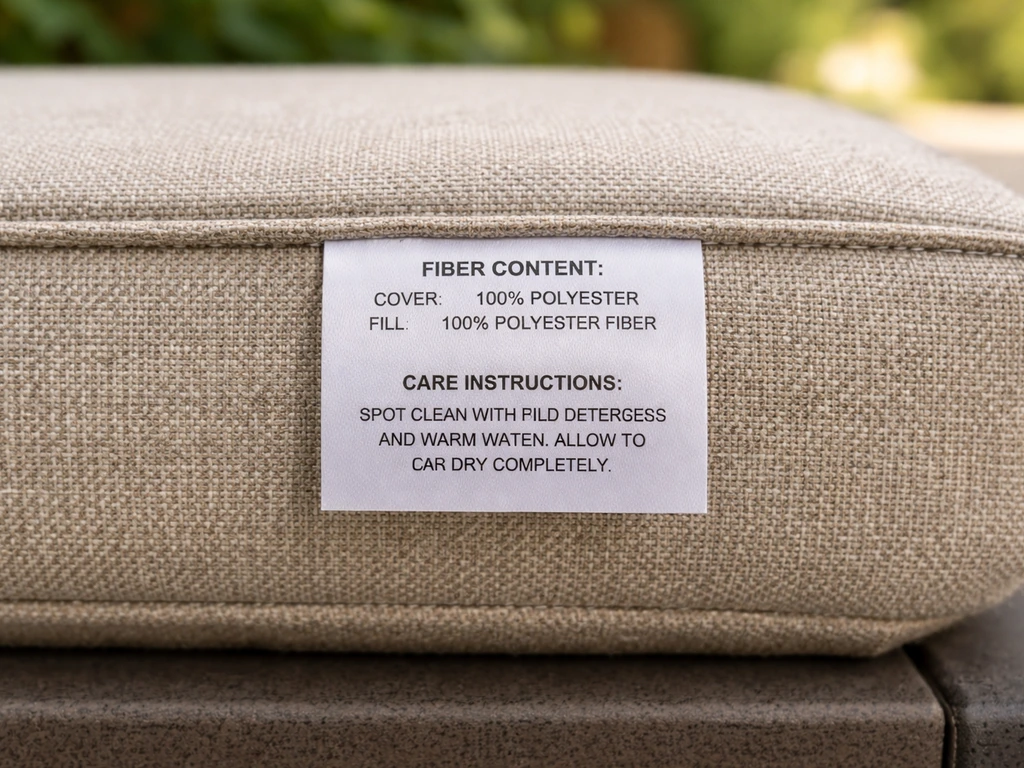
Manufacturers aren't always transparent about fabric specs on the sales floor or even on product pages. Here's how to cut through it.
- Check the care label or fabric tag on the cushion itself. Quality outdoor cushions usually have a sewn-in label listing the fiber content (e.g., '100% solution-dyed acrylic' or '100% polyester'). If there's no label or it just says 'outdoor fabric,' that's a yellow flag.
- Look for brand names on the fabric: Sunbrella, Outdura, Tempotest, and Glen Raven are manufacturer names that appear on the fabric selvedge or label. If the retailer calls out one of these by name, that's a verifiable spec. If they just say 'Sunbrella-like performance,' that's marketing language, not a spec.
- Ask about the dyeing process specifically. 'Solution-dyed' is a meaningful technical term. 'Colorfast' or 'UV-treated' on its own is vague and could mean anything from a surface coating to a marginal dye bath improvement.
- Check the denier or weight if listed. For sling fabrics, a higher denier (e.g., 1000D vs. 300D) means heavier, more durable construction. For cushion upholstery, a fabric weight of 8 to 12 oz per linear yard is a practical range for quality outdoor use.
- Run the fingernail test on the dry fabric: drag your fingernail across it firmly. If it leaves a white scuff mark that doesn't rub away, the fabric has a surface coating over a lower-quality base. Solution-dyed acrylics and olefins won't scuff this way.
- Look at the back of the fabric. Cheap outdoor fabrics often have a visible acrylic or PVC backing applied to the underside to add water resistance. Quality outdoor fabrics are engineered through the weave itself and usually have a clean, consistent appearance on both sides.
Best fabric for your specific climate
Climate is the single biggest factor in which fabric actually holds up versus which one fails early. Here's how to match fabric choice to your conditions.
| Climate / Condition | Best Fabric Choice | What to Avoid |
|---|---|---|
| Intense sun (Southwest, desert, high altitude) | Solution-dyed acrylic (Sunbrella-grade) | Standard polyester, canvas, natural fibers |
| High humidity and heat (Southeast, Gulf Coast) | Solution-dyed acrylic or textilene sling; quick-dry foam cores essential | Cotton canvas, low-grade polyester with slow dry times |
| Heavy rain and frequent wet cycles | Solution-dyed acrylic with DWR finish; textilene mesh for seating | Non-treated polyester, natural fibers, foam without drainage |
| Coastal salt air | Solution-dyed acrylic; avoid metal hardware on fabric since salt corrodes fasteners | Olefin in very exposed locations (can degrade faster in salt spray) |
| Freezing winters (snow, ice, freeze-thaw cycles) | Any quality outdoor fabric works if stored; if left out, solution-dyed acrylic handles temperature swings best | Vinyl-coated fabrics (can crack in freezing temps), sling fabrics left under snow load |
| Covered patio, moderate climate | Solution-dyed polyester or olefin is cost-effective here; full acrylic is still better but less critical | Natural fibers still not recommended even under cover |
For family use with kids and pets, prioritize abrasion resistance and stain cleanability over everything else. Solution-dyed acrylic cleans up with soap and water for most stains, and because the color runs through the fiber, surface abrasion doesn't show as fading. That's a real practical advantage over polyester or olefin in high-traffic settings.
Durability vs. comfort: the real trade-offs
The most durable outdoor fabrics aren't always the most comfortable to sit on, and understanding that trade-off helps you make a smarter choice for how you actually use the furniture.
Tightly woven, heavy solution-dyed acrylic (like standard Sunbrella upholstery weight at around 9 to 12 oz per yard) is extremely durable and weather-resistant but it's stiffer and can feel warm in direct sun because less air moves through it. Lighter-weave performance fabrics and textilene slings feel much cooler and more breathable but may show wear faster under heavy use.
Quick-dry foam matters as much as the fabric itself. The best outdoor cushion fabric paired with a standard indoor foam core is a losing combination. The foam will hold moisture for days, promote mildew, and compress unevenly. Reticulated (open-cell) foam cores or Dryfast foam drain and dry in hours, not days. This is often more important to long-term comfort than the fabric choice.
Removable cushion covers with zipper closures are worth paying extra for. They let you machine-wash the covers (following the fabric's care instructions), dry them separately from the foam, and replace just the cover if it eventually fades or wears without buying new cushions. Sewn-shut cushions are cheaper upfront but limit your maintenance options significantly.
On the replace-vs.-cover question: quality outdoor furniture covers extend fabric life significantly, especially against UV and bird damage when the furniture isn't in use. But they're not a substitute for quality fabric. A cheap polyester cushion under a good cover will still degrade faster than a solution-dyed acrylic cushion without a cover, though the cover still helps the acrylic last even longer.
How to actually clean and store outdoor fabric
Routine cleaning does more for outdoor fabric longevity than any spray or treatment. The basic protocol for most performance outdoor fabrics is a mild soap (dish soap works fine), lukewarm water, and a soft brush. Rinse thoroughly and let it air dry completely before storing or covering. For solution-dyed acrylic, even a diluted bleach solution (1/4 cup bleach per gallon of water with a small amount of mild soap) is safe for mildew stains and won't affect the color the way it would a surface-dyed fabric. Always check the manufacturer's care instructions first.
- Clean at least twice per season, not just when you can see dirt. Pollen, bird droppings, and oils from skin all degrade fabric and create conditions for mildew even if the fabric looks okay.
- Re-apply DWR (durable water repellent) spray once a year or when you notice water no longer beading off the surface. Nikwax Outdoor Fabric Proof and 303 Fabric Guard are widely used options that work on most outdoor fabrics.
- Store cushions inside or in a ventilated storage box during winter or extended rain periods. Do not store damp cushions in a sealed bag or box. That's the fastest way to guarantee mildew.
- For sling chairs, rinse them down regularly in humid coastal climates. Salt deposits accelerate degradation in both the PVC coating and the stitching.
- Treat oil-based stains (sunscreen, cooking grease) immediately. These are the hardest stains to remove from outdoor fabric once they set. Blot, don't rub, and treat with a degreasing dish soap before it cures into the weave.
- If the fabric develops a musty smell even after cleaning, a diluted white vinegar rinse (1 part vinegar to 4 parts water) followed by thorough rinsing and drying in the sun usually eliminates it without damaging the fabric.
What to check when you're shopping
Before you buy any patio furniture with fabric components, run through this checklist. It takes about five minutes and it's the difference between furniture that lasts a decade and furniture that looks rough after two seasons.
- Fiber content: Confirm 'solution-dyed acrylic' or at minimum 'solution-dyed polyester.' If the product description just says 'polyester' with no further detail, assume it's surface-dyed.
- Brand identification: Look for named fabric brands (Sunbrella, Outdura, Tempotest) or at minimum a verifiable manufacturer spec sheet. Generic 'performance fabric' claims without a spec aren't meaningful.
- Denier or fabric weight: For cushion upholstery, 8 to 12 oz per linear yard is a practical range. For sling fabric, 1000D or higher polyester construction is worth seeking.
- Foam core type: Confirm reticulated or Dryfast foam, or at minimum a foam core with drainage holes in the cushion cover. Ask the retailer if this isn't listed.
- Removable covers: Zipper closures on cushion covers are a strong indicator of a quality-oriented product and make maintenance realistic.
- UV test data: If the brand can point to testing against ASTM G154 or AATCC lightfastness methods (like TM16), that's a meaningful spec. 'UV-resistant' without backing data is not.
- Warranty coverage: Quality outdoor fabric from reputable brands typically carries a 5-year warranty against fading and mildew. Short or unclear warranties on fabric are a red flag.
- Price reality check: Expect to pay $30 to $80 or more per linear yard for true solution-dyed acrylic from name brands. If a full cushion set is priced well below what that math suggests, the fabric is likely lower grade than claimed.
If you're still narrowing down which fabric works best specifically for your chair styles, or you want to go deeper on how patio chair materials (frame and fabric together) affect the overall buying decision, those are worth looking at alongside fabric selection. Patio chair materials can include outdoor fabrics like solution-dyed acrylic for cushions and PVC-coated polyester or textilene for sling seats, along with frames made from metal, wood, or resin. The fabric choice and the frame material interact more than most buyers expect, especially in coastal or freeze-thaw climates where hardware corrosion can destroy otherwise good fabric from the inside out.
FAQ
If I’m shopping online, what fabric names should I search for to answer what type of fabric is used for patio furniture?
For cushions, look for a solution-dyed acrylic or high-denier solution-dyed polyester, then verify the cushion is paired with quick-dry foam. For sling chairs, confirm the listing specifies PVC-coated polyester or a textilene (often a PVC-coated fiberglass mesh), and check whether the sling is UV-stabilized in the coating, not just the color.
Is polyester patio furniture fabric good enough, or will it fade quickly?
Not necessarily. “Polyester” alone is too broad. You want solution-dyed polyester, ideally a high-denier construction (for example, 600D or higher), and you still need proper cushion drainage and air-dry time so moisture does not sit in the foam.
If my patio fabric is mildew-resistant, do I still need to clean it?
Solution-dyed acrylic resists fading, but it does not prevent mildew caused by dirt, debris, and moisture trapped in creases or on the foam underneath. Regular rinsing, gentle brushing, and letting everything dry fully before covering are what keep mildew from gaining a foothold.
Should I choose removable cushion covers or sewn-shut upholstery for outdoor fabric?
If you buy removable cushion covers, you can extend the cushion life by washing and drying covers separately, then storing cushions only when both fabric and foam are fully dry. If covers are sewn-shut, mildew risk rises because trapped moisture takes longer to escape.
Do outdoor furniture covers eliminate the need to pay for higher-grade patio fabric?
Covers help a lot, especially for UV and bird droppings, but they do not replace fabric quality. A cheaper polyester cushion under a cover usually still degrades sooner than a top-tier solution-dyed acrylic cushion used without a cover, particularly after years of sun exposure.
Which patio furniture fabric choice is smartest for hot and humid climates?
For mixed climates, prioritize drying speed and cleanability over softness. In hot-humid areas, choose fabrics and slings that breathe and drain well (textilene slings and quick-dry foam cores), because trapped moisture accelerates odor and mildew.
What fabric should I choose for patio furniture if I live where it freezes?
In freeze-thaw regions, the fabric matters, but the frame and hardware matter too because rust and corrosion can stain or physically damage upholstery and sling material over time. Look for corrosion-resistant frames and check that sling hardware stays tight so the coated fabric does not rub and abrade.
Can I use bleach to remove mildew from outdoor patio fabric?
Bleach guidance depends on the fabric type. For solution-dyed acrylic, diluted bleach is commonly safe for mildew stains when mixed conservatively, but surface-dyed fabrics can be affected. Always confirm with the manufacturer’s care instructions before using bleach or any strong cleaner.
Why do natural fabric patio covers often fail sooner than synthetic ones?
Avoid natural fibers like cotton or linen unless the piece stays under shelter most of the time. Even then, they absorb moisture, dry slowly, and are more likely to mildew without very consistent cleaning and drying.
Is fabric type more important than the foam inside outdoor cushions?
A quick-dry foam core (open-cell or a designed drain-and-dry foam) can be more important than the fabric, because slow-drying foam keeps moisture trapped for days and undermines any fabric’s mildew resistance. If you can, choose the cushion system designed for fast drainage and air drying.
How do I tell whether a sling or cushion fabric is actually high quality?
Your best signal is to look for how the product is constructed for your use case: higher weave density for cushions that need sun blocking, and sling weave density for the right balance of breathability and shade. If the listing only mentions “outdoor fabric” without spec details, treat it as a red flag and look for denier, weave type, or weight.
Next Articles
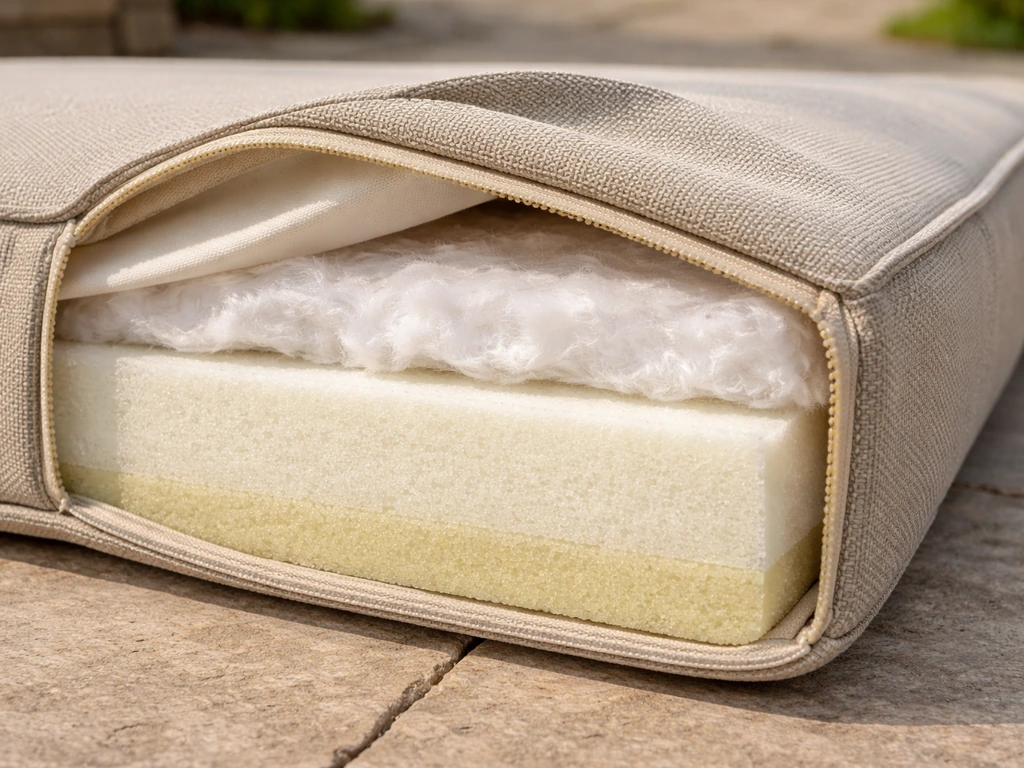
What Are Patio Cushions Made Of Cover and Fill Materials
Learn what patio cushions are made of: weatherproof cover fabrics, foam or fiber fills, and how each resists UV and mild
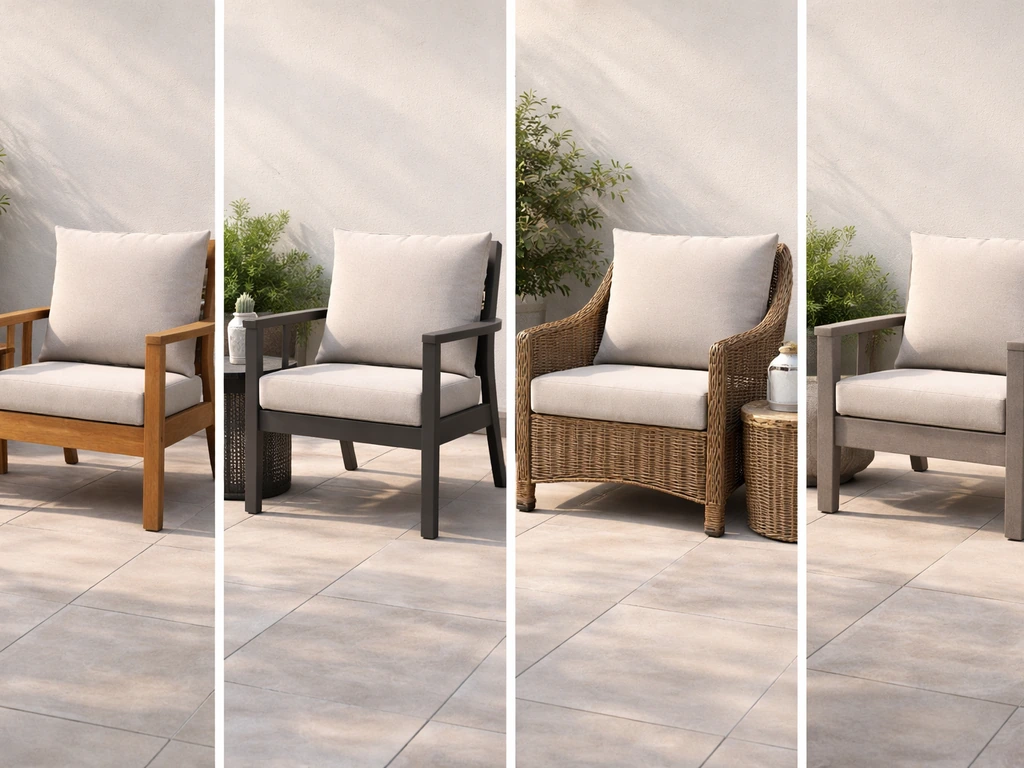
Patio Furniture Material Comparison: Wood, Metal, Wicker, Composite
Compare wood, metal, wicker and composite patio furniture on durability, weather resistance, rust, rot, fading, and upke
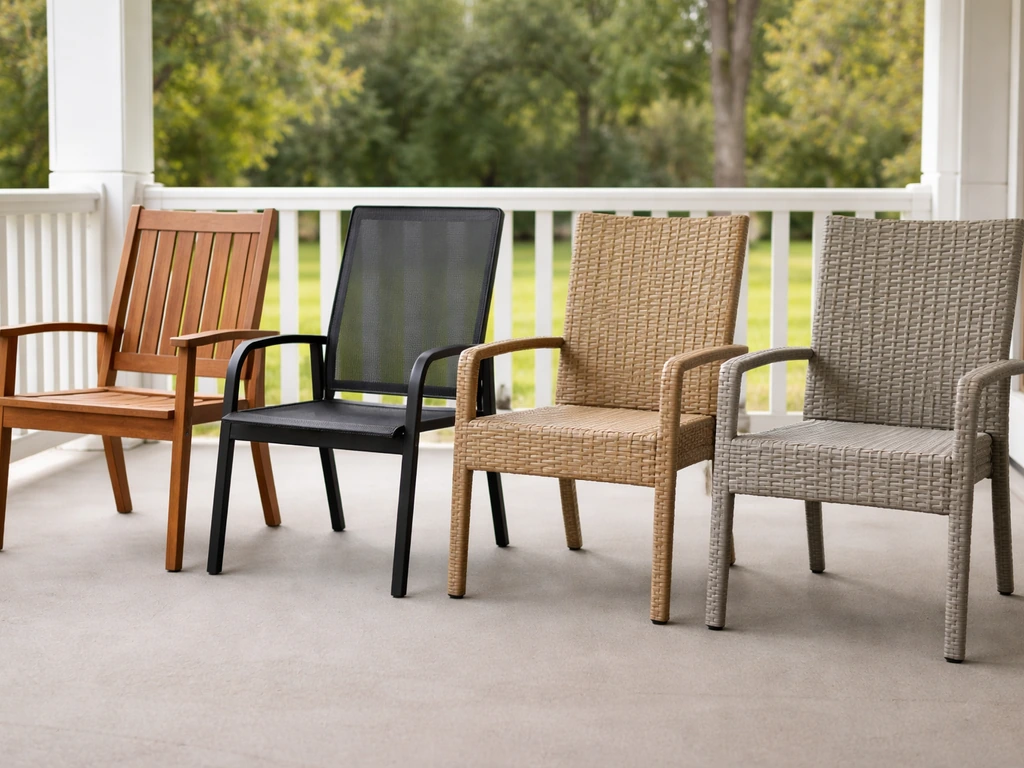
What Are Patio Chairs Made Of? Materials and Care Guide
Learn what patio chairs are made of and how wood, metal, wicker, and resin affect durability and care in your climate.