
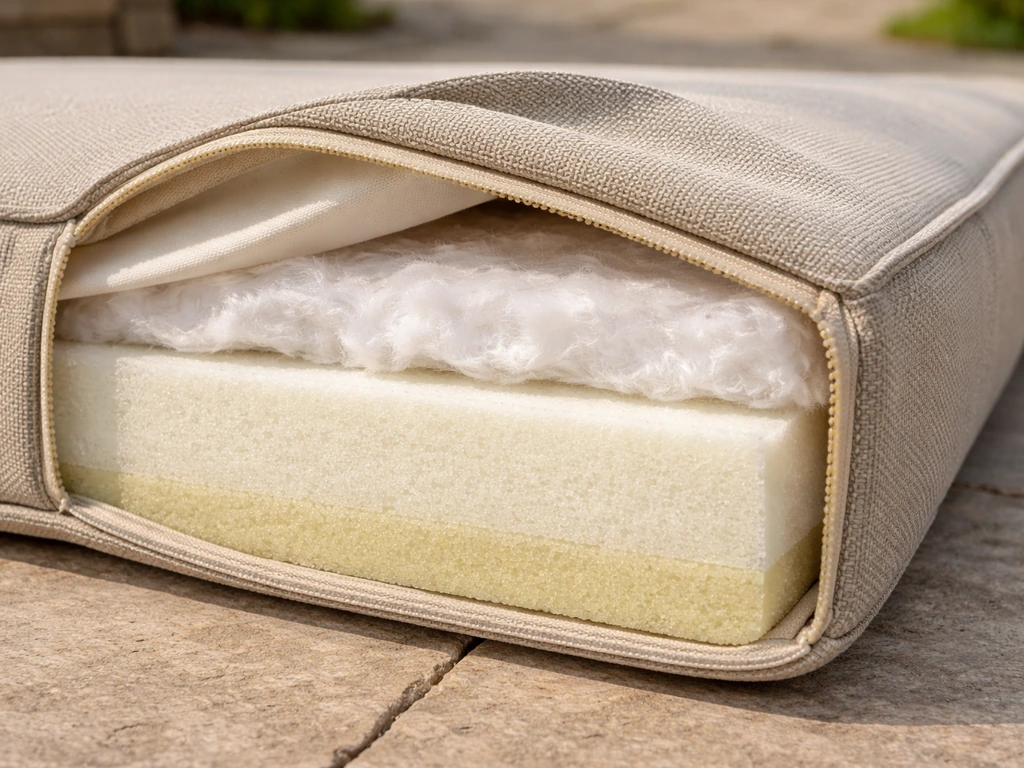
Patio cushions are made of three distinct layers: a weather-resistant outer cover fabric, an internal fill material, and a set of supporting components like piping, bindings, and backing fabric. The cover is usually solution-dyed acrylic, olefin, or a polyester blend. The fill is typically polyurethane foam, polyester fiberfill, or open-cell reticulated foam engineered to drain quickly. Which combination you get matters enormously for how long the cushion lasts, how it handles rain, and whether you're pulling a mildewed mess out of storage every spring. For patio furniture, the cover fabric you choose matters because it affects UV fade, mildew resistance, and how well the cushion dries after rain how long the cushion lasts.
What Are Patio Cushions Made Of Cover and Fill Materials

Theo Tierney
2 Jul 2026
Cover fabrics: what the outside of your cushion is actually made of
The cover fabric is the most consequential material decision in any outdoor cushion. It determines UV fade resistance, how water behaves on the surface, mildew resistance, and how long the cushion looks good. Here are the materials you'll actually encounter in the market.
Solution-dyed acrylic
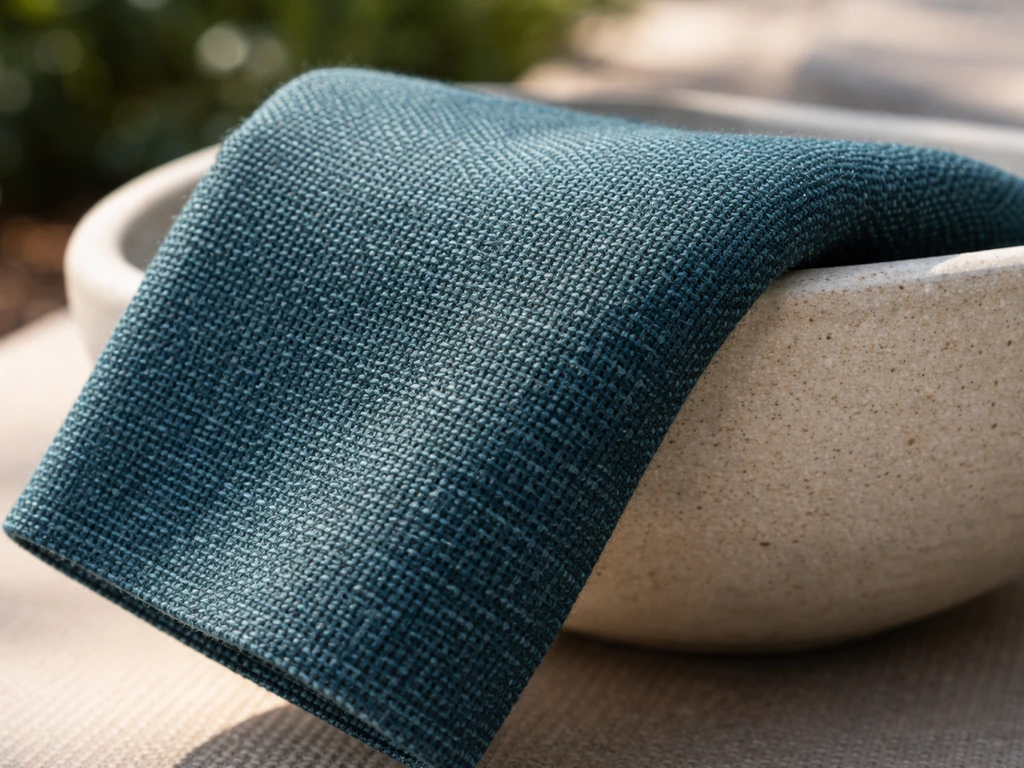
This is the gold standard for outdoor cushion covers, and Sunbrella is the most recognized brand name. Solution-dyed means the color pigment is locked into the fiber itself during manufacturing rather than applied to the surface afterward. The result is exceptional fade resistance over years of sun exposure. Brands like Gloster specify 100% solution-dyed acrylic yarns precisely because the color can't wash or bleach out the way surface-dyed fabrics can. Solution-dyed acrylic is also breathable and water-repellent by nature, though most standard versions aren't fully waterproof. Sunbrella's documentation is upfront about this: their base fabrics are water-resistant and breathable, not waterproof. Sunbrella Rain is a separate, fully waterproof product, though even that version can allow moisture inside a cushion if the seams or fabrication openings aren't sealed. If you're in a high-rain or high-humidity climate, solution-dyed acrylic is what you want on the cover.
Olefin (polypropylene)
Olefin, also sold as polypropylene, is the strong budget-friendly alternative to acrylic. It's genuinely resistant to mildew, abrasion, and sunlight, which is why it shows up on a huge range of mid-price outdoor cushions. It's also solution-dyed in most outdoor applications, so color stability is decent. The trade-off is that olefin doesn't hold up to prolonged UV exposure as well as high-grade acrylic over a multi-year period. In Arizona or south Florida where sun exposure is relentless, olefin cushions may start looking faded after two or three seasons. In more moderate climates, they perform well.
Polyester blends
A lot of cushions in the $30-$80 range use polyester or polyester blends. Polyester can be finished with water-repellent coatings and treated for UV resistance, but these treatments degrade over time and washings in a way that solution-dyed acrylic does not. Polyester blends are acceptable for covered patios, screened porches, or seasonal use where cushions get stored during rain. For cushions that live outside full-time in direct weather, polyester blends are a compromise that usually shows its limits by year two or three.
Canvas and other woven fabrics
Heavy canvas (usually cotton-based) shows up on some nautical or farmhouse-style outdoor cushions. It can be water-resistant when treated, but it's not inherently so, and untreated cotton canvas will absorb water, stay wet for a long time, and develop mildew quickly. If you see canvas on an outdoor cushion, check whether it has a synthetic treatment. Untreated cotton canvas is an indoor fabric forced into outdoor duty, and it will fail faster than any other option on this list.
Why indoor fabrics are a bad idea outside
Standard indoor upholstery fabrics, including regular cotton, linen, velvet, and non-treated polyester, are not rated for UV exposure, moisture, or mildew. They'll fade in a single season, absorb and hold water, and start growing mildew within days of getting rained on. If you're tempted to reupholster patio cushions with leftover indoor fabric to save money, it's usually not worth it. The fabric will fail far faster than any outdoor-rated alternative, and you'll be replacing it again within a year.
What's inside: fill materials and how they affect comfort and drainage
The fill material is what determines comfort retention, how quickly the cushion dries after rain, and whether you end up with a soggy, compressed brick after a wet season. This is often the least-discussed part of a cushion purchase, but it's just as important as the cover fabric.
Standard polyurethane foam
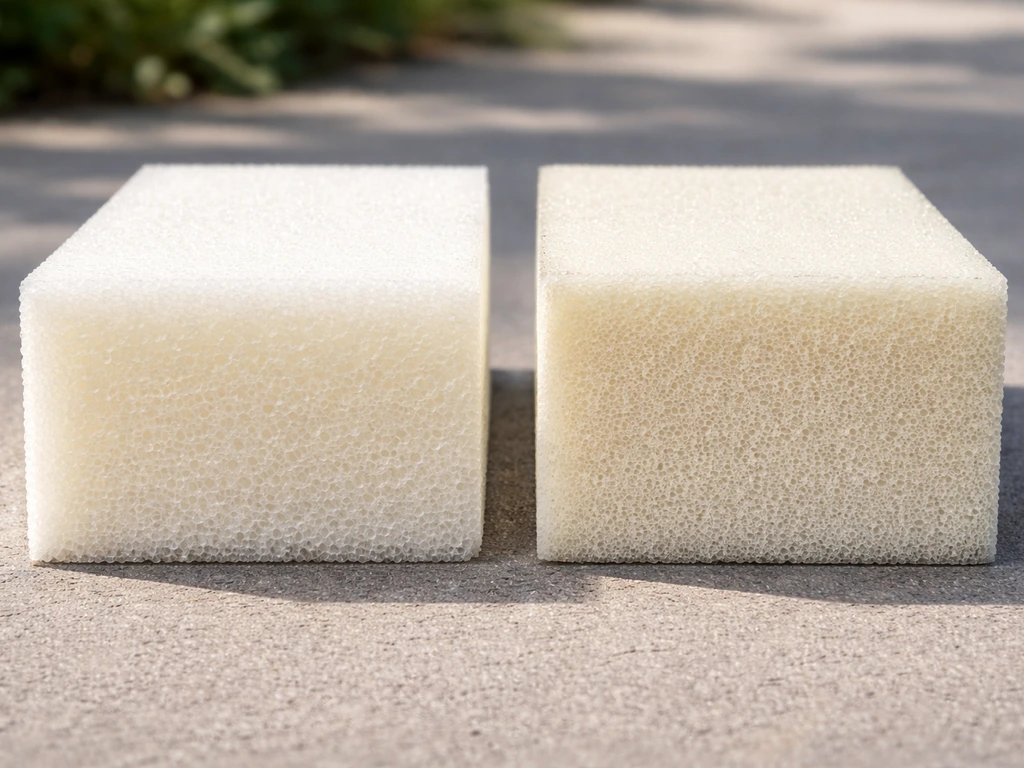
Most entry-level and mid-range cushions use standard closed-cell polyurethane foam. It's comfortable initially, holds its shape reasonably well when dry, and is cheap to manufacture. The problem outdoors is that closed-cell foam doesn't drain water efficiently. If rain gets through the cover or through seams, the foam absorbs moisture, stays wet for days or weeks, and creates ideal conditions for mold and mildew inside the cushion. Foam density matters too: low-density foam (under 1.8 lb/cubic foot) will compress and deform faster, losing its shape within a season or two of regular use.
High-resiliency (HR) foam
High-resiliency foam has a higher density and a more resilient cell structure that springs back more consistently after compression. It lasts longer than standard foam, maintains comfort better over time, and is worth paying extra for on chairs and loungers you use daily. It still shares the drainage limitation of standard closed-cell foam, so it's best paired with a highly water-resistant cover fabric and a covered or sheltered installation.
Reticulated (open-cell) foam, also called Dry Fast foam
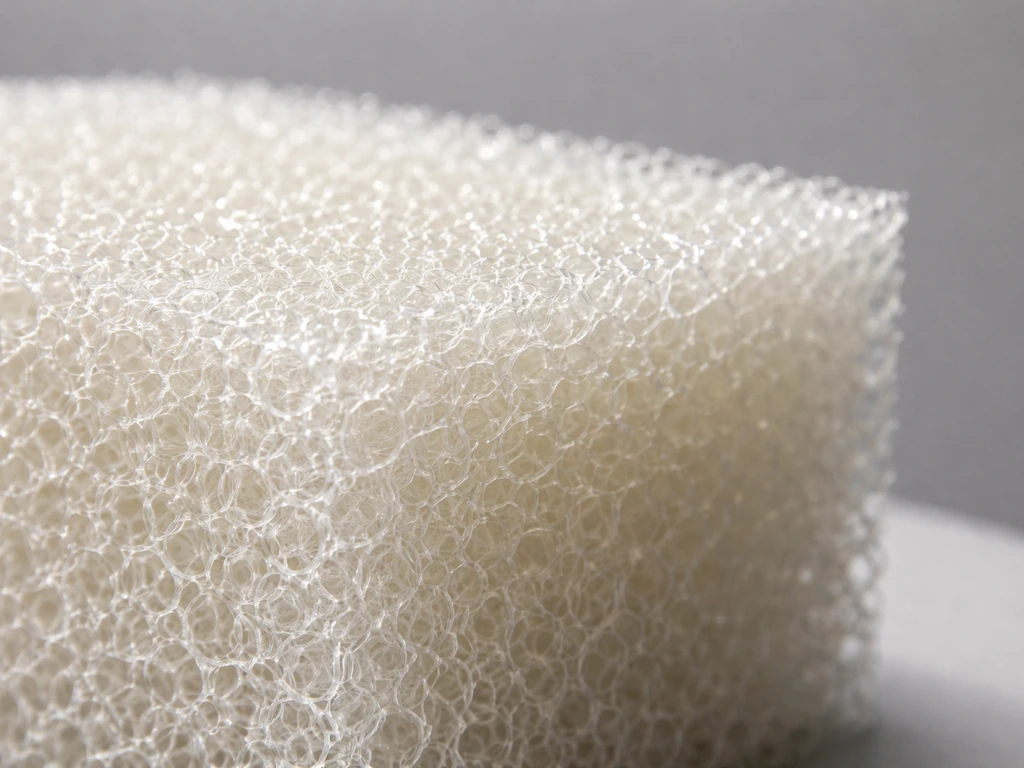
Reticulated foam, sold under names like Dry Fast and Hyper-Dri, is engineered specifically for outdoor and marine use. The open-cell structure has large interconnected pores, which means water drains through the foam rather than being absorbed by it. Manufacturers claim the foam is effectively dry within minutes of rain stopping. Many formulations also include antimicrobial treatments to inhibit mold and mildew inside the cushion. This is the correct fill for cushions that will be left outside in rain, near pools, or in high-humidity climates. The trade-off is that reticulated foam can feel slightly firmer than standard foam and doesn't provide quite the same plush sink-in comfort. For outdoor use, the performance advantages are well worth it.
Polyester fiberfill
Polyester fiberfill (the same fluffy fill used in pillows and stuffed animals) is used in some outdoor cushions, especially throw pillows and decorative back cushions. It's soft and inexpensive, but it's a poor choice for any cushion that will get wet regularly. Fiberfill absorbs water, clumps, takes a very long time to dry, and loses its loft permanently once it gets repeatedly wet and dried. Reputable cushion makers explicitly advise against fiberfill for applications requiring quick drainage. It's fine for throw pillows that get stored during rain, or for covered porch applications where direct wet exposure is rare.
Blended fill constructions
Better outdoor cushions sometimes use a layered approach: a core of reticulated or HR foam wrapped in a thin layer of polyester batting for a softer surface feel. This hybrid gives you the drainage benefits of open-cell foam with a slightly more comfortable outer texture. Look for this construction on higher-end seat cushions and chaise lounge pads. It's a good sign when a product listing describes the fill in this level of detail.
The parts people overlook: piping, backing, seams, and bindings
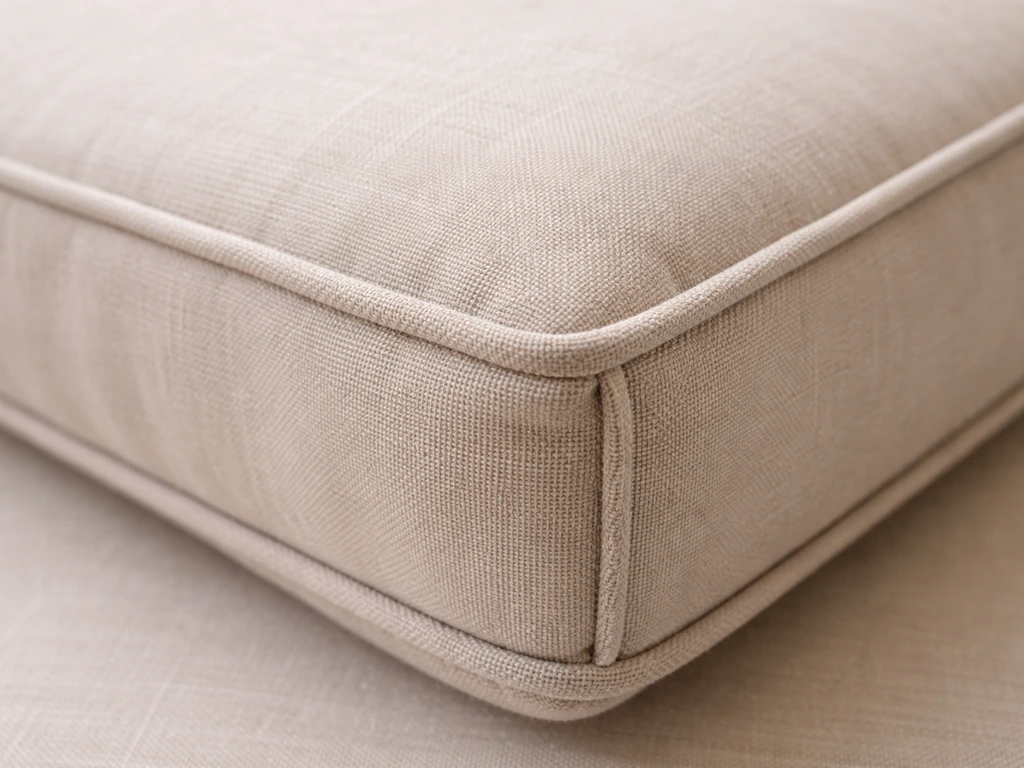
The cover and fill get most of the attention, but the construction details are where cheaper cushions fall apart. Piping, which is the corded trim that runs along the edges of most cushions, needs to be made of the same outdoor-rated fabric as the cover, or it fades and deteriorates faster than the main panel. On budget cushions, you'll sometimes see piping in a slightly different material that starts cracking or discoloring first.
The backing fabric (the panel facing the chair frame) matters too. It's often a different, simpler material than the face fabric, and it takes the most abrasion from the frame. Check that backing fabric is at least a weather-rated polyester or the same outdoor fabric as the front. Thin, loosely woven backing fabrics pill, fray, and fail first.
Seams on outdoor cushions need to be sewn with UV-stable polyester or nylon thread. Cotton thread degrades quickly outdoors, causing seams to split within a season or two. If a cushion cover uses cotton thread, it doesn't matter how good the fabric is; the seams will fail. When you're buying cushions, check whether the product listing mentions thread type or seam construction. Silence on this usually means cotton thread.
Drainage holes and ventilation are a genuinely underrated feature. Patio chair frames and slings are commonly made from materials like aluminum, steel, wicker, or resin, while the seating fabric is chosen for outdoor weather Drainage holes and ventilation. Some well-made cushions include small drainage holes in the backing or a short zipper vent on the bottom face to let trapped moisture and air escape. If a cushion is going to be left outside and isn't fully waterproof, this kind of construction detail makes a real difference in drying time and mildew prevention. It's worth looking for in product descriptions, especially for seat cushions on chairs that won't be moved indoors regularly.
How different materials handle weather: a real-world comparison
Performance claims from manufacturers don't always translate to real-world conditions, so here's a direct breakdown of how these materials actually perform across the key outdoor challenges.
| Material | UV/Fade Resistance | Water/Rain Performance | Mildew Risk | Durability (years, typical) |
|---|---|---|---|---|
| Solution-dyed acrylic (e.g., Sunbrella) | Excellent (color in fiber, not surface) | Water-repellent; not fully waterproof | Low (if fabric dries well) | 5-10+ years |
| Olefin/Polypropylene | Good to very good | Water-repellent | Low to moderate | 3-6 years |
| Polyester blend (coated) | Moderate (coating degrades) | Water-resistant when new | Moderate | 2-4 years |
| Untreated cotton/canvas | Poor | Absorbs moisture | High | 1-2 seasons |
| Reticulated (open-cell) foam fill | N/A (interior fill) | Drains within minutes | Very low | 4-8 years |
| Standard polyurethane foam fill | N/A (interior fill) | Retains moisture for days | High if wet | 2-5 years |
| Polyester fiberfill | N/A (interior fill) | Absorbs and holds moisture | High | 1-3 years (outdoors) |
One important clarification: water-resistant and waterproof are not the same thing, and most outdoor cushions are only the former. Water-resistant means the fabric surface sheds light rain and dries quickly. But if a cushion sits in sustained rain, water eventually works through seams, zippers, and fabrication openings into the fill. Even waterproof cover fabrics like Sunbrella Rain can allow moisture penetration at seam punctures. This is why fill material and drainage construction matter as much as the cover fabric in wet climates.
Picking the right materials for your climate and how you use the cushions
The right material stack depends heavily on where you live and how the cushions are used. Here's how to think through it by situation.
Hot, sunny climates (Arizona, Southern California, Southwest)
UV exposure is your primary enemy here. Solution-dyed acrylic is non-negotiable if you want cushions that don't fade to a washed-out version of their original color within two seasons. If you want the best fabric for patio chairs, look for solution-dyed acrylic because it resists fading even after heavy sun exposure. Olefin is acceptable if you're on a tighter budget and the cushions get some shade. For fill, standard foam works fine in dry climates as long as the cushions aren't left in the rare rain events. If monsoon season is relevant (Arizona, New Mexico), bump up to reticulated foam.
Humid climates (Florida, Gulf Coast, Southeast)
Humidity and frequent rain mean mildew resistance is the top priority alongside UV performance. You want solution-dyed acrylic on the cover and reticulated foam for the fill. Standard foam in Florida is a mildew incubator. Look for antimicrobial treatments on both the fill and the cover fabric. A drainage vent in the cushion construction is a genuine asset here. Leaving cushions out overnight in humid climates with standard foam fill is a recipe for a musty, moldy mess by mid-summer.
Coastal environments (salt air, ocean proximity)
Salt air accelerates corrosion on frames but also degrades fabric finishes and thread. UV-stable polyester or nylon thread becomes even more important here. Solution-dyed acrylic performs well in salt air. Check that zippers and hardware are plastic or marine-grade metal, because cheap metal zippers will corrode fast. Reticulated foam fill is the right call in coastal climates for the same reasons as humid climates.
Cold and snowy climates (Northeast, Midwest, Pacific Northwest)
If you bring cushions indoors for winter, the climate pressure is lower and you have more flexibility. Polyester blends can work fine if stored properly. If cushions live outside year-round, freeze-thaw cycles are brutal on standard foam fills, which can crack and degrade structurally. Solution-dyed acrylic or olefin covers handle temperature swings well. The bigger issue is spring: cushions that sat through winter rain and snow need to dry out completely before use or mildew sets in fast.
Covered patios and screened porches
If cushions are protected from direct rain and intense sun, you have significantly more latitude. Polyester blends with water-repellent finishes work well. Standard foam fill is acceptable. You can prioritize comfort and aesthetics more than pure weather performance. That said, humidity can still cause mildew in screened spaces, so look for mildew-resistant treatments on the fill at minimum.
Keeping cushions longer: maintenance that actually works
Most cushion premature failures are preventable with basic maintenance. Here's what actually extends lifespan versus what's marketing theater.
Regular cleaning
For solution-dyed acrylic fabrics, the standard Sunbrella cleaning protocol works well across the category: brush off loose dirt, then clean with blank" rel="noopener noreferrer">a mix of 1/4 cup of mild dish soap and 1 cup of bleach per gallon of water. Rinse thoroughly and air dry. This is a genuine bleach solution, not a gentle wipe, and solution-dyed acrylic can handle it. If you have a mildew outbreak, Sunbrella explicitly supports using stronger bleach concentrations on severe cases without damaging the fabric. Sunbrella’s help center also recommends using a bleach solution to remove mold and mildew blank" rel="noopener noreferrer">bleach concentrations on severe cases. Rinse completely after any bleach treatment. For olefin and polyester covers, use a gentler soap-and-water approach since coated fabrics may lose their water-repellent finish faster with repeated bleach exposure.
Drying and storage
Standing water on cushions is the enemy. After rain, prop cushions on their edges to drain and dry rather than leaving them lying flat. If cushions have standard foam fill, get them vertical as fast as possible to drain. Cushions with reticulated foam take care of themselves faster. When storing for winter, make sure cushions are completely dry before bagging them in storage containers. Storing slightly damp cushions is a reliable way to open them in spring to a mildew disaster.
Re-treating covers
Polyester and coated fabric covers lose water repellency over time. Products like 303 Fabric Guard can restore the water-repellent finish on the cover. Solution-dyed acrylic doesn't need this kind of re-treatment since its performance comes from fiber chemistry rather than a surface coating, but it doesn't hurt to apply it occasionally on high-exposure cushions.
When to replace instead of maintain
Maintenance has limits. Here are the signals that replacement is the smarter move than continued upkeep: persistent mildew smell that doesn't go away after thorough cleaning and drying (the fill is compromised); foam that doesn't spring back after sitting (structural failure, not a cleaning problem); seam splitting in multiple places (thread failure throughout the cushion); fabric that's noticeably faded, thinning, or pilling broadly (UV degradation is complete); and a cover that no longer sheds water at all even after re-treatment. At any of these points, you're spending time and money maintaining something that won't perform well. New cushions with better materials are usually a better investment than fighting a failing one.
How cushion style and dimensions affect material choices
Not all cushions face the same demands, and the material stack that makes sense for a dining seat cushion is different from what a chaise lounge pad needs.
Seat cushions (dining chairs, accent chairs)
Seat cushions take the most compression stress. They need higher-density foam, at least 1.8 lb/cubic foot and ideally 2.0 or higher for anything used daily. Thickness matters too: 3 to 4 inches is standard for comfortable sit-down use. For chairs used outdoors full-time, reticulated foam fill paired with a solution-dyed acrylic cover is the right combination. Removable, washable covers are especially useful for seat cushions since they accumulate more dirt, sunscreen, and food contact.
Lounge and chaise cushions
Chaise lounge pads and deep-seat lounge cushions are typically thicker (4 to 6 inches) and benefit most from the blended fill approach: an open-cell foam core with a polyester batting wrap. Lounge cushions sit flat and horizontal for extended periods, which means drainage is even more important than on angled seat cushions. Some premium lounge cushions are designed as highly water-resistant all the way through the fill, meaning water genuinely can't enter the filling itself, not just the cover. Gloster describes this as a construction goal for their performance lounge cushions. These are worth the price premium in rain-heavy or poolside settings. One caution: some high-performance lounge cushions with non-removable covers are engineered that way intentionally. Removing the cover on a cushion not designed for it can compromise the water-resistant lining between cover and fill.
Back cushions and throw pillows
Back cushions and decorative throw pillows usually get less direct compression and moisture exposure than seat cushions. Polyester fiberfill is acceptable here if they're going to be stored or brought indoors during rain. If they're staying outside, opt for covers in a weather-rated fabric and fills that can actually dry out. Thin polyester fiberfill pillows left in Florida rain will be moldy lumps by August.
How to read labels and product listings before you buy
Product listings vary wildly in what they disclose, so knowing what to look for helps you cut through vague marketing claims. Here's what to check.
- "Solution-dyed" in the fabric description: this is the single most important phrase for fade resistance. If it's not mentioned, assume the color was surface-applied and will fade faster.
- Fabric brand names like Sunbrella, Outdura, or Tempotest: these indicate the cover meets documented outdoor performance standards, including UV testing under methods like AATCC TM16.3 xenon-arc testing.
- "Water-resistant" vs. "waterproof": most outdoor cushions are water-resistant. If you need true waterproof performance, look specifically for fabrics like Sunbrella Rain or similar waterproof-rated products.
- Fill material description: look for "reticulated foam," "open-cell foam," or "dry-fast foam" if the cushions will be left in rain. If the listing only says "foam fill" or "high-quality foam" without elaboration, assume standard closed-cell.
- Removable, zippered covers: a significant practical advantage for cleaning and for replacing covers if the fill outlasts the fabric.
- Thread type: UV-stabilized polyester or nylon thread is a sign of quality construction. This is rarely listed but worth asking about for expensive purchases.
- Drainage holes or vents: noted in product descriptions on better outdoor-specific cushions.
- Warranty length: longer warranties (3-5 years on the fabric) from reputable outdoor brands signal genuine confidence in material durability.
The broader material comparison between cushion fabrics and the fabrics used on the chairs themselves (like woven seat straps, sling materials, or upholstered frame elements) is worth understanding together, since the best cushion material for your space often depends on what it's pairing with. If you're evaluating full patio furniture setups, the same material tradeoffs that apply to cushion covers apply to chair upholstery and fabric selection more broadly. A complete patio furniture material comparison also considers the chair frame and upholstery materials, since those choices affect corrosion, fade, and how long the whole set lasts.
FAQ
What are patio cushions made of if the listing just says “outdoor fabric” and “foam”?
Look for specifics about the cover fiber (solution-dyed acrylic, olefin, or polyester blend) and the fill type (HR foam, closed-cell foam, or reticulated/open-cell foam). If the product does not name the fabric chemistry or foam style, assume it is likely standard polyester/closed-cell foam, which is more vulnerable to slow drying and mildew in humid or rainy climates.
Are patio cushions fully waterproof, or only water-resistant?
Most patio cushions are water-resistant, not fully waterproof. Even with “waterproof” covers, seams, zippers, and construction openings can let moisture reach the fill. In real use, the difference shows up in whether the cushion is able to dry quickly after a storm.
What is the difference between solution-dyed acrylic and regular dyed outdoor fabric?
Solution-dyed acrylic has the pigment locked inside the fiber during manufacturing, so it resists fading and color loss better over time. Regular dyed or surface-colored fabrics can look fine at purchase but typically lose color faster under repeated UV exposure.
Can I use polyester fabric or indoor fabric for patio cushions if I add a water repellent spray?
You can improve surface water shedding, but coatings wear down with washing and sun, and indoor fabrics are not engineered for UV and mildew resistance. For cushions left outside, outdoor-rated fabric (solution-dyed acrylic, olefin, or treated polyester blend) is usually the safer long-term choice.
Which patio cushion fill dries fastest after rain?
Reticulated (open-cell) foam is designed to drain and dry quickly because water passes through interconnected pores rather than being absorbed. Standard closed-cell polyurethane foam can trap moisture when water gets past the cover, especially if the cushion stays flat or is left to sit wet overnight.
Is polyurethane foam always bad for outdoor use?
No, polyurethane foam can work well in dry or covered conditions where the cushions rarely get wet. It becomes a problem when water intrusion happens regularly, because closed-cell foam holds moisture and slows drying. If you have frequent rain, pair foam with a highly water-resistant cover and favor constructions that vent or drain.
What should I check to make sure the seams will not fail on outdoor cushions?
Check for UV-stable thread mentioned in the listing (polyester or nylon) and look for well-finished seam construction. If cotton thread is used, seams can split even if the cover fabric is high quality, because the thread degrades first outdoors.
Do drainage holes or a bottom vent actually make a difference?
Yes, especially for seat cushions left outside. Bottom vents and small drainage openings help trapped moisture escape and reduce drying time. They are particularly helpful when your cushions are not fully waterproof, so some moisture can still migrate into the cushion over time.
How do I tell whether my cushion cover is the outdoor-rated part or the whole cushion?
Check whether the listing distinguishes the cover fabric from the backing fabric and whether it mentions how the fill is protected. Some high-performance cushions focus on cover-only resistance, others aim for water resistance “through the fill.” Removable covers also matter, since taking a cover off can expose or disrupt internal protective layers.
Is it okay to store patio cushions indoors during winter, even if they got damp once?
Store only when fully dry. If cushions were damp during the last wet spell, mildew can start during storage and you may bring the smell and spores indoors. Dry cushions thoroughly and prop them to drain before bagging or wrapping for the season.
How can I identify low-quality construction just by looking?
Look for matching outdoor-rated materials on piping, strong backing fabric (not thin or loosely woven), and intact seams. If piping or backing looks noticeably less substantial than the face fabric, it often fails first, leading to edge fraying or color loss before the panels do.
What fill should I choose for poolside or near sprinklers?
Reticulated open-cell foam is the best starting point because it drains and dries quickly. Also prioritize an outdoor cover with strong UV fade resistance, and look for ventilation or drainage features to reduce mildew risk after splash or mist exposure.
When should I replace patio cushions instead of cleaning them?
Replace when there is persistent mildew smell after thorough cleaning and complete drying, foam that does not spring back (structural compression failure), repeated seam splitting, or fabric that has thinned and lost its ability to shed water even after re-treatment. These issues usually indicate the fill, seams, or protective coatings have already failed.
Next Articles
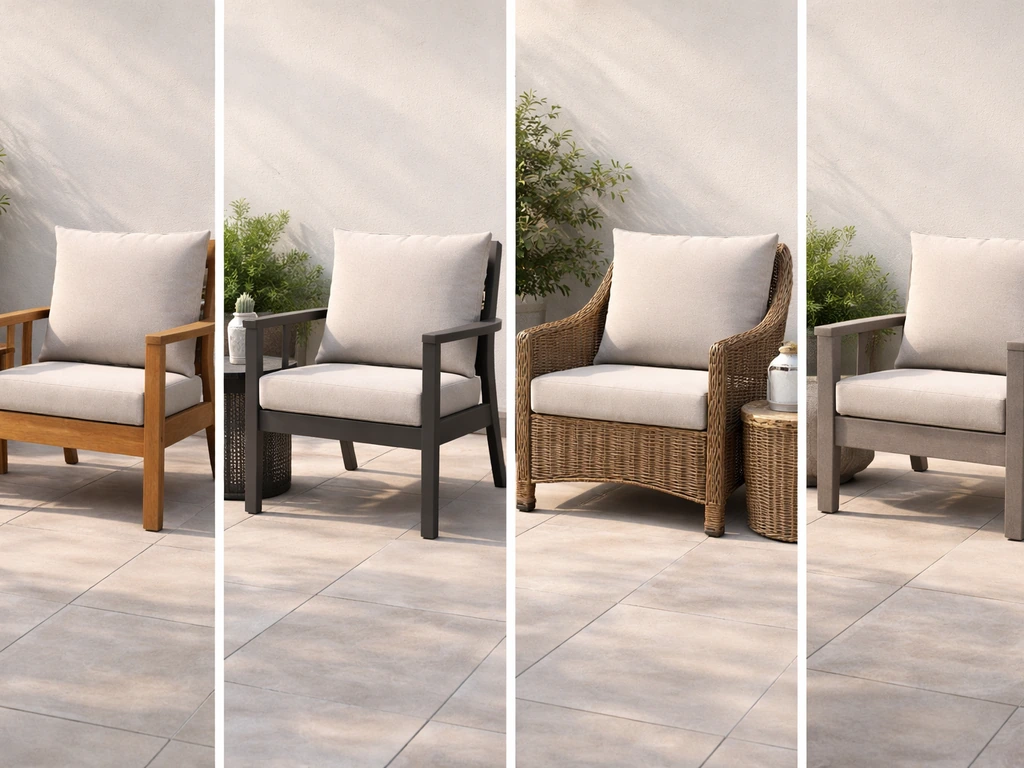
Patio Furniture Material Comparison: Wood, Metal, Wicker, Composite
Compare wood, metal, wicker and composite patio furniture on durability, weather resistance, rust, rot, fading, and upke
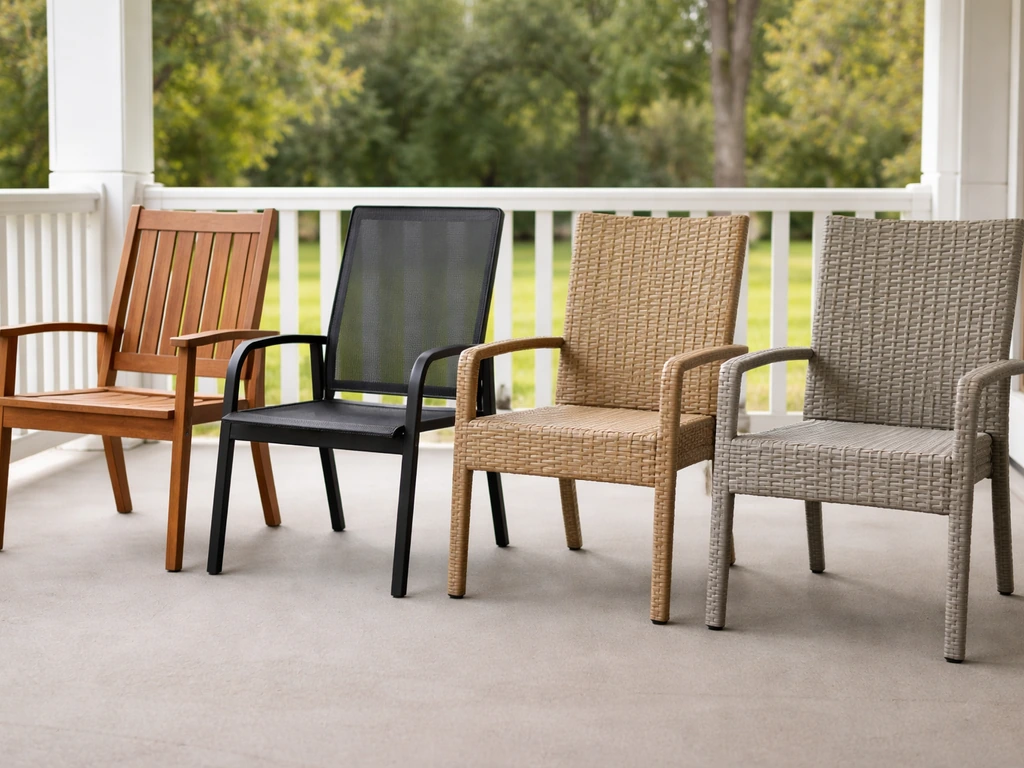
What Are Patio Chairs Made Of? Materials and Care Guide
Learn what patio chairs are made of and how wood, metal, wicker, and resin affect durability and care in your climate.
Common Patio Furniture Wood: Best Choices, Care & Tips
Compare common patio furniture wood types, teak, cedar, redwood, oak, with durability, finishes, and care tips.