
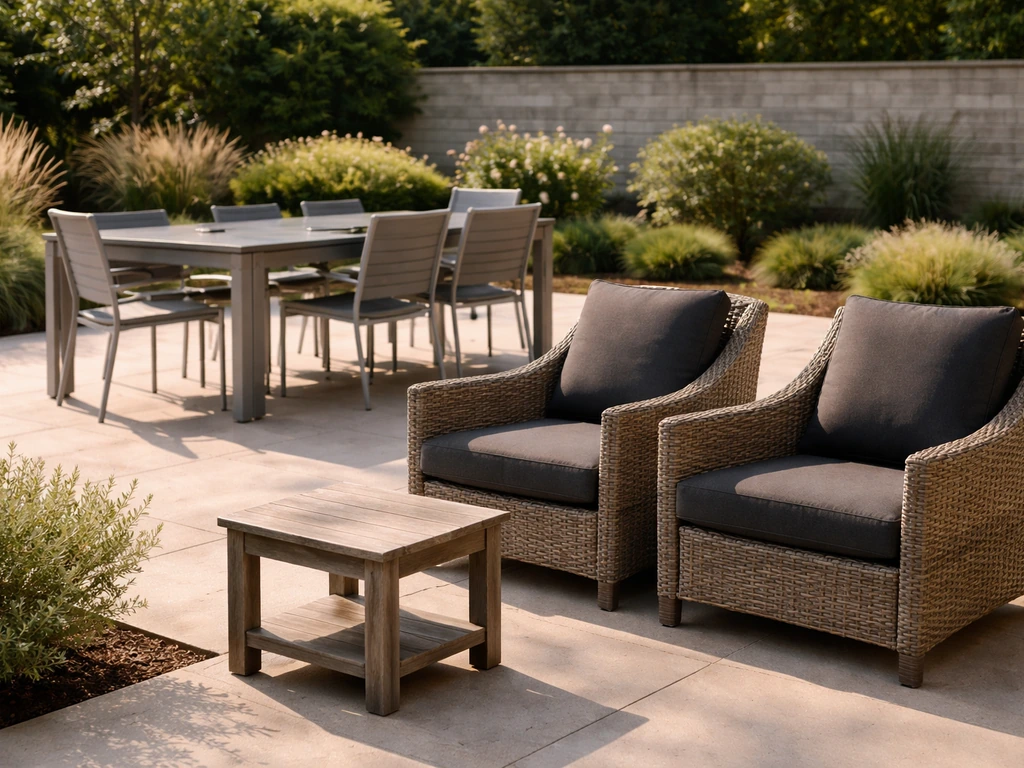
For most people, powder-coated aluminum is the best type of outdoor patio furniture material overall. It resists rust, handles nearly every climate, weighs less than steel, and requires almost no ongoing maintenance. But if you lounge more than you dine, want a softer look, or live somewhere extreme, the right answer shifts. The sections below walk you through every material, every climate scenario, and every feature that actually matters so you can buy with confidence today.
Best Type of Outdoor Patio Furniture for Your Climate

Theo Tierney
13 May 2026
Quick answer by how you actually use your patio
Not everyone needs the same thing, and matching the furniture type to your use case saves a lot of regret. Here is where each material type wins by scenario.
| Use Case | Best Material Type | Why |
|---|---|---|
| Outdoor dining (daily or frequent use) | Powder-coated aluminum | Durable, lightweight, easy to clean, resists rust and UV fading |
| Deep lounging, sectionals, and conversation sets | All-weather HDPE resin wicker over aluminum frame | Comfortable look, weather-resistant weave, pairs well with solution-dyed acrylic cushions |
| Small balcony or tight patio | Powder-coated aluminum (foldable or bistro styles) | Lightweight, stackable, compact options are widely available |
| Large entertaining space | Teak or aluminum with HDPE wicker accents | Teak handles heavy use and ages beautifully; aluminum scales easily |
| Coastal or salt-air environment | Marine-grade aluminum or Grade-A teak | Corrosion-resistant coating or naturally dense wood both handle salt well |
| Snowy, freezing winters | Powder-coated aluminum or HDPE poly lumber | Neither absorbs moisture, neither cracks when it freezes |
Breaking down every major outdoor furniture material
Powder-coated aluminum
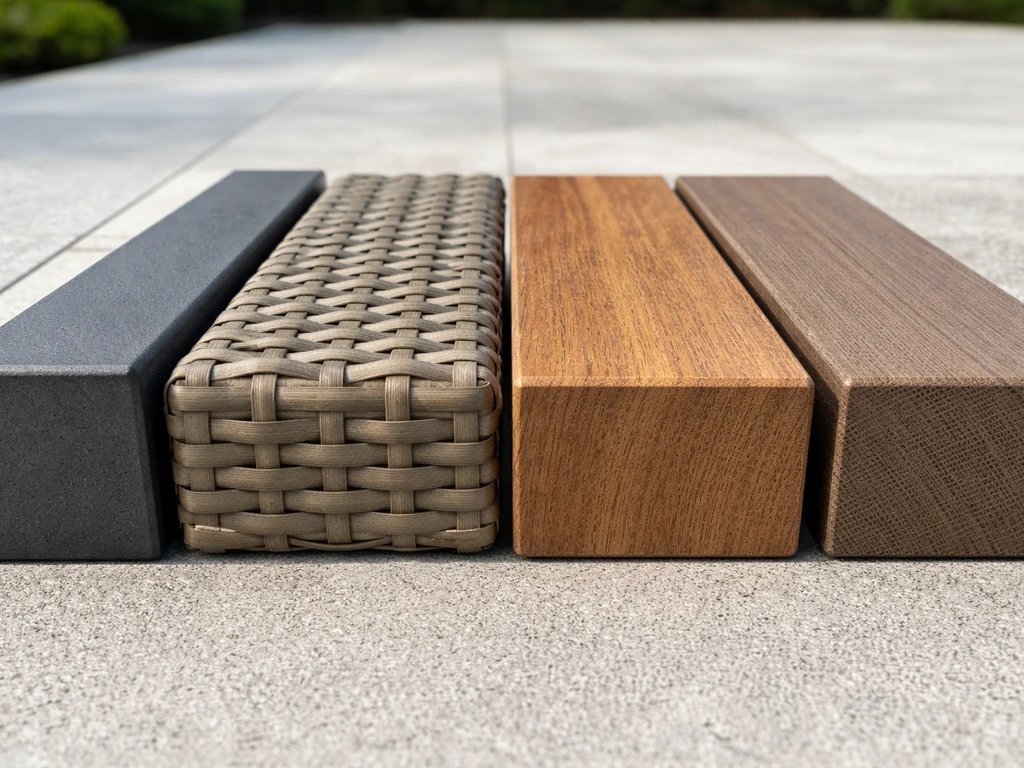
Aluminum is the closest thing to a universally correct answer for outdoor furniture. It does not rust, it is light enough to rearrange without straining your back, and a quality powder coating adds serious UV and impact resistance. The best coatings meet AAMA 2605 standards, which carry warranties up to 20 years on non-metallic finishes. That is not marketing language, it means the coating has passed independent testing for UV, chemical, and impact resistance.
For coastal homes with salt air, you want to confirm the piece uses marine-grade aluminum and a hard powder coat or anodized finish specifically rated for corrosive environments. The one honest caveat: powder coating warranties require basic maintenance to stay in force, meaning periodic cleaning still matters even though the material itself needs very little.
All-weather resin wicker (HDPE)
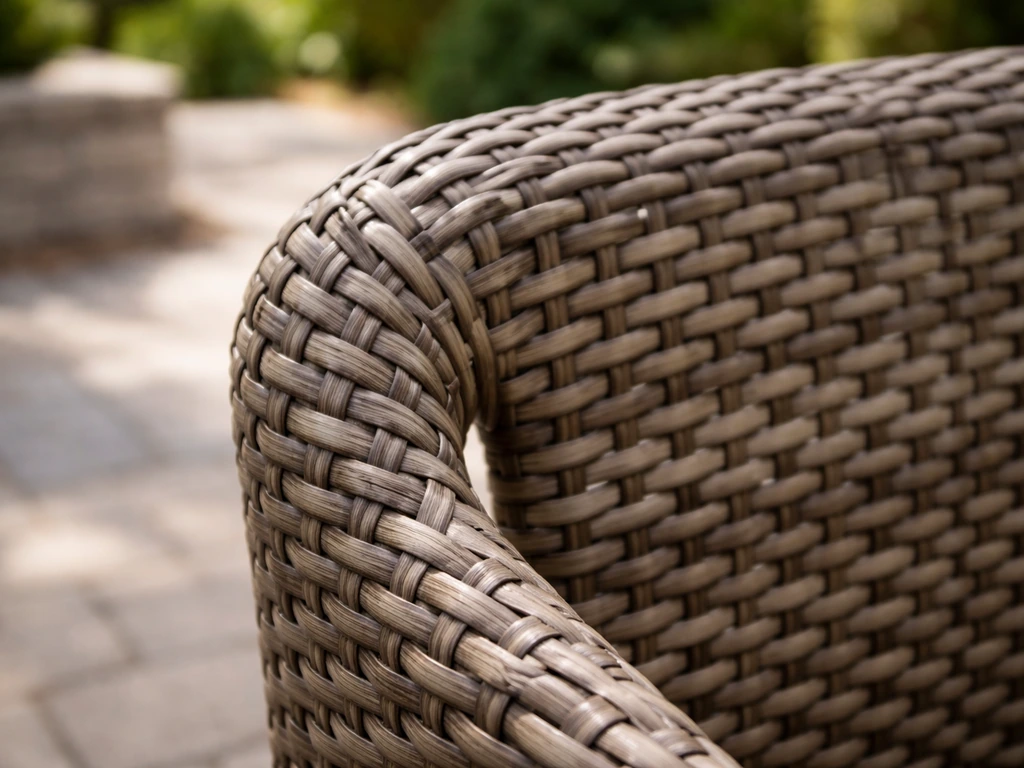
Modern outdoor wicker is not the brittle natural rattan your grandparents had. Quality all-weather wicker is extruded HDPE (high-density polyethylene) strands woven over a powder-coated aluminum or steel frame. HDPE resists mildew, fading, sagging, staining, and cracking under normal conditions. The problem is that not all wicker sold as weather-resistant is actually HDPE. Budget versions made from PVC start cracking and fading within a couple of seasons. Direct and prolonged sun exposure can make even HDPE fibers brittle over time, so it performs best in shaded or partially shaded settings. When shopping, ask or read the spec sheet to confirm the material is HDPE, not PVC, and check that the underlying frame is aluminum, not bare steel.
Teak and other outdoor woods
Teak is the gold standard among outdoor woods because of its natural oil content and density, which give it genuine rot and pest resistance without constant sealing. Grade-A teak (cut from the mature heartwood) is the grade worth buying. Left untreated, it weathers to a silver-grey patina that many people find attractive. If you prefer the warm honey color, you will need to clean it and apply teak oil or sealer annually.
A Carl Hansen maintenance guide similarly recommends regularly cleaning teak even when it is oil-treated and applying oil retreatment for outdoor use when needed clean it and apply teak oil or sealer annually. Cedar is more affordable and water-resistant compared to other common woods, but it does not match teak's long-term durability.
Acacia and eucalyptus land in the middle: attractive and reasonably durable, but they need more consistent sealing than teak to hold up. The honest tradeoff with any wood is that "low maintenance" is relative, even teak benefits from an annual clean and occasional oil treatment.
HDPE poly lumber and composite
HDPE poly lumber, often sold as recycled plastic furniture, is arguably the most genuinely zero-maintenance option available. It does not absorb water, does not rust, and will not splinter. It handles freezing temperatures without cracking. The tradeoff is aesthetics: it tends to look more utilitarian, and the heavier weight makes rearranging less convenient. For pool decks, lakesides, or any situation where furniture stays wet frequently, it is hard to beat.
Steel
Steel is heavier and stronger than aluminum, which makes it great for windy locations where you do not want furniture blowing around. But it must be powder-coated or galvanized to prevent rust, and even then, coastal salt air will eventually win if the coating gets scratched and is not touched up. If you buy steel furniture, check welds carefully for any bare spots that can become rust entry points, and treat any scratches promptly.
Which material survives your specific climate
Climate is probably the single biggest factor most buyers overlook. The furniture that thrives in Phoenix will struggle in Miami, and what works perfectly in Seattle may crack in Minneapolis winters.
| Climate / Condition | Best Material Choice | What to Avoid |
|---|---|---|
| High humidity (Florida, Gulf Coast) | Powder-coated aluminum, HDPE wicker, HDPE poly lumber | Bare steel, untreated wood, natural rattan |
| Intense sun and UV (Arizona, Southwest) | Marine-grade aluminum with AAMA 2605 coating, Grade-A teak | PVC wicker, low-grade powder coat, cheap synthetic fabrics |
| Coastal salt air | Marine-grade aluminum, Grade-A teak, HDPE poly lumber | Bare or lightly coated steel, PVC wicker, pine or cedar |
| Freezing winters / snow | Powder-coated aluminum, HDPE poly lumber | Natural wicker, wood without seasonal sealing, cheap resin |
| Moderate / mixed climates | Nearly any quality material works; aluminum is safest all-rounder | Avoid bare metals and natural rattan regardless of climate |
One thing worth noting about sun specifically: UV exposure is the fastest way to destroy cushion fabric and degrade wicker fibers. If your patio gets full sun for most of the day, that factor matters as much as the frame material. Solution-dyed acrylic fabric (Sunbrella is the most recognized brand) has its color embedded in the fiber rather than printed on the surface, which is why it holds up years longer than cheaper polyester in direct sun.
Honest durability, maintenance, and lifespan expectations
Here is where manufacturer claims and reality start to diverge. "Low maintenance" on a hang tag usually means low maintenance relative to bare wood, not zero maintenance. Every outdoor furniture type benefits from regular cleaning, and most benefit from covers or seasonal storage.
Expected lifespans by material
| Material | Realistic Lifespan | Key Maintenance Required |
|---|---|---|
| Grade-A teak | 20–30+ years | Annual cleaning, oil or sealer if you want color retained |
| Powder-coated aluminum | 15–25 years | Periodic cleaning, touch up any coating chips promptly |
| HDPE all-weather wicker (aluminum frame) | 10–20 years | Monthly wipe-down, cover or store when not in season |
| HDPE poly lumber | 20–30 years | Occasional soap-and-water clean, essentially maintenance-free |
| Steel (powder-coated) | 10–20 years | Monitor for coating scratches, treat rust spots immediately |
| Solution-dyed acrylic cushions | 7–10 years | Regular cleaning, dry before storage, remove in off-season |
| Outdoor polyester cushions | 5–7 years | Same as acrylic but more UV-vulnerable |
Cleaning reality for each material
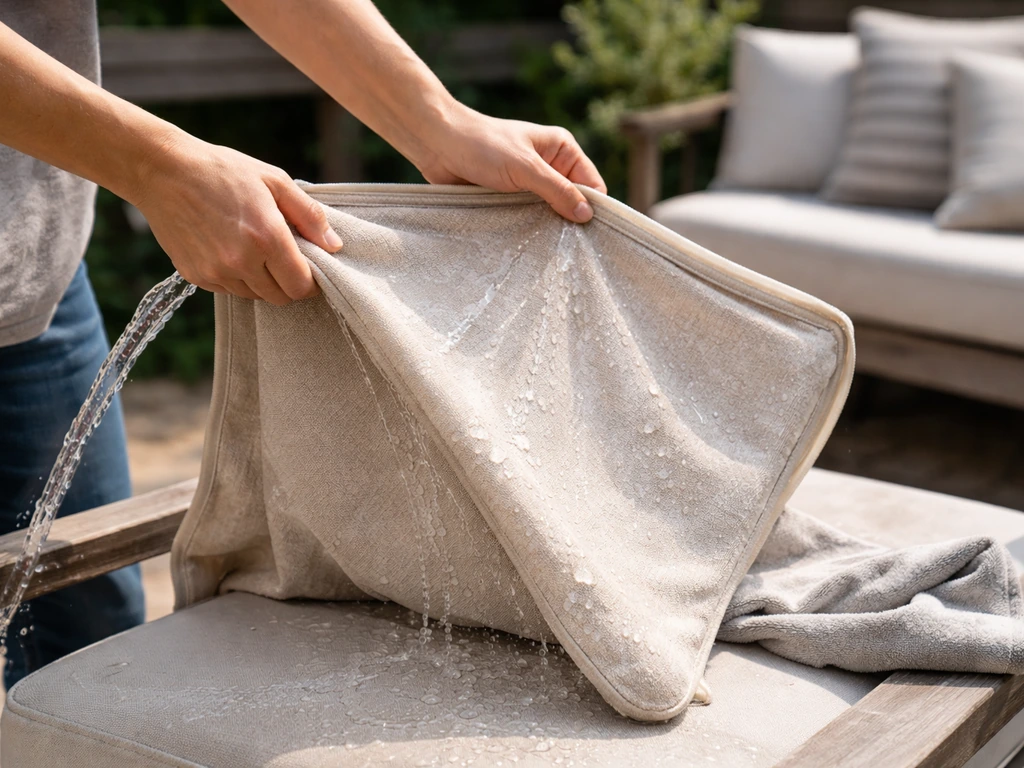
For aluminum and powder-coated metals, mild soap and cool water on a soft cloth is all you need. Avoid abrasive cleaners that scratch the coating, since scratches invite corrosion. For HDPE wicker, use a soft brush and non-detergent soapy water to get into the weave, then rinse and let it dry fully before covering. For teak, a mild cleaner specific to teak (or diluted dish soap) works, followed by sanding any rough spots before re-oiling if needed. The common mistake is skipping the dry step, covering damp furniture traps moisture and creates the exact mold conditions you are trying to avoid.
Cushion care matters more than most people think
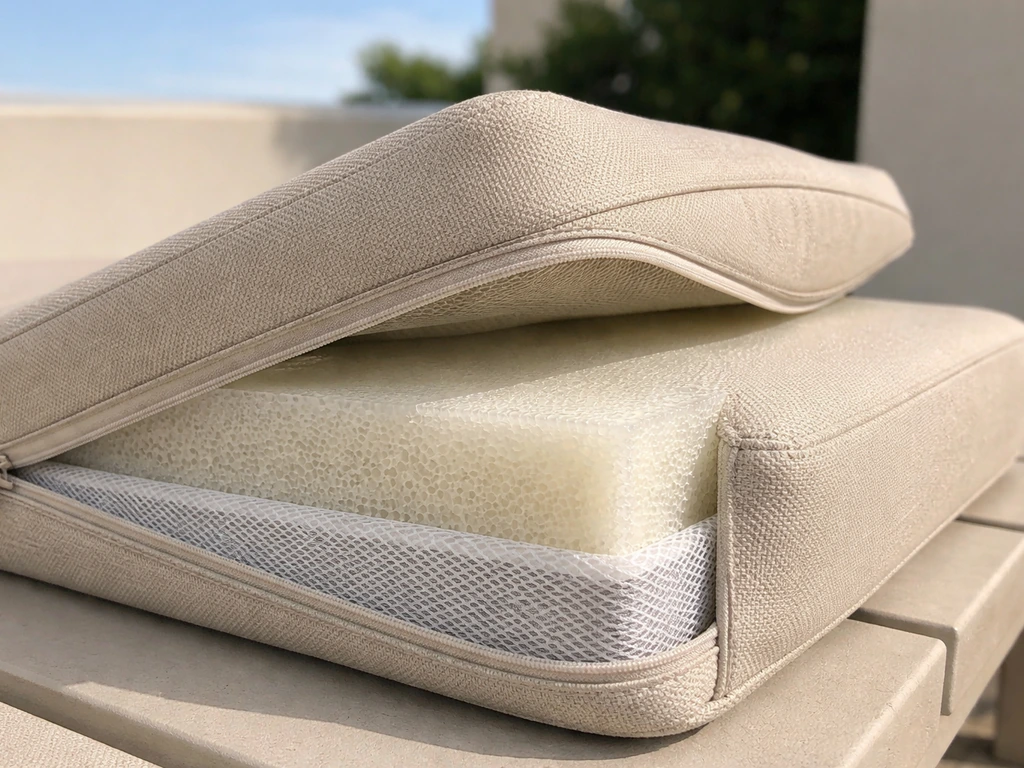
Cushions are usually the first thing to fail on otherwise sturdy outdoor furniture. If moisture penetrates the fabric and soaks the foam, you get mold fast. The right approach is to remove cushions after heavy rain if they feel saturated, stand them on edge to air the interior layers, and store them dry. For washing, remove the inner foam or fill pad before washing the cover.
Harsh chemicals damage fabric coatings and shorten fabric life, so stick to mild detergents. Quality cushions use reticulated (open-cell) foam that drains water instead of holding it, and good solution-dyed acrylic fabric is water-resistant enough to dry quickly after rain. Those two features together are what separate a cushion that lasts a decade from one that molds out in year two.
Covers and seasonal storage
Furniture covers are worth buying for almost every material. They block rain, sun, dirt, dust, and pollen. Even aluminum, which can technically stay out year-round, will look better longer with a cover when not in use. For wicker especially, covering when the furniture is not actively being used significantly reduces UV-driven fiber degradation. If your patio is in a snowy climate, bringing cushions indoors at the end of the season is not optional, it is the difference between replacing them every three years or every eight years. When covering furniture in storage, use vented covers or storage bags so moisture can escape rather than building up inside.
Style, comfort, and the features that actually make a difference
Frame construction
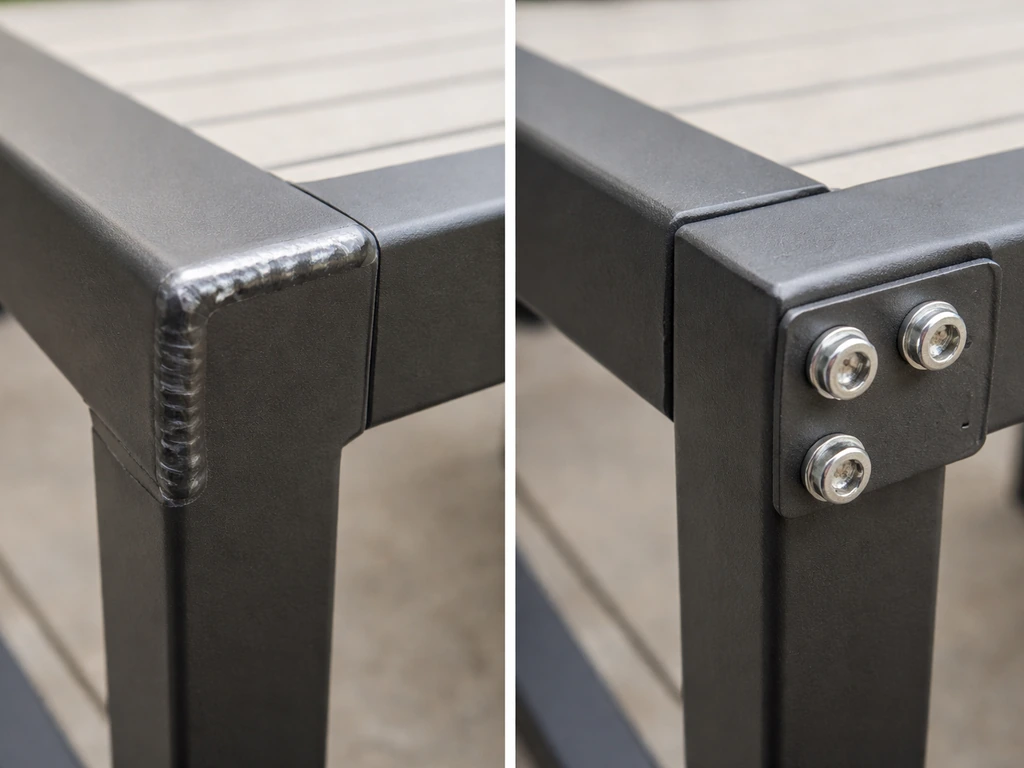
Welded frames are stronger and longer-lasting than bolted or screwed assemblies because there are no fasteners to loosen or corrode. On aluminum and steel furniture, look for clean, smooth welds without visible gaps. On wicker pieces, the frame underneath matters as much as the weave on top, an aluminum sub-frame is far better than a steel one for long-term weather resistance. Wobble the piece in the store or look for flex: a rigid frame is a good sign, and a piece that shifts or creaks under light pressure is not going to get better outdoors.
Cushion fill and fabric
Quick-dry cushions with reticulated foam and solution-dyed acrylic covers are the standard to aim for. Sunbrella and Agora are two well-known solution-dyed acrylic fabric brands that resist UV fading and mildew. A cushion with a zippered cover lets you wash the cover and replace the foam separately, which extends overall cushion life considerably. Cushions without zippers are harder to maintain and typically a sign of lower build quality.
Comfort and ergonomics
For dining sets, seat height matters relative to table height. Standard dining table height is around 30 inches, and standard dining chair seat height is 17 to 19 inches. If you are pairing a counter-height or bar-height table, confirm the chairs or stools are rated for the corresponding height. For lounge and conversation sets, seat depth and back angle determine comfort more than cushion thickness. A chair with a shallow seat depth will feel tiring to sit in for long periods regardless of how thick the cushion is. Sit in the furniture if you can, or buy from a retailer with a good return window.
How to choose the right set today: measurements, budget, and a buying checklist
Measure your space before you shop
The most common mistake buyers make is ordering furniture that overwhelms the space. Measure your usable patio area and then plan to leave at least 36 inches of clearance around the dining table for chairs to pull out and people to walk by. For a conversation or sectional set, leave at least 18 inches between the sofa and a coffee table. If you have a small balcony or tight urban patio, a bistro set (two chairs plus a small round table) or a pair of foldable chairs with a side table is almost always the right answer over trying to squeeze in a four-piece set.
Budget guidance
At the entry level (under $400 for a set), expect thinner wall aluminum, lower-grade powder coating, and polyester cushion fabric. These sets work fine in mild climates with consistent care, but do not expect a decade of life in a tough climate. The mid-range ($400 to $1,200) is where quality-to-value ratio is best for most buyers: thicker aluminum, better welds, and the option of solution-dyed acrylic cushions starts to appear. Above $1,200, you are getting into Grade-A teak, marine-grade aluminum, commercial-weight construction, and Sunbrella fabric as a standard. If you live in a harsh climate or want furniture that lasts 15-plus years without replacement, spending more up front is actually the more economical decision.
Your shopping checklist
- Measure your patio footprint and mark out the furniture zone with tape or chalk before buying
- Confirm the frame material (aluminum over steel for most situations; HDPE poly for poolside or wet areas)
- Look for welded rather than bolted frame construction
- For wicker, confirm the weave is HDPE, not PVC
- Check the cushion fabric: solution-dyed acrylic (Sunbrella, Agora) outperforms standard polyester
- Look for zippered, removable cushion covers and ask about foam type (reticulated foam drains; standard foam holds water)
- Check warranty length: 5+ years on the frame is a reasonable baseline, 10+ years signals quality
- For coastal or high-UV climates, confirm the powder coating standard or ask if the aluminum is marine-grade
- Factor in the cost of covers: buy them at the same time as the furniture
- Read return and assembly policies before ordering online
Brand and value guidance: how to spot quality and avoid junk
The outdoor furniture market has a significant noise problem. You will find $250 wicker sets sitting next to $2,500 ones, both marketed with the same words: "weather-resistant," "all-season," "durable." Here is how to cut through it.
Quality signals worth trusting
- Welded frame construction with visible, smooth welds (not exposed bolts or screws at main joints)
- AAMA 2604 or 2605 powder coating standard mentioned specifically (not just 'powder-coated')
- HDPE wicker called out by name in the product specs (not just 'resin wicker' or 'PE wicker')
- Sunbrella, Agora, or solution-dyed acrylic cushion fabric stated explicitly
- Manufacturer warranty of at least 5 years on the frame
- Quick-dry or reticulated foam cushion fill listed in specs
- Brand sells matching furniture covers designed for the specific product
Warning signs and things to skip
- No material specification beyond 'metal frame' or 'resin wicker' with no further detail
- Extremely high review counts on brand-new products (common with review-incentivized imports)
- Cushion fabric described only as 'polyester' with no UV or fade resistance rating
- Wicker sets priced under $300 for a multi-piece dining set — the HDPE quality will not be there
- Frame described as 'iron' with no mention of rust-resistant coating or treatment
- No assembly or care instructions provided, which often signals poor after-sales support
- Heavily discounted 'original prices' with no brand history or physical retail presence
Where to actually shop
Established brands with dedicated outdoor lines (Polywood, Telescope Casual, Brown Jordan, Woodard, and Restoration Hardware at the premium end) publish real material specs and stand behind warranties because they have reputations to protect. Mid-tier options from Wayfair, Home Depot, and Lowes range from budget to solid mid-range, but you need to read the spec sheet carefully rather than relying on the product title.
For the absolute best value, look for brands that spec out HDPE wicker, marine-grade aluminum, or Grade-A teak directly in the product description rather than burying it. To find the best patio furniture for outdoors, use those same spec clues for the material, frame, and fabric durability that match your weather. If the spec sheet does not answer your material questions, that is itself an answer.
If you are still weighing options across specific categories, the material choice for metal outdoor sets and the question of which fabrics hold up best in sun and rain both deserve closer looks before you buy. Choosing the best outdoor furniture patio setup comes down to picking the right material for your climate and how you plan to use it. Getting those details right alongside the frame material is what separates furniture that looks great for one season from furniture that still looks good a decade from now.
FAQ
What’s the best outdoor patio furniture type for a full-sun patio?
If a patio gets full sun, the frame material matters, but your cushions and any woven fiber usually fail first. Prioritize solution-dyed acrylic covers and reticulated foam that dries fast, then choose aluminum or HDPE-based wicker if you want the best chance of avoiding long-term brittleness and faded fabric.
How can I tell if “all-weather wicker” is actually worth buying?
Do not rely on “weather-resistant” language alone for wicker. Confirm the strands are extruded HDPE (not PVC) and verify the frame under the weave is aluminum (not bare steel). If the listing lacks material specs, assume the product is more likely to disappoint in harsh sun or wet cycles.
Will powder-coated aluminum hold up near the ocean?
Yes, but only if the brand specifies the right coating and you maintain it. For coastal areas, choose marine-grade aluminum with a hard powder coat or anodized finish rated for corrosive environments, then clean regularly and treat scratches promptly so salt water does not reach metal.
Which outdoor patio furniture type is the most maintenance-proof for pool decks or lakesides?
If you want low upkeep and you expect frequent rain, pool splash, or occasional snow, HDPE poly lumber is the closest to truly “set it and forget it.” It is more utilitarian in look and often heavier, so make sure the layout is comfortable for the reduced ability to rearrange.
Is teak really low maintenance, or is that marketing?
For wooden sets, treat “low maintenance” as relative. Even teak needs periodic cleaning and re-oiling if you want the original color, otherwise it naturally grays. If you do not plan any seasonal attention, teak can still work, but you may prefer HDPE or high-quality aluminum instead.
What cushion features make the biggest difference for longevity?
When choosing cushions, look beyond thickness. Open-cell reticulated foam and solution-dyed acrylic (color in the fiber) reduce mold risk and UV fade, and a zippered cover lets you wash the cover or replace the foam separately when it eventually wears.
What spacing should I leave around outdoor furniture so it stays comfortable and usable?
Yes. Measure clearance for how people move, not just how chairs fit. Plan for at least about 36 inches around a dining table for chair pull-out and traffic flow, and for conversation sets, keep roughly 18 inches between a sofa and any coffee table so you can stand up without scraping.
What should I inspect on the furniture frame before buying, especially if I can’t test it at home yet?
Look for welded frame construction when possible, then do a quick in-store “wobble test” to check for flex or creaking. Also inspect welds for gaps or bare spots, since those become rust entry points on metal frames.
Is it better to cover patio furniture or move it into storage, and what’s the common mistake?
A cover helps, but it has to be moisture-managing. For storage, choose vented covers or storage bags so condensation can escape, and make sure furniture is fully dry before covering to avoid trapping moisture that leads to mildew.
How do I decide based on my local rain and sun patterns, not just the material label?
Most “outdoor” fabrics will still degrade in heavy UV and constant wetting. If your patio is exposed, you should assume you will need at least seasonal cleaning, plus cushion storage after storms, so the real decision is how quickly items can dry and how easy the covers are to clean.
Next Articles
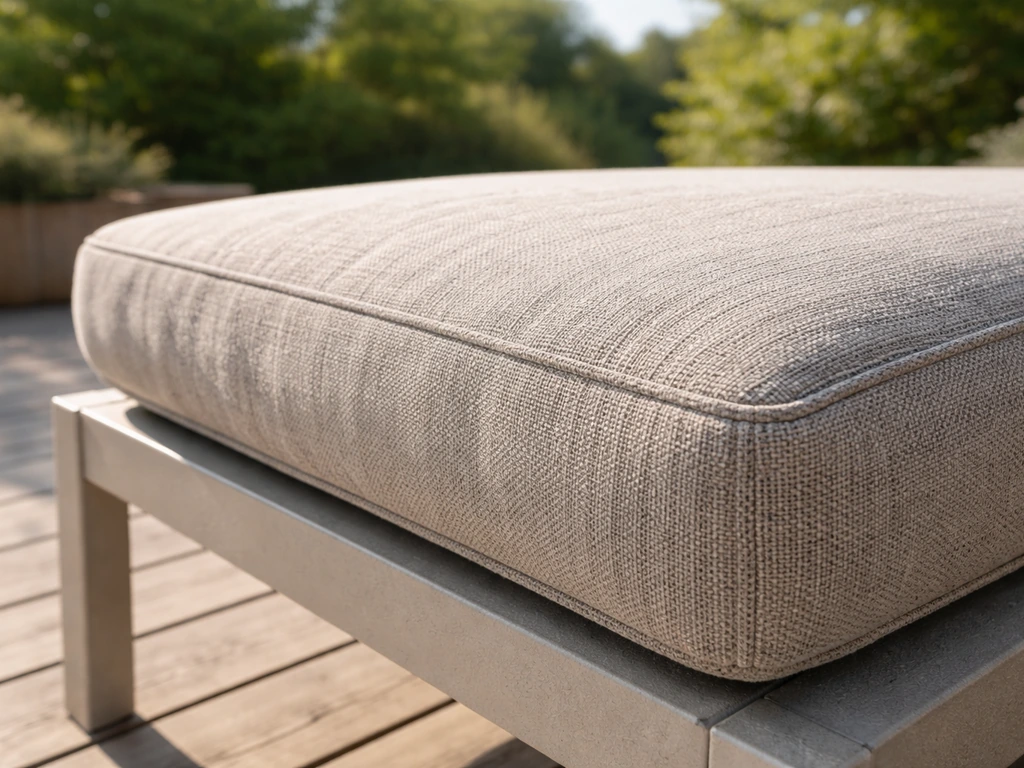
Best Outdoor Patio Furniture Fabric: How to Choose
Choose the best outdoor patio furniture fabric for your climate: durability, UV fade, mildew, comfort, and care tips.
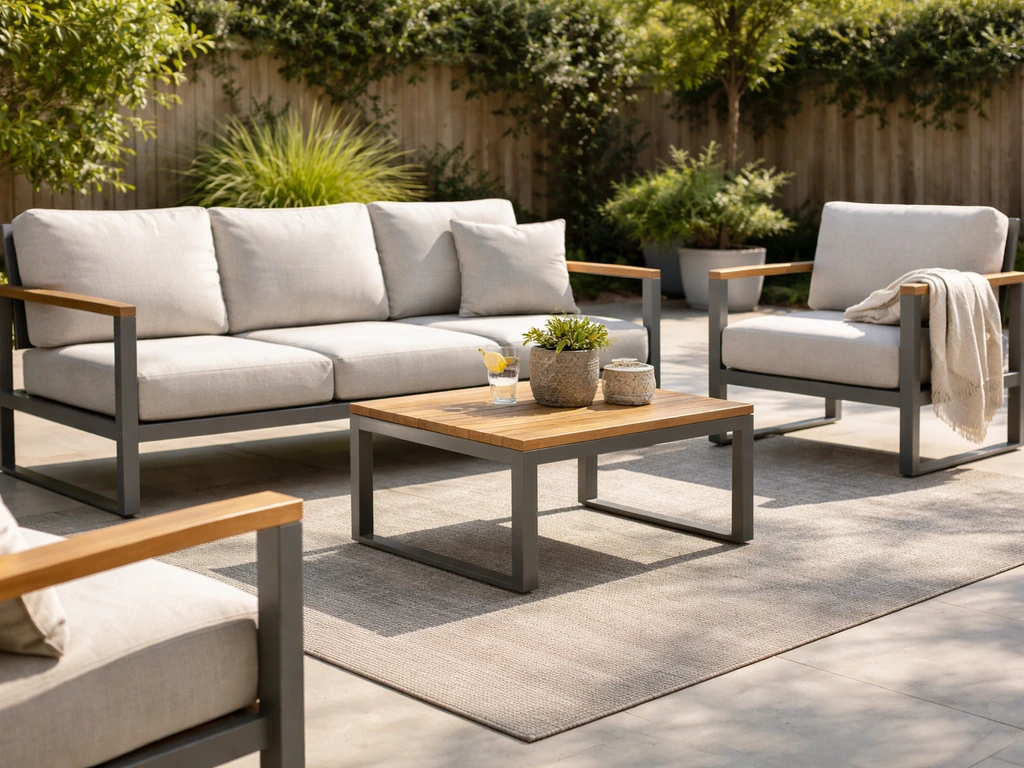
Best Patio Furniture for Outdoors: How to Choose
Choose the best patio furniture for outdoors by climate and material, with durability tips for sun, rain, UV and upkeep.
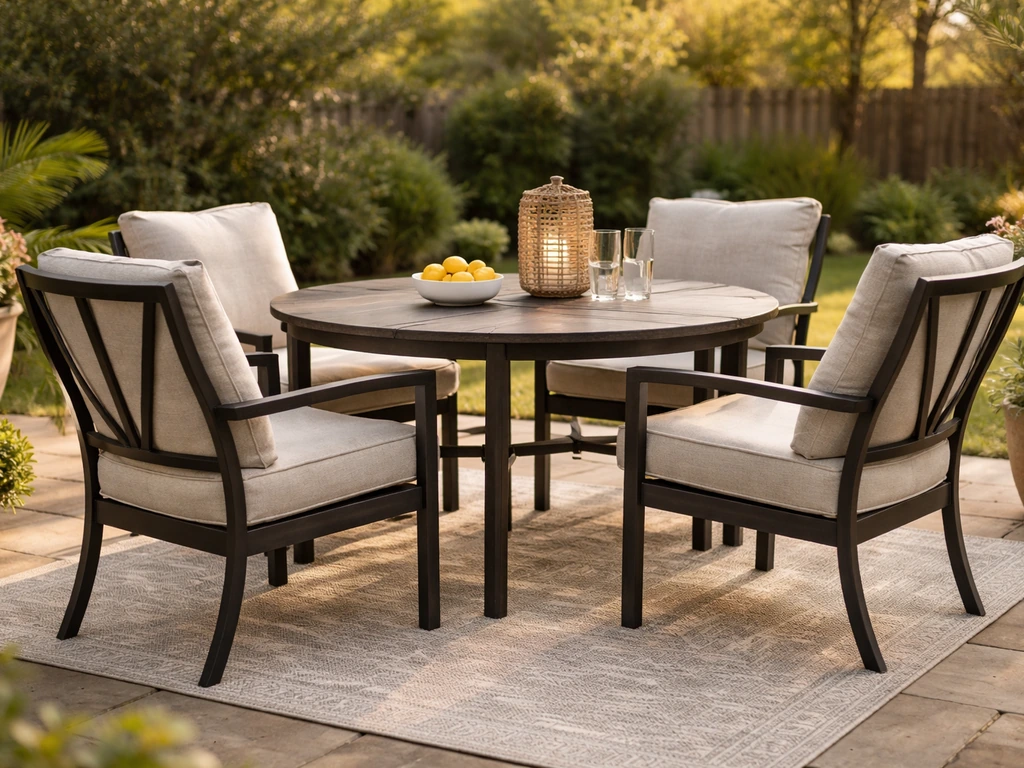
Best Outdoor Furniture Patio Guide: Buy the Right Set
Choose the best outdoor patio furniture by material, climate, fit, and online specs for lasting patio dining comfort.