
For hot weather, your best patio furniture materials are powder-coated aluminum, teak or eucalyptus hardwood, high-density polyethylene (HDPE) lumber, and commercial-grade synthetic wicker over an aluminum frame. Pair those frames with solution-dyed acrylic cushion covers (Sunbrella being the most proven brand), choose lighter frame finishes if the furniture sits in full sun, and you have a setup that will handle years of intense summer heat without warping, fading, or burning you when you sit down.
Best Patio Furniture for Hot Weather: Materials Guide

Theo Tierney
27 May 2026
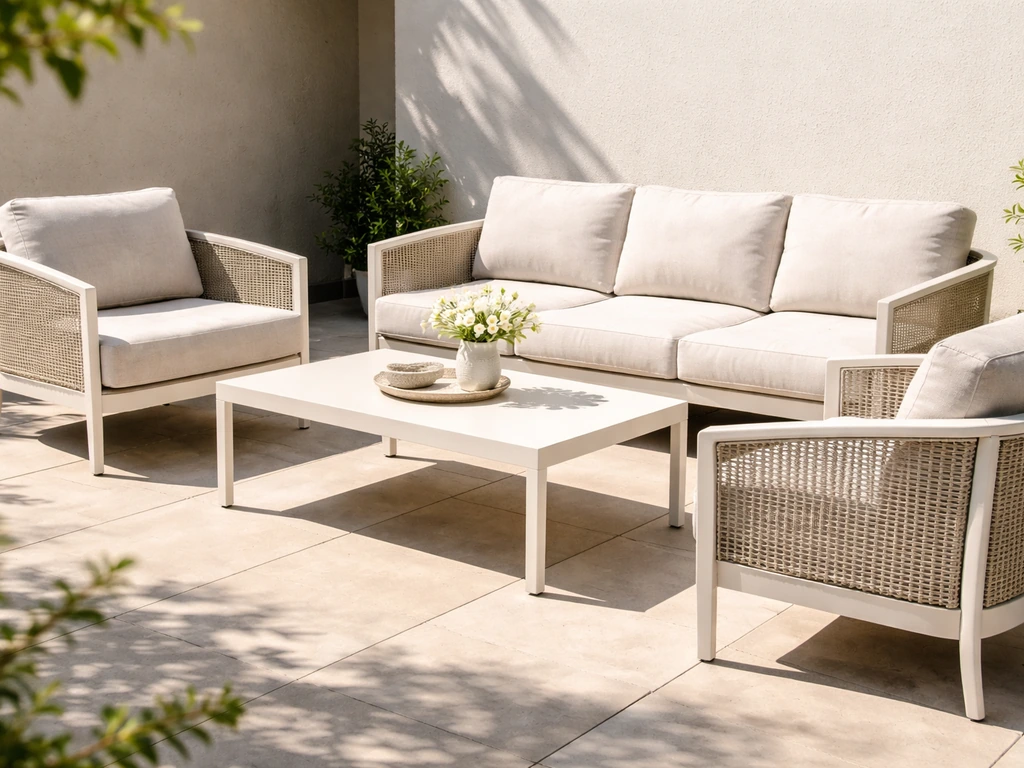
What hot weather actually does to patio furniture
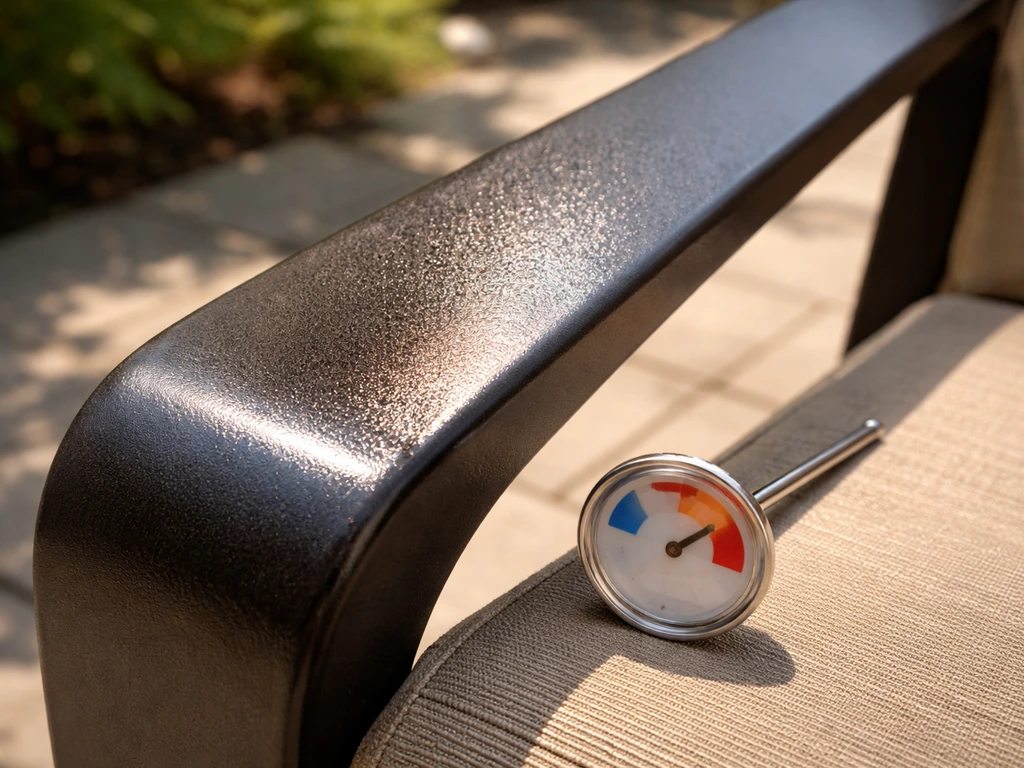
Heat changes the performance equation in ways that a general furniture review rarely covers. The three main problems are heat absorption (surfaces that get too hot to touch), UV degradation (fading, cracking, and brittleness), and thermal expansion (frames and joints that loosen over time). Add humidity in climates like Florida or the Gulf Coast and you layer in mold, mildew, and accelerated rust. In dry climates like Arizona or Texas, the UV load is punishing but the lack of moisture means rust and mold are rarely the issue. Knowing which failure mode matters most in your yard guides almost every material and finish decision.
The color of a surface matters more in full sun than most people realize. Dark powder-coated metals can reach surface temperatures of 150°F or higher on a 100°F day. That is not just uncomfortable, it can damage cushions sitting on the frame. Plastics and resins that are not UV-stabilized become chalky and brittle within two to three seasons of direct sun. Natural fibers rot or fade fast. None of this means you cannot have good-looking furniture in the heat. It just means the materials need to be chosen for the conditions, not the catalog photo.
Best materials for hot climates, ranked by real-world performance
Powder-coated aluminum
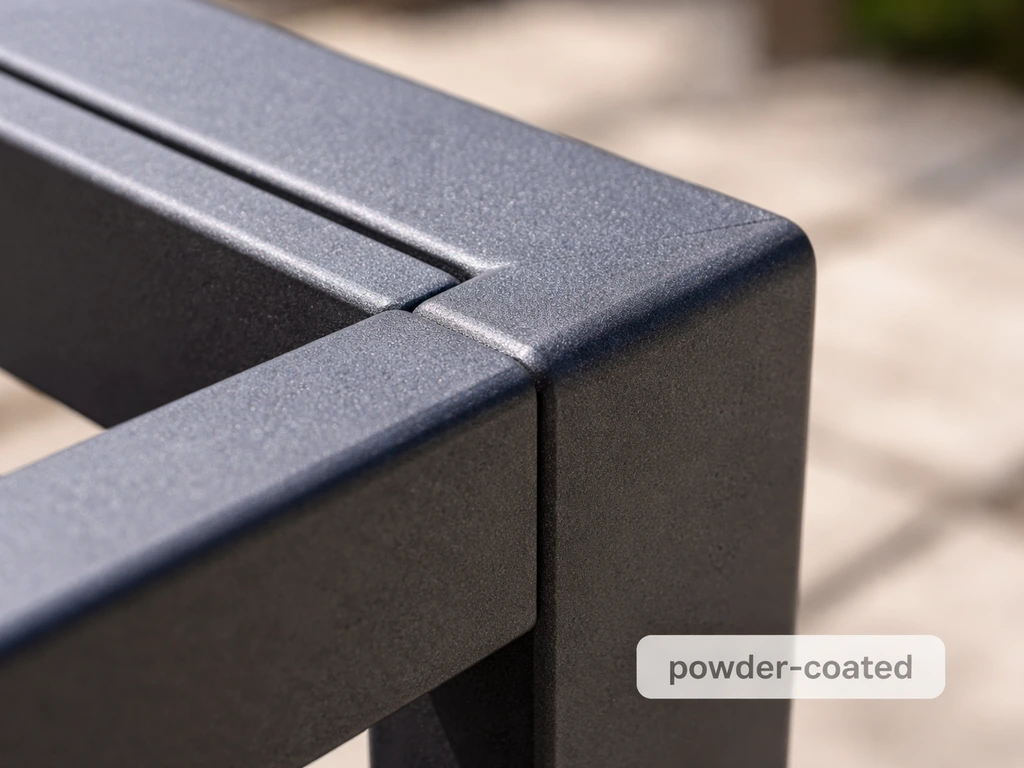
Aluminum is the single best frame material for hot climates, and it is not particularly close. It does not rust, it expands and contracts less than steel over temperature swings, and a quality powder-coat finish (look for thickness of 2 to 3 mils applied electrostatically) bonds to the surface rather than sitting on top of it. Cast aluminum is denser and heavier with fewer seams, making it more durable than extruded aluminum tubing for high-wind or high-traffic situations. The tradeoff: aluminum conducts heat, so bare aluminum armrests in full sun will get hot. A light-colored powder coat and wide armrest caps in teak or resin help a lot. Avoid thin-wall extruded aluminum furniture from budget brands, where the wall thickness can be under 1mm. That stuff dents, flexes at joints, and the powder coat chips within a season.
Teak and other dense hardwoods
Teak is the benchmark hardwood for outdoor furniture because its natural silica content and high oil density make it self-protecting in a way that pine, cedar, or acacia simply are not. It resists splitting, warping, and insect damage without annual treatment. Left untreated in the sun, teak weathers to a silver-gray patina that many people actually prefer. If you want to maintain the golden-brown color, a teak sealer applied once a year does the job. Eucalyptus is a legitimate budget alternative: similar density and oil content at roughly half the price, though it benefits more from annual oiling than teak does. Shorea and iroko are other hardwoods that perform well in heat. What to avoid: acacia marketed as premium outdoor furniture. It is beautiful, but it cracks and warps noticeably faster than teak in climates with heat and UV stress. Rubberwood and pine are not suitable for full-sun outdoor use in hot climates.
HDPE lumber and composite
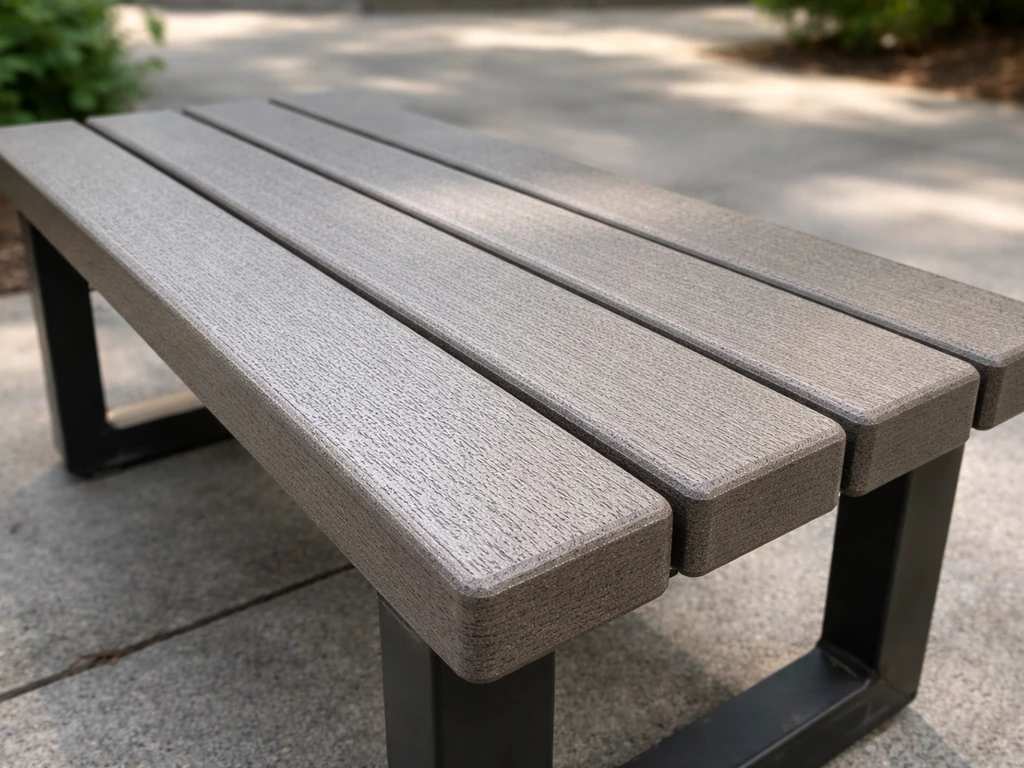
High-density polyethylene lumber, sometimes called poly lumber or recycled plastic lumber, is made from recycled plastics and contains UV inhibitors built into the material. It does not rot, splinter, crack, or absorb moisture, and quality HDPE furniture from brands like Polywood has been independently tested to hold up in both extreme heat and coastal salt air. The color goes all the way through the material, so scratches do not show as clearly as they would on painted wood. Heat absorption is moderate: HDPE will get warm in full sun but rarely scorching. The main downside is weight and flex. Thick HDPE slats are heavy and can bow slightly on longer spans without a proper frame underneath. Look for furniture where the HDPE sits on a sturdy aluminum or stainless steel frame, not just plastic-on-plastic construction.
Synthetic wicker over aluminum frames
Synthetic (resin) wicker is woven polyethylene or PVC strand over a metal frame. The key distinction is whether that frame is aluminum or steel. Steel frames rust, full stop. In humid climates especially, a steel-framed wicker set starts showing rust at the welds within a few seasons. An aluminum-framed resin wicker set avoids that problem entirely. The wicker itself should be UV-stabilized and tightly woven with consistent strand thickness. Better brands use round-strand weave that holds its shape under heat expansion. Half-round strand weave, common in budget furniture, flattens and cracks faster. Natural rattan wicker is not suitable for outdoor use in hot, sunny climates. It will dry out, crack, and disintegrate. It belongs indoors or in a screened porch.
Steel
Steel is heavier and stronger than aluminum but it corrodes unless perfectly sealed. Galvanized or stainless steel (304 or 316 grade) is appropriate for outdoor use. Standard steel with paint or basic powder coating will rust, especially at cuts, drilled holes, or welds where the coating is thinner. In dry inland climates, a good powder-coated steel set can last well, but in humid or coastal environments, aluminum wins every time on longevity with less maintenance.
| Material | Heat Absorption | UV Resistance | Rust/Rot Risk | Best For | Main Weakness |
|---|---|---|---|---|---|
| Powder-coated aluminum | Moderate (high with dark finishes) | Excellent with quality coat | None | Most hot climates | Hot to touch in full sun, thin-wall budget frames flex |
| Teak/eucalyptus hardwood | Low to moderate | Good (weathers to gray) | No rust, resists rot | Dry or humid heat, classic look | Cost, needs occasional oiling to keep color |
| HDPE/poly lumber | Moderate | Excellent (inhibitors built in) | None | Coastal, humid, low-maintenance | Heavy, can flex on long spans |
| Resin wicker over aluminum | Low | Good (UV-stabilized strands) | None if aluminum frame | Casual, comfortable seating sets | Cheap versions use steel frames or thin strands that crack |
| Steel (powder-coated) | High | Good short-term | High if coating chips | Dry climates, shaded areas | Corrodes at welds and cuts; heavy |
Full sun vs shade: how your exposure changes the right choice
Full sun and partial shade are practically different buying conditions. In full sun (more than six hours of direct sun daily), surface temperature, UV fading, and heat comfort are your primary concerns. In partial shade, you have more material flexibility but still need to plan for moisture, mildew, and the occasional direct sun hit.
Finishes and colors for full sun
Light-colored frames (white, sand, light gray, driftwood) absorb significantly less radiant heat than black, charcoal, or dark bronze. If you love the look of a dark-finish aluminum frame, it is manageable with shade from a market umbrella or pergola, but placing a dark metal set in unshaded full sun is a recipe for uncomfortable armrests and accelerated cushion degradation from the heat radiating off the frame. Matte or satin finishes run slightly cooler than high-gloss finishes in direct sun because they reflect light less efficiently, but the temperature difference is secondary to color choice. The related topic of whether black patio furniture specifically gets dangerously hot is worth understanding before committing to a dark color scheme. Black patio furniture can get very hot in full sun, so choose lighter finishes or add shade if you expect to sit outside for long periods whether black patio furniture specifically gets dangerously hot.
Frame design details that matter in heat
Slat spacing on dining chairs and loungers affects both heat buildup and comfort. Wider-spaced slats on seat surfaces allow air to circulate and reduce the heat trapped between you and the furniture. Sling-back chairs, where a fabric sling is suspended from the frame, are actually one of the best full-sun seating choices because there is no solid surface to absorb and hold heat the way a slatted or solid seat does. Drainage holes in seat cushion frames and tabletops matter too: water that pools on flat surfaces in humid conditions breeds mildew on cushions and can accelerate finish wear on metals.
Shade conditions: more flexibility, but still pick smart
If your patio gets consistent shade from trees, a pergola, or a covered roof, you can lean into darker finishes and denser materials without the heat discomfort penalty. Wrought iron becomes a reasonable choice under shade because the heat absorption issue is reduced. Natural hardwoods stay more stable under shade and require less UV-protection maintenance. That said, shade brings its own problems: more moisture retention, more chance of mildew on cushions, and more likelihood of debris buildup on furniture surfaces. Clean more often and watch for mildew on fabrics.
If you are specifically shopping for furniture that will live in full, unshaded sun all day, the guide on the best patio furniture for full sun goes deeper on that specific scenario, including umbrella and shade structure pairing.
Cushions and fabrics that actually survive summer heat
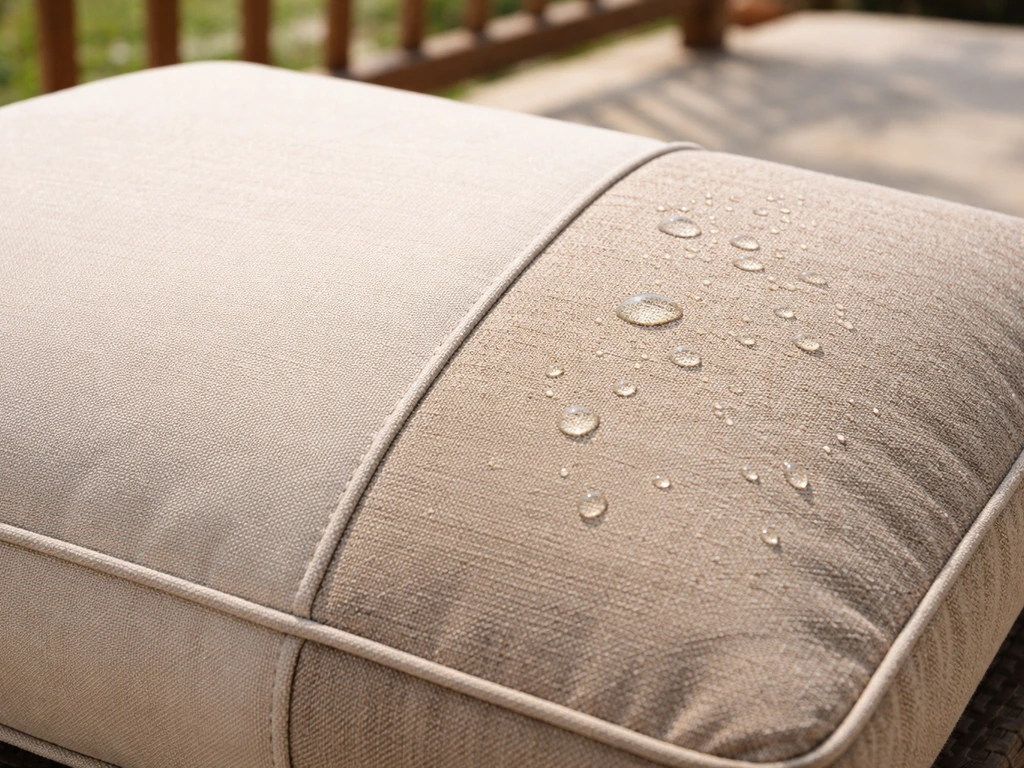
This is the category where cheap furniture dies fastest. Low-end polyester cushion covers fade in a season, develop mildew in two, and lose structural integrity in three. The solution is solution-dyed acrylic fabric, and the most proven brand in that category is Sunbrella. The reason solution-dyed fabric performs better is that the color pigment is locked inside the fiber during manufacturing rather than applied to the surface afterward. UV exposure cannot bleach a color that is inside the strand. Sunbrella backs this up with a 5-year limited warranty on its fabric, and it is one of the only outdoor fabric brands to offer that level of coverage.
Sunbrella fabric is also specifically engineered to resist mold and mildew growth. The fiber itself will not support mildew, but dirt and organic debris that accumulates on the surface can still trigger mildew if left unchecked. Regular cleaning prevents this. When mildew does appear on Sunbrella cushions, the manufacturer confirms you can clean it with a diluted bleach solution without damaging the fabric, which is not something you can say about most outdoor fabrics. If you are leaving cushions out and covering them, Sunbrella and similar brands recommend not allowing water to stand on cushion surfaces, and removing cushions before covering furniture for periods longer than a few days.
For the cushion insert itself, look for quick-dry foam (sometimes labeled as open-cell or drain-through foam) rather than standard upholstery foam. Standard foam holds water for days, which leads to mildew inside the cushion even if the cover looks clean. High-density, quick-dry foam is firmer, stays cleaner, and lasts longer. Dacron wrap around the foam adds softness without trapping water the way cotton batting does.
If you are investing in a quality furniture set, it is worth looking at brands that offer Sunbrella-covered cushions as standard, since the cushion quality on budget sets is often where the value falls apart fastest. The best Sunbrella patio furniture brands typically use commercial-grade aluminum frames paired with deep-seat cushions in Sunbrella or equivalent solution-dyed acrylic, and that combination is hard to beat for longevity in hot climates.
What to look for in brand quality and construction
Marketing language in outdoor furniture is aggressive and often misleading. Here is what actually separates quality construction from budget furniture at the same price point.
- Frame wall thickness: Quality extruded aluminum furniture uses wall thicknesses of 1.5mm or more. Budget sets often run 0.8 to 1mm, which flexes at joints and dents easily. Cast aluminum is inherently thicker and more rigid.
- Weld quality: Look at the welds or joints under the armrests and at leg connections. Clean, fully-penetrated welds with no visible gaps or porosity are a sign of commercial manufacturing standards. Rough or incomplete-looking welds are a structural warning.
- Powder coat thickness and process: Electrostatic powder coating that is cured in an oven (thermosetting) adheres far better than spray-applied finishes. Look for 2 to 3 mil coating thickness. Thin coatings chip at corners and edges within a season or two of outdoor use.
- Hardware: Stainless steel hardware (screws, bolts, and brackets) is essential. Zinc-plated or standard steel hardware rusts and stains the frame below it. Check what the assembly hardware is made of, not just the frame.
- Seat and back support: On dining chairs and lounge chairs, check whether the seat pan has cross-bracing or slat support rated for static weight. Budget chairs often have undersized support spanning wide distances, which flex-fatigues at welds.
- Cushion cover zippers: YKK or comparable quality zippers with a corrosion-resistant coating will not seize up or rust after a season of outdoor humidity. No-name zippers on cushion covers are one of the first things to fail.
- Warranty terms: A serious outdoor furniture brand offers at least a 5-year frame warranty and a 1 to 2-year finish warranty. Anything less signals the manufacturer does not expect it to last.
When comparing brands, look past the lifestyle photography and check whether they publish actual material specs: aluminum alloy grade (6061 or 6063 series is standard commercial quality), powder coat mil thickness, cushion foam density (1.8 lb/ft³ or higher is the baseline for outdoor use), and country of manufacturing quality control. Brands that publish these numbers are usually proud of them. Brands that do not publish them often have something to hide.
Keeping your furniture in shape through a hot summer
Cleaning routine
For aluminum frames, a monthly wipe-down with mild soap and water removes the oxidation layer that forms on even powder-coated aluminum in hot, UV-heavy environments. Rinse thoroughly, because soap residue left on a hot metal surface can stain or accelerate finish wear. For teak or eucalyptus, a soft brush and mild soap will remove surface grime without stripping oils. Do this two to three times during the summer if the furniture is in regular use. Apply teak sealer or oil once a year, ideally at the start of the season. For HDPE, soap and water is all you need, and occasional use of a pressure washer on a low setting removes embedded dirt without damage.
Cushion care in summer
Stand cushions on edge after rain rather than leaving them flat. This lets water drain out of the foam and the cover dries faster. If you have Sunbrella or solution-dyed acrylic covers, spot-clean stains promptly with mild soap and cold water. For heavier cleaning or mildew, a diluted bleach solution (about 1 cup bleach per gallon of water with a small amount of dish soap) works on Sunbrella without damaging the fabric. Rinse completely and allow to air dry before storing or covering. Do not store damp cushions in a deck box or under a furniture cover for extended periods, as confined damp conditions are exactly where mildew develops even on mildew-resistant fabrics.
Covers and storage
Furniture covers in summer protect against UV, bird droppings, tree sap, and sudden storms. Use breathable covers rather than solid vinyl tarps. Vinyl traps heat and moisture underneath, which creates a mini-greenhouse effect that accelerates mildew and can actually damage powder coat finishes over time. Breathable polyester covers with vented panels allow airflow while keeping out debris. When covering furniture for longer than a few days (vacation, extended travel), remove cushions and store them in a dry location. This is not over-cautious: it genuinely extends cushion life by years. For the offseason or extended periods, if you have storage space, bringing cushions and lightweight aluminum furniture under a covered porch or into a garage is the single highest-impact thing you can do for longevity.
Protecting the finish long-term
Apply a car wax or aluminum-specific protectant to powder-coated aluminum frames once a year. This fills micro-pores in the finish and gives an extra barrier against oxidation and UV. It takes about thirty minutes for a dining set and meaningfully extends the finish life. For teak, a UV-stabilizing sealer (not a film-forming varnish, which peels) is the right product. Sikkens, Star Brite, and Semco make reliable teak sealers. For HDPE, you do not need any finish treatment. The material is self-maintaining.
Pulling it all together: how to choose your set today
Start with your sun exposure. If the furniture is in full sun most of the day, prioritize light-colored powder-coated aluminum or HDPE frames with solution-dyed acrylic cushions. If you are in a humid climate (Southeast, Gulf Coast, Florida), eliminate steel frames entirely and look for aluminum-frame wicker or aluminum dining sets with a proven powder coat. If you want the best patio furniture for humid climates, focus on aluminum frames and UV- and moisture-resistant cushions while avoiding steel. If you are in an arid climate (Arizona, Nevada, inland California), UV resistance is your top priority: HDPE and teak handle that load well, and aluminum is fine as long as the finish is quality.
Measure your space before you buy. Outdoor furniture tends to be bulkier than indoor pieces, and a dining set that looks proportional in a showroom can overwhelm a small patio. Leave at least 36 inches of clearance around chairs for comfortable movement, and account for how far chairs pull out from the table when people sit down. For deep-seat lounge sets, a sectional that fits a 12x12 foot space in photos may need a 14x16 foot footprint in reality once traffic flow is accounted for.
Set a realistic budget that factors in cushions, a cover, and at least one season of minor maintenance. A quality aluminum dining set with Sunbrella cushions at the $800 to $1,500 price point will outperform a $400 set over five years in nearly every measurable way: the finish will not chip, the cushions will not fade, and you will not be replacing it after three summers. If budget is genuinely limited, HDPE furniture from a brand like Polywood offers lasting durability at mid-range prices without the cushion maintenance burden at all, since many HDPE sets are designed for use without cushions.
Climate-specific recommendations go deeper than this guide can cover in one place. If you are in Texas or a similarly demanding hot-and-sunny environment, the material and design priorities shift enough to be worth separate consideration. That is why the best patio furniture for Texas heat focuses on UV resistance, breathable airflow, and materials like aluminum, teak, and solution-dyed cushions. The same applies if you are dealing with extreme humidity alongside the heat, where mold, mildew, and corrosion resistance move to the top of the list.
FAQ
What’s the single best material choice for hot weather if I only want one option?
For hot, sunny patios, powder-coated aluminum is the best overall frame material. Pair it with solution-dyed acrylic cushions (like Sunbrella) and choose a light-colored powder coat to reduce how hot the armrests get in direct sun.
Will powder-coated aluminum furniture be safe to touch in full sun?
It can still get hot to the touch, because the metal conducts heat. To make it more comfortable, pick light or matte finishes, add wide armrest caps in teak or resin where people rest, and use shade (umbrella or pergola) if you sit for long stretches.
Is HDPE patio furniture cooler than metal in the summer?
Generally, yes. HDPE absorbs less radiant heat than dark metals, so it rarely becomes “scorching,” but it can still get warm in full sun. If comfort is critical, look for lighter colors and ensure there is a supporting frame so slats do not bow over time.
How do I tell if an aluminum or wicker set is likely to hold up in coastal humidity?
Avoid any steel frame components, especially at welds or joints. For resin wicker, confirm the weave is UV-stabilized and that it is mounted on an aluminum frame. Also check that the powder coat is thick and uniform, because thin or patchy coating is where corrosion starts.
What cushion features matter most beyond fabric color?
Quick-dry foam is a big deal. If the cushions use standard upholstery foam, they can trap water inside and develop mildew even with a good cover. Look for drain-through or open-cell designs and, if offered, deep-seat cushions with a proper water-shedding design.
How should I clean mildew if it appears on hot-weather cushions?
Act quickly and clean the entire surface, not just the visible spots. For solution-dyed acrylic like Sunbrella, mildew can be cleaned with a diluted bleach mixture, but you must rinse thoroughly and fully air dry before storage. If you see mildew that keeps returning, stop leaving cushions in wet conditions or under non-breathable covers.
Do I need to oil teak every year in the hottest climates?
If you want to keep the golden-brown color, yes, plan on annual sealing. Teak left in the sun will gray naturally, and the practical question is whether you want that look. Sealer choice matters too, use a UV-stabilizing sealer, avoid film-forming varnishes that can peel.
Can I cover patio furniture in summer to extend its life, and what’s the catch?
You can, but covers must be breathable. Non-breathable vinyl traps heat and moisture, which accelerates mildew and can stress finishes. For extended periods, remove cushions and store them dry, do not cover cushions that are even slightly damp.
Should I store cushions indoors over winter even if I use a cover?
Yes, especially if you get seasonal rain, humidity, or temperature swings. Bringing cushions and lightweight metal pieces under covered storage (garage or porch) typically extends lifespan more than covers alone, because it reduces trapped moisture and UV exposure during long storage periods.
What’s the best way to reduce heat buildup on seating surfaces?
Choose designs that do not trap heat against your body. Sling-back chairs often feel cooler because they lack a solid seat surface that absorbs and holds radiant heat. For slatted seats, wider spacing improves airflow and reduces the “hot bench” effect.
What should I check when comparing ‘outdoor aluminum’ furniture claims?
Ask whether they list an aluminum alloy grade (commercial series like 6061 or 6063) and the powder coat thickness in mils. Brands that publish specs usually have better quality control. Also avoid thin-wall aluminum tubing, it can dent, flex at joints, and lose coating adhesion faster.
How much clearance should I plan for patio dining chairs in hot weather use?
Allow at least 36 inches around the dining area for safe movement, and account for how far chairs slide out when someone sits down. This matters more than you think because you might also be adding shade structures like umbrellas, and those need space to function without rubbing cushions or covers.
Is black patio furniture actually a bad idea for hot climates?
It’s not automatically wrong, but unshaded full sun can make dark frames very uncomfortable. If you prefer dark colors, mitigate with shade and choose matte finishes to reduce reflected heat. Light-colored cushions plus a light powder coat or add-on armrest covers can also help.
If my climate is hot and humid, what are the biggest “avoid” mistakes?
Do not choose steel-framed resin wicker, since it can rust at welds quickly in humidity. Also avoid non-breathable covers that trap moisture, and avoid cushion setups that leave foam wet or stored flat after rain. These are common reasons “hot weather” furniture fails early.
If my climate is hot and dry, is rust still a concern?
Rust and mold are usually less severe in dry climates, but UV degradation is still the top threat. Focus on UV-stabilized materials, durable frames with solid powder coating, and solution-dyed cushion fabric that resists fading and cracking.
Next Articles
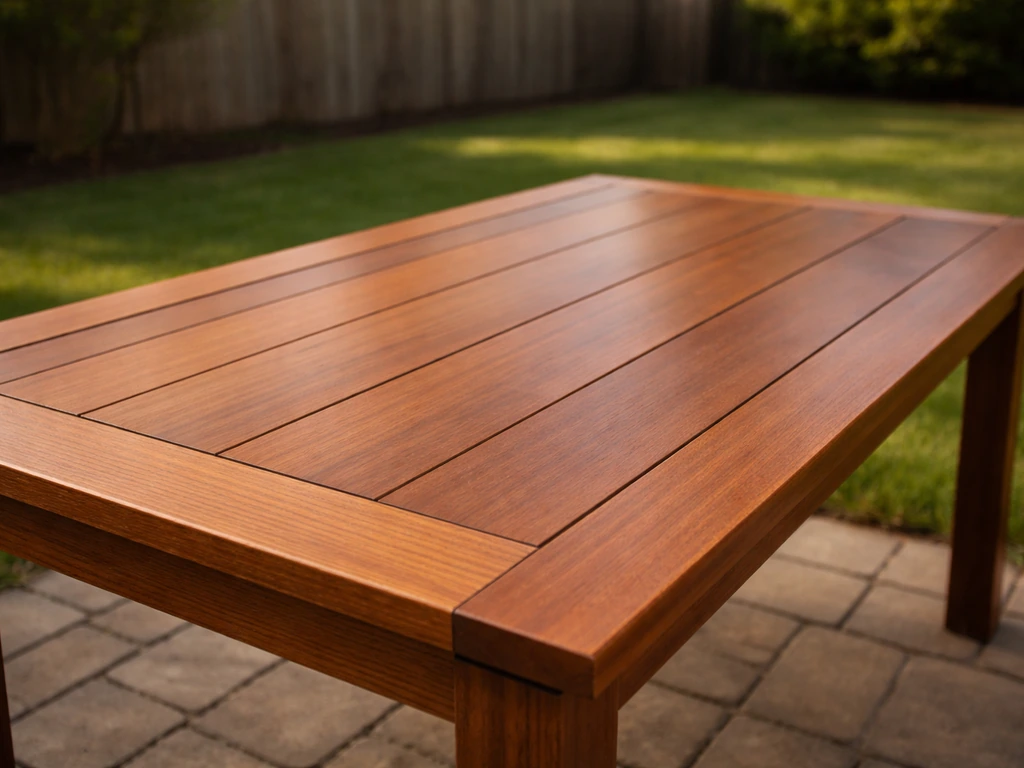
Best Wood for Outdoor Patio: Top Choices for Tables
Durable patio table woods by climate, plus finish and maintenance tips to prevent rot, warp, and insects.
Common Patio Furniture Wood Crossword Answers and Care
Solve common patio furniture wood crossword clues and choose the right outdoor wood, with care tips by climate.
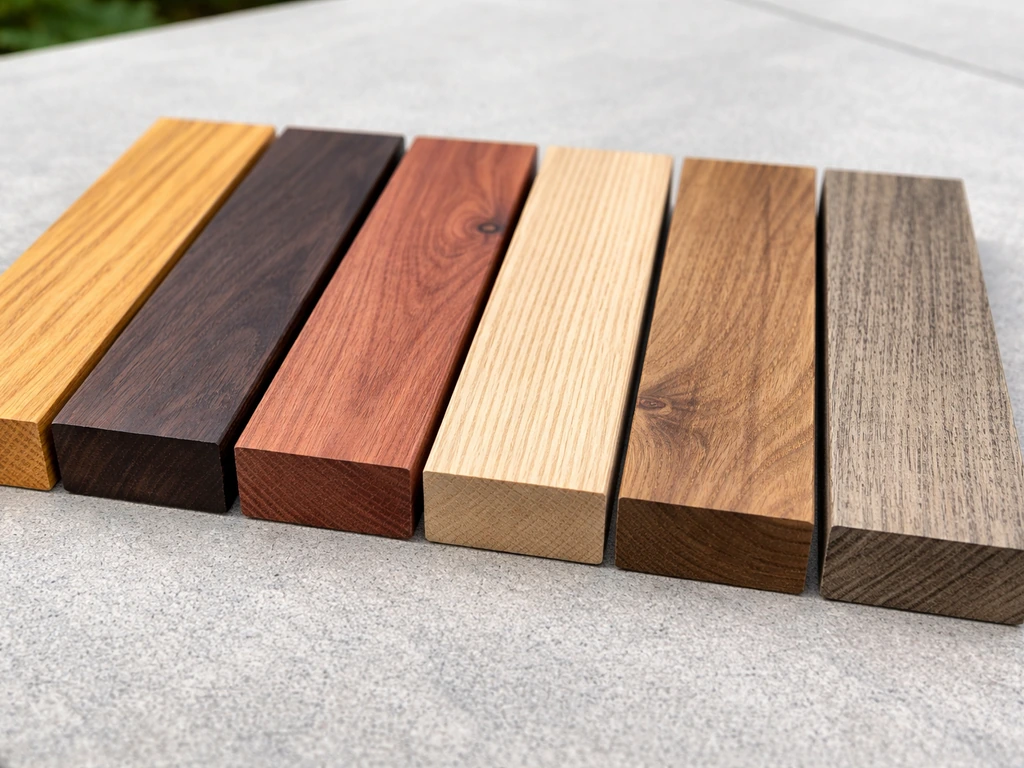
Best Wood for Patio Furniture: Top Choices by Climate
Compare the best wood for patio furniture by climate, with finish and maintenance tips to prevent rot and warping.